Tennessee School District Takes Steps to Address IAQ
Historic middle school building undergoes $8.7 million renovation to address HVAC, other issues.
By Howard Riell, Contributing Writer
The recent completion of long-awaited renovations to a historic Tennessee school building, Bridgeforth Middle School — one of the district’s oldest educational facilities, with deep ties to the community’s legacy – has proven a cause for widespread celebration.
The $8.7-million project delivers improved indoor air quality (IAQ), modernized safety systems and extended life for the historic facility. It is part of a broader district effort that has already been recognized with two Associated Builders and Contractors awards for the Giles County High School renovation.
District leaders and school administrators marked the milestone with a ribbon-cutting ceremony on March 13, welcoming community members to tour the updated space, one rich in history. Located in Pulaski, Tennessee, the building has been a priority for leaders to maintain and upgrade in order to extend its lifespan while enhancing daily conditions for students and staff.
“Bridgeforth is an important part of Pulaski’s educational history and a place where generations of families have learned,” says Knox Vanderpool, school board chairman for Giles County Schools. The project “has allowed us to protect the building’s legacy while creating a healthier, more reliable environment for today’s students and staff.”
Aging infrastructure
Designed by local architecture firm Wold Architects & Engineers, the renovation reflects a growing trend among districts to prioritize modernizing core building systems to support healthier learning environments while preserving existing facilities.
The two-year project began in March 2024. Following a system-wide facilities assessment with the Giles County School Board and Administration, Wold has been working through individual projects to upgrade all eight of their educational buildings, ranging from elementary to high schools. While Bridgeforth Middle School had undergone several smaller renovations throughout its history, this marked one of the most comprehensive modernization efforts for the facility to date.
The project provided an opportunity to address aging infrastructure, improve building performance and better align the school – which includes 28 classrooms to house its approximately 300 students — with current expectations for student comfort, safety and learning environments while preserving its longstanding role within the community.
Indeed, preserving the school’s legacy was an important part of the project. Originally constructed in 1958, Bridgeforth Middle School has deep historical significance within the community and was named after one of the area’s first Black educators, J.T. Bridgeforth.
As enrollment and demand increased, the facility expanded significantly, nearly doubling in size by 1976. It grew to accommodate grades 5-8 as Bridgeforth Middle School in 1978, further embedding its place within the community. The renovation was approached with respect for that history while ensuring the building could continue serving future generations of students.
Healthier, safer, more energy-efficient
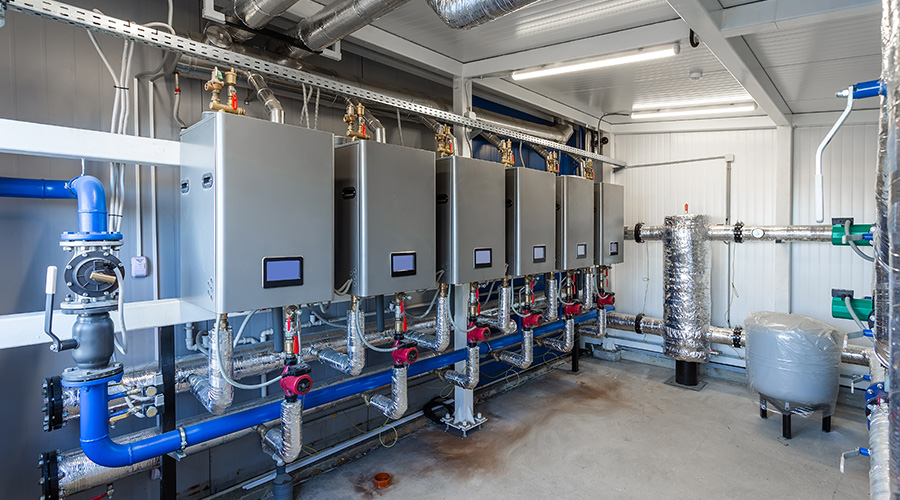
The renovation focused primarily on modernizing critical building infrastructure to create a healthier, safer and more energy-efficient learning environment for students and staff. Most of the work centered on replacing and upgrading aging mechanical and electrical systems, including new HVAC systems in most classrooms to improve indoor environmental
quality, electrical service upgrades, water piping replacements, enhanced lighting systems and a new, fully addressable fire alarm system.
Architectural improvements included the replacement of existing windows with high-performance storefront systems to strengthen the building envelope while significantly improving energy efficiency.
“The project balanced operational improvements with long-term sustainability goals,” says Wold’s education practice leader, Steve Griffin, “helping the district extend the life of an important community facility while improving the day-to-day experience for those learning and working inside the building.”
New acoustical lay-in tile ceiling systems were installed throughout the facility to reduce noise levels and improve speech clarity in classrooms and shared spaces, minimizing distractions and enhancing overall classroom functionality. Paired with new LED lighting, the upgrades significantly changed the feel of the interiors to create brighter, quieter and more comfortable environments for teaching and learning.
One of the biggest challenges was integrating modern systems and technology into a building originally constructed nearly seven decades ago. “Existing buildings often come with unforeseen conditions and limitations that require careful coordination throughout the design and construction process,” says Sitha Chhuum, Wold’s electrical engineer. “The team worked closely with the district to modernize the facility in a way that improved performance and functionality while respecting the structure and history already in place.”
The renovation significantly extended the building’s useful life, likely by another 20 to 30 years, according to Reed Paitich, Wold’s mechanical engineer. “By modernizing core building systems and addressing long-term infrastructure needs now, the district was able to protect its investment in the facility while avoiding more costly emergency repairs or replacement needs in the future.”
Security upgrades
The existing system consisted of two separate fire alarm panels serving different portions of the building: an older zoned panel that was no longer supported, and a newer addressable panel nearing the end of its useful life.
In addition, several areas of the original school lacked code-required audible and visible notification devices, limiting effective fire alarm alerting during an emergency. Changes were needed to bring the facility into compliance with current code and provide a safer and more secure environment for the students, staff and visitors throughout the school.
As part of the project, both existing fire alarm panels were replaced with a single addressable panel to streamline system monitoring, notification and control. An addressable system allowed personnel to quickly identify which device was in alarm or required service. The previous technology of a zoned system could identify only the general area of the school. As a result, locating the specific device that had detected smoke or malfunctioned often required additional time.
The new panel also allowed the newer addressable devices to be reused, helping manage costs while improving overall system performance. Areas that were missing fire alarm notification devices were brought up to current code.
Classrooms, conference rooms, corridors and other common spaces were equipped with new audible and visible notification appliances. Together, these upgrades created a more reliable, efficient and modern life-safety system throughout the school.
Environmental benefits
IAQ was a critical priority for this school because aging building systems were directly affecting the health, safety and comfort of students and staff.
The facility’s outdated and failing HVAC system, deteriorated hydronic and domestic water piping that was leaking onto floors and significant building envelope leakage created conditions that could compromise air quality, increase moisture intrusion and contribute to unhealthy indoor spaces.
To address these issues, the project included replacement of the HVAC air distribution and piping systems, replacement of the domestic water piping system and new windows to improve the building envelope. These upgrades significantly enhanced IAQ by improving ventilation rates and reducing airborne contaminants through the implementation of UV lights in both HVAC equipment and directly within classroom spaces, limiting unwanted air and moisture infiltration. Updated in the post-COVID era, the improvements were especially important in creating a more resilient learning environment.
“By upgrading core building systems and improving indoor air quality, we’re creating a safer and more comfortable environment for students that supports teaching and learning, all while protecting this important school facility for the future,” says Bryan Brindley, construction manager for Brindley Construction.
The response from the district, staff and school board has been overwhelmingly positive. Many stakeholders have commented that the renovations transformed the feel of the building into something entirely new while preserving its identity and importance within the community. The upgraded systems, improved comfort and refreshed learning environments have helped create a space to better support both students and educators for years to come.
Howard Riell is a freelance writer based in Henderson, Nevada.
Related Topics: