Why Facility Managers Should Recycle PVC Roofs
Industry reports that nearly 40 million pounds of material and membrane saved from landfills in 2025.
By Ronnie Wendt, Contributing Writer
Key Takeaways:
- PVC roof recycling is rapidly gaining momentum, with post-consumer PVC roofing material recycling more than doubling in 2025, helping facility managers divert waste from landfills and support circular economy goals.
- Not all roofs are suitable for recycling, but mechanically fastened and induction-welded PVC roof systems can often be recycled into new roofing products and other construction materials with relatively little added cost during replacement projects.
- Recycling end-of-life PVC roofing can significantly reduce carbon emissions, contribute to sustainability and green building certification goals, and is most successful when facility managers proactively monitor and replace roofs before major failures occur.
For decades, an aging roof meant one thing: tear it off and send it to a landfill. Today, facility managers can raise the roof on sustainability when the old roof comes down.
Expanded recycling efforts are diverting end-of-life roofing membranes from landfills and transforming them into new products.
According to the Coated Fabrics and Film Association’s Vinyl Roofing Division (CFFA-VRD), the polyvinyl chloride (PVC) roofing industry recycled nearly 30 million pounds of pre-consumer PVC roofing material and over 7 million pounds of post-consumer roofing membrane in 2025. Their survey data also shows that post-consumer recycling alone more than doubled from 2.6 million pounds in 2024 and increased 350 percent since 2023.
PVC recycling presents an opportunity to think differently about roof replacement. Instead of seeing roof removal as the end of a product’s lifecycle, facility managers and building owners can view it as a new lifecycle that supports sustainability goals and reduces environmental impacts.
Renewed focus on circularity
PVC roof recycling isn't a new concept. What is new is the growing momentum to keep more roofing material out of landfills.
“We are doing what we can to raise awareness of PVC roof recycling. I think it’s still something that many people don't know is available,” says Brian Whelan, president of Roof Resources, LLC and consultant to the CFFA-VRD.
He shares that the CFFA-VRD takes a two-prong approach to PVC roof recycling:
- Pathway to Zero focuses on reducing manufacturing waste and increasing the recycling of pre-consumer PVC roofing materials.
- Pathway to Circularity targets post-consumer roofing materials, encouraging building owners, contractors, architects, and manufacturers to participate in a circular lifecycle for roofing products.
Both initiatives extend the useful life of roofing materials by keeping them out of landfills and returning them to the manufacturing stream. The ability of PVC to be reheated and reprocessed repeatedly makes it an excellent candidate for recycling.
Once recovered, manufacturers can recycle PVC roofing membranes into a variety of products. In closed-loop applications, the material becomes new roofing membranes, roof walkways, and roofing accessories. In open-loop applications, it is converted into flooring, expansion joints, and other construction products.
Not every roof is a candidate
First, a facility manager must figure out if a roof qualifies for recycling.
“We focus on what’s called mechanically fastened or induction-welded roof membranes; those are the types that are most amenable to recycling today,” says Richard Krock, principal of VyChlor Advisors LLC and consultant to CFFA-VRD.
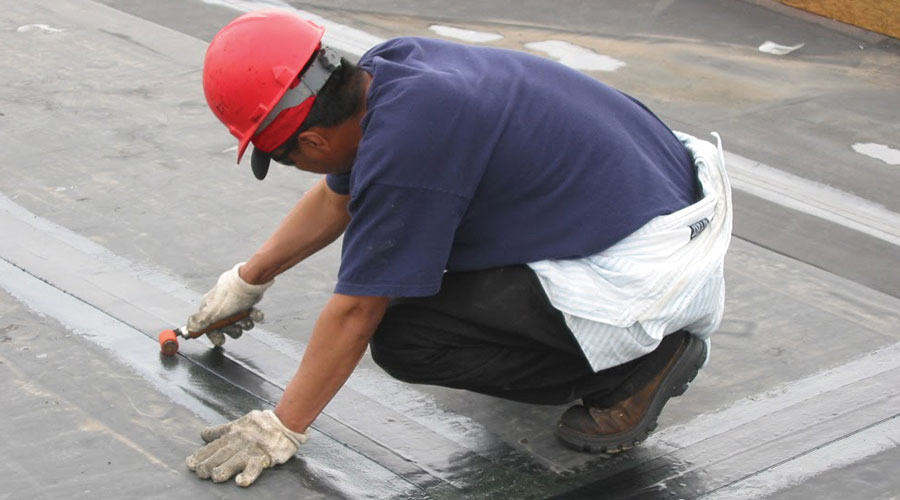
Mechanically attached and induction-welded PVC roof systems can be removed in large sections, bundled, and shipped to a recycler. But adhered roofing systems present added challenges because adhesives remain attached to the membrane.
“We’re not there yet on recycling adhered roofs, but we’re evaluating various types of processes and applications that could take adhered roofs,” Krock says.
Facility managers considering roof recycling should consult with a roofing consultant, roofing contractor, or membrane manufacturer early in the planning phases to decide whether their roof is a viable candidate for recycling.
How it works
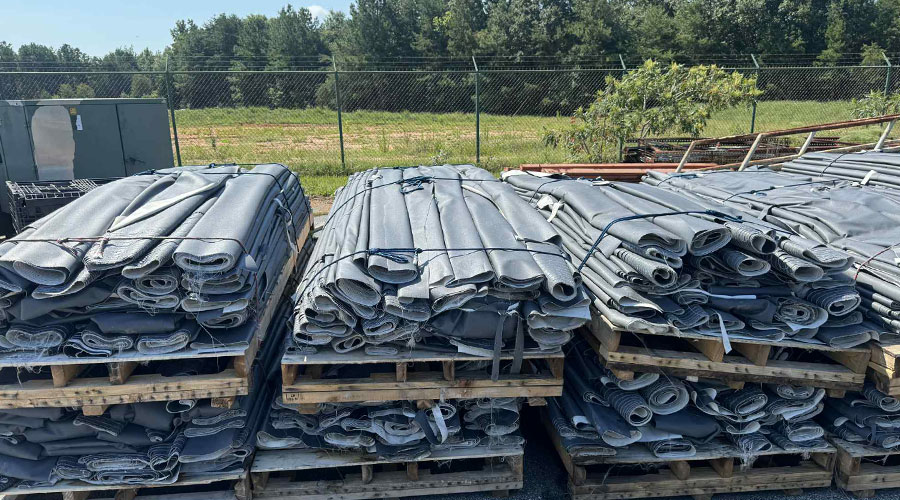
Unlike traditional tear-offs, recycling requires roofing contractors to remove and package roofing material in a more organized manner. Instead of cutting the membrane into small pieces and throwing it in a dumpster, contractors must slice it into manageable sections, roll it, bundle it, place it on pallets or in containers, then ship it to a specialized recycler.
While the extra steps increase labor expenses, Whelan highlights that recycling makes up a small part of the project’s cost. “When you look at the overall cost of a re-roofing job, this piece is not expensive at all,” Whelan says.
Still, a common question from most building owners is how much recycling will cost. The answer depends on the project’s scope, according to Whelan.
He says roof size, membrane type, rooftop obstructions, local labor rates, transportation distances, and landfill costs will influence the final cost. As a result, neither contractors nor manufacturers can provide a universal estimate.
“We cannot really estimate the cost because every job is different,” Whelan says.
He recommends that facility managers ask roofers to include a separate line item in their re-roofing bids for recycling.
The CFFA-VRD recommends a line item that reads like this: The proposed lump sum price to package the original PVC roof membrane, safely remove from the roof and put on a flatbed/truck to ship to the recycler: $xxxxx, with a notation that says the price includes all labor, overhead and profit, and considers the reduction in dumpster and landfill costs for diverting PVC membrane from landfill.
This approach allows building owners to make informed decisions based on actual project costs rather than assumptions. Many owners discover that the incremental cost is small compared to the overall roofing investment, Whelan adds.
Sustainability benefits
Many corporations, healthcare systems, universities and commercial property owners have set goals for carbon reduction, waste diversion and circularity. PVC roof recycling can contribute to all three.
“They have their own circularity goals and objectives; they have their own CO2 reduction initiatives, and what we’re doing falls right into what they’re trying to accomplish,” Whelan says.
The CFFA-VRD worked with researchers from the National Institute of Standards and Technology (NIST) to quantify the carbon benefits of recycling PVC roofing membranes. Their research showed that recycling construction materials at their end of life demonstrably avoids carbon emissions.
According to the NIST research, recycling end-of-life 60 mil PVC roofing membranes can avoid between 0.62 and 0.80 pounds of CO2-equivalent emissions per square foot compared to landfilling. This means:
- For a 50,000-square-foot roof, that translates to between 31,000 and 40,000 pounds of avoided carbon emissions. Using U.S. EPA’s greenhouse gas (GHG) equivalencies calculator, these reductions are equivalent to GHG emissions from 35,800 to 46,200 miles driven by an average gasoline powered passenger vehicle, or in other terms, 2.9 to 3.8 homes’ electric usage for a full year.
- For a 100,000-square-foot roof, the benefit rises to between 62,000 and 80,000 pounds of avoided emissions. Using U.S. EPA’s greenhouse gas (GHG) equivalencies calculator, these reductions are equivalent to GHG emissions from 71,600 to 92,400 miles driven by an average gasoline powered passenger vehicle, or in other terms, 5.8 to 7.6 homes’ electric usage for a full year.
Those measurable outcomes can support sustainability reporting efforts and show environmental progress to stakeholders.
Green building and certification opportunities
PVC recycling can also help building owners achieve notable green building certifications. Several programs recognize material reuse, waste diversion, and end-of-life planning, according to Krock.
Programs such as Green Globes, BREEAM, and LEED may offer opportunities to earn points or recognition depending on the specific project and certification pathway. The industry is also working on new recognition programs for building owners who choose to recycle during re-roofing projects.
“There are green building rating system credits that can be available, and we hope to have more of those in the future,” Krock says.
Don’t wait until the roof fails
Perhaps the most important lesson for facility managers is that successful recycling starts long before replacement becomes necessary.
Whelan encourages organizations to take a proactive approach to roof management. One strategy involves annual thermal scans to identify moisture intrusion before widespread damage occurs. Another strategy is to replace roofing systems before extensive insulation damage develops to preserve valuable roof components and improve recycling opportunities.
“They need to make sure that they catch the roof before it fails,” he stresses.
He explains that when roofing insulation remains dry and usable, facility managers can retain existing insulation during a re-roofing project, thereby preserving thermal performance and reducing disposal volumes. “Today, insulation is typically the most expensive part of a new roof,” Whelan says.
Awareness remains a barrier
Despite growing interest in PVC recycling, both Krock and Whelan agree that awareness is still the biggest obstacle.
“We did a survey and found 83 percent of the roofing contractors surveyed indicated they had an interest in recycling,” Krock says. “That same survey found that 74 percent of building owners expressed interest in recycling roofing materials.”
Those numbers show that demand exists. However, to move these projects forward, stakeholders must understand how to participate.
“Awareness is probably one of the biggest obstacles to recycling the roof,” Krock says. “Recycling a roof is not something that’s been practiced widely in the industry, but it is an option that more people need to be aware of.”
As landfill pressures increase, sustainability expectations grow and recycling infrastructure expands, roof recycling will become more and more common. “The future is here; it’s happening now,” Whelan says.
For facility managers seeking practical ways to support sustainability goals without dramatically increasing project costs, recycling an end-of-life PVC roof may be one of the easiest places to start, he concludes.
Ronnie Wendt is the owner of In Good Company Communications and a freelance writer specializing in articles for the facilities management, aviation, RV and automotive, meetings and events, security, logistics and business technology industries.
Related Topics: