What Sinking Soils Mean for Facility Owners
In fast-growing population hubs, soil subsidence is becoming a critical infrastructure concern that directly impacts facility stability and performance.
Institutional and commercial facilities designed under historical climate assumptions might no longer perform as intended when soils begin subsiding, particularly when subsidence is already stressing the system. While some foundation settlement is typically expected on a local scale, has subsidence been taken into consideration?
For building owners and contractors, soil movement is not an abstract geotechnical concept. It is a challenge that can manifest into real-world failures if not accounted for. These failures can include:
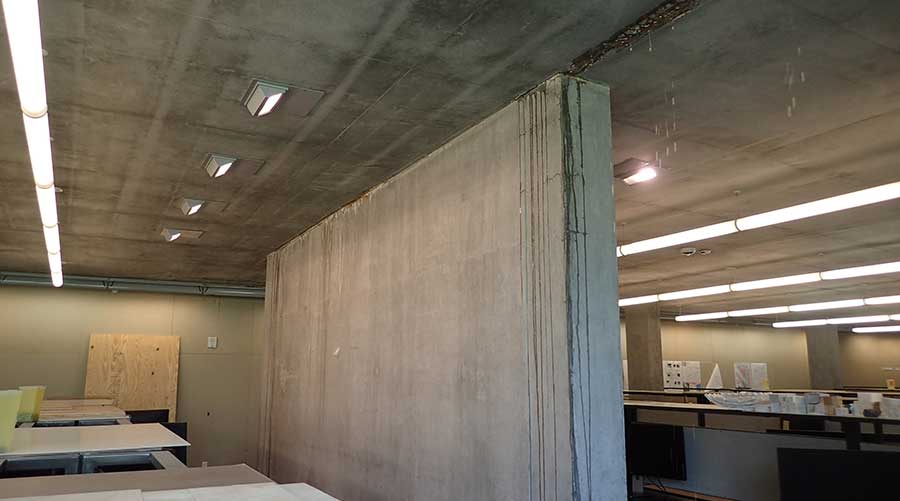
Foundation damage and differential settlement. Uneven settlement can crack slabs, distort structural frames, misalign doors and windows, and damage underground utilities. Because subsidence is often slow and hidden, the results can take time to manifest, and identifying the root cause of damage can be difficult.
Slope failures and retaining wall distress. Many facilities are constructed adjacent to slopes, drainage channels or cut-and-fill embankments. Subsidence can alter slope geometry over time, while added loads from development increase stresses on retaining structures. Saturated soils and inadequate drainage, as well as erosion along the slope, can further elevate failure risk.
Erosion and undermining. Uncontrolled runoff can strip protective soil cover, undermine foundations and expose utilities. Once erosion begins, it often accelerates, particularly in areas where subsidence has altered drainage patterns from the intended path.
Regulatory, liability and warranty considerations. From a risk management perspective, soil-related failures are especially problematic because they might not appear until years after construction is complete.
Most states have statutes of repose for construction defects, often ranging from 6 to 12 years. But claims related to negligent design, improper construction or failure to follow industry standards can still expose owners and contractors to significant liability.
To manage risk, owners and contractors must:
- adhere strictly to geotechnical recommendations, site-specific and development wide
- clearly document construction decisions and field changes
- implement recognized best management practices for erosion and drainage
- coordinate closely with design professionals when site conditions differ from assumptions
- provide third-party testing to ensure proper compaction and code conformance.
Meanwhile, facilities managers must understand that soil movement is an ongoing process requiring monitoring and maintenance, not a one-time construction issue. Managers need to address issues of soil movement and erosion early and often to minimize potential impacts.
Best practices
Owners looking for effective strategies for managing soil subsidence, slopes and erosion can start with these steps:
- Perform a comprehensive geotechnical investigation. A thorough geotechnical study is the foundation of risk mitigation. Investigations should evaluate soil stratigraphy and compressibility, groundwater conditions and seasonal fluctuations, the presence of expansive clays or collapsible soils, and historical land use and fill placement. Skipping or minimizing geotechnical work might reduce upfront costs but usually increases long-term risk.
- Design foundations for long-term performance. Foundation systems must account for both immediate loading and long-term soil behavior. Depending on conditions, this might include: deep foundations transferring loads to competent strata; mat or raft foundations to distribute loads evenly; soil improvement techniques such as lime treatment, grouting or geosynthetics; and removal and replacement of unsuitable soils. The goal is not to eliminate movement entirely but to control it within acceptable limits. This step should consider factors of widespread subsidence and not just localized long-term consolidation.
- Analyze slope stability under realistic conditions. Slope stability analysis should consider both short-term construction conditions and long-term operational scenarios. Key considerations include: global and local stability modeling; the effects of groundwater rise and transient rainfall; long-term subsidence-induced loading; and toe erosion and scour near waterways. When feasible, flatter slopes — 4:1 or gentler — provide greater stability and reduce erosion potential. Where space is limited, retaining structures must be designed with appropriate drainage and surcharge considerations.
- Manage surface water aggressively. Poor drainage is a leading contributor to slope failure and erosion. Best practices include: intercepting runoff at slope crests with berms or swales; conveying water through lined channels or closed systems; protecting outlets with energy dissipation measures; and avoiding irrigation near slopes, retaining walls and foundations. Facilities that rely on aging or undersized drainage infrastructure should prioritize upgrades as part of asset management planning. Landscaping with low water usage is highly encouraged.
- Consider flexible, reinforced slope systems. Traditional rigid concrete solutions may not perform well in areas experiencing settlement. Mechanically stabilized earth systems and reinforced vegetated slopes offer flexibility and resilience. These systems combine soil reinforcement with controlled drainage, allowing for minor settlement without structural failure. They are particularly effective along waterways, earthen embankments and transportation corridors.
- Implement erosion control during and after construction. Construction sites are most vulnerable before vegetation is established. Effective erosion control measures include: temporary erosion control blankets; hydroseeding and engineered soils; soil binders and tackifiers; native plantings with deep root systems; varietal seasonal plantings for climates with longer growing periods; and permanent outlet protection at discharge points. Post-construction maintenance is just as important. Failed vegetation, clogged drains and damaged protection measures must be addressed promptly.
The assumption that the ground beneath buildings is static no longer holds true in many parts of the country. Soil subsidence, slope instability and erosion are dynamic processes influenced by development, climate and resource use. By acknowledging that the ground is moving and reacting accordingly, today’s infrastructure can continue to perform safely and effectively for decades to come, even as the land beneath is ever-changing.
Zachary Henrichs, M.S., P.E., DFE, is the director of civil engineering with Knott Laboratory, a forensic engineering and visualization firm.
Related Topics: