 Photo credit: Cincinnati Open
Cincinnati Open Renovation Elevates Player Experience and Event Operations
Upgraded player amenities, continuous campus maintenance and operations-first planning position the Lindner Family Tennis Center for year-round success.
Key Takeaways:
- New locker rooms, recovery spaces, training areas and player dining demonstrate how athlete-focused amenities directly support a world-class tournament experience.
- Maintaining a clean, organized and vibrant campus throughout an event requires continuous coordination that is largely invisible to guests but essential to the brand.
- An operations-first design process helps facilities create attractive, high-performing spaces that serve fans, athletes, staff, media, vendors and sponsors alike.
The renovation also significantly upgraded player-facing areas. This highlights a broader principle: fans may be the most visible users, but players, staff, media, vendors and sponsors all rely on the facility in different ways.
“The players have seen their facilities significantly expanded and upgraded,” observes Dell. “The locker rooms, lounges, recovery areas, warm-up and gym spaces, and the player dining room were all brand new in 2025 and designed with hospitality in mind.”
While those spaces may be out of public view, they are central to the success of a world-class tournament. For elite athletes and their teams, recovery, training, dining and private support areas affect the overall event experience.
Player dining was a particular improvement.
“The food experience was exceptionally well received, with a new, robust kitchen allowing our culinary team to offer a varied menu for the players and their support teams,” says Dell. “Whether a player is preparing for a match or relaxing after training, we wanted them to feel comfortable and at home.”
Keeping the campus event-ready
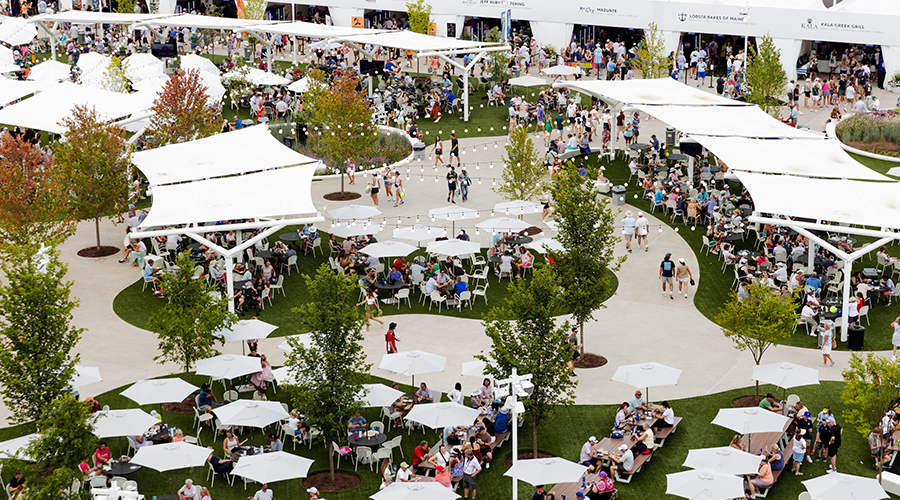
A clean and vibrant site is part of the Cincinnati Open brand, Dell says.
“We are very excited to host the number of people we do on site every day,” he says. “But large crowds can also create challenges. A clean and vibrant site is a hallmark of the Cincinnati Open brand.”
Large crowds create wear. Trash accumulates. Landscaped areas need attention. High-traffic zones require constant inspection. The work must happen without getting in the way of the event itself.
“We spend a lot of time planning to efficiently keep the site clean and organized without interrupting the overall experience,” adds Dell.
The best maintenance work often goes unnoticed. Fans see a clean campus, not the coordination behind it. They see fresh landscaping, not the early-morning watering and repairs.
“You never know who is coming to the tournament for the first time, so it is important to keep the site looking its best on the last day, as it is from day one,” Dell says.
Event readiness is not a one-time checklist completed before gates open; it is a continuous operating discipline that runs from pre-event preparation through the final guest departures. For Dell and his team, the work continues year-round as the site is now also home to the Cincinnati Open Sporting Club, which opened in March 2026. The Sporting Club offers tennis, pickleball and padel memberships, a Junior Academy, a public restaurant, flexible event space and golf and tennis shops, keeping the campus active well beyond the tournament.
Lessons for other facilities
The Cincinnati Open project elevated the campus’ look and feel, but it also strengthened the systems that allow the venue to operate under pressure. For Dell, any successful renovation starts with a deep understanding of operations.
“If you know how a site will function, you can be intentional with its layout,” he says. “With that foundation, you can begin the design process with confidence.”
The reimagined Lindner Family Tennis Center shows that world-class fan and player experiences depend on more than premium spaces and new amenities. As Dell points out, it took “intentionality” and “relentless attention to detail” to design a site that is aesthetically beautiful while elevating the fan and player experience. For facility teams, that same attention to detail continues every day the venue is open, from the first match to the final point.
Joel Williams is a freelance writer based in Frankfort, Illinois.
Related Topics: