ADA and Accessibility: Spotlight on Parking
From designated spaces to snow removal and surface maintenance, parking structures play a critical role in ADA compliance and the visitor experience.
By Joan Stein, Contributing Writer
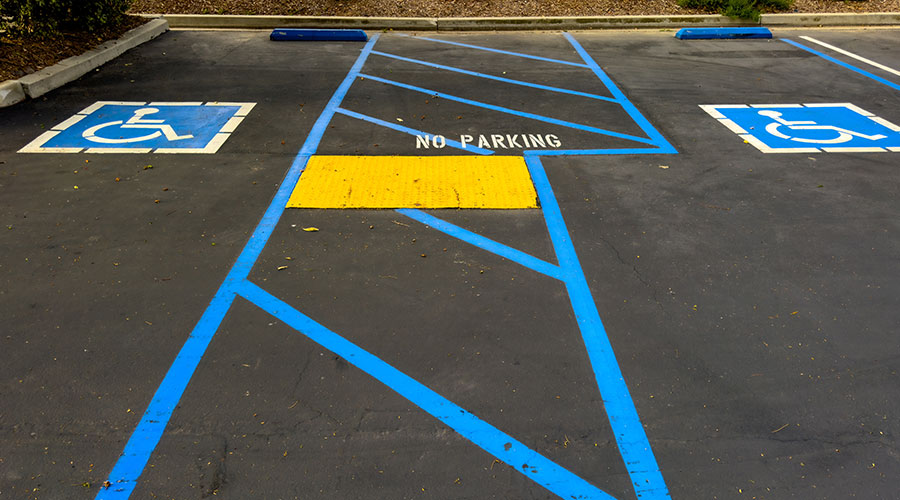
Many design professionals for institutional and commercial facilities concentrate almost exclusively on the building when planning new construction or renovations and largely ignore parking structures. Their excuse often is that the accessibility guidelines in the Americans with Disabilities Act (ADA) only cover the facility itself.
The 2010 ADA Standards for Accessible Design begin with the No. 1 priority under ADA – getting into the building. This requirement includes access from public transit stops, public sidewalks, parking lots and parking garages.
The basic requirements for designated accessible parking are separated into:
- scope: How many spots are required?
- technical: slope, width, signage, etc.
Scoping issues are based on a chart in Chapter 2 – 208.2. Further clarifications for hospitals, rehabilitation facilities and outpatient physical therapy are also provided. Many of these facilities apply to garages that connect to the facility via elevators or walkways.
Parking structures also have additional scoping and technical requirements:
- If a facility has more than one parking structure , each location must provide the required number of designated van and car spaces per location.
- Parking structures must provide a minimum of 98 inches of vertical clearance for routes to the designated spaces and the spaces and access aisles themselves.
The vertical clearance cannot be obstructed by hanging pipes, signs or anything that intrudes on the clearance.
The remaining requirements are the same for outdoor surface parking and structures. It is important to remember that a great number of ADA complaints are filed in federal courts across the United States based solely on barriers found in parking structures. Maintaining the accessible features of a parking lot or structure is a sound method to avoid ADA complaints.
According to the scoping requirements, spaces must be on the shortest accessible route to the accessible entrance.
If managers pay attention to their parking structures, they will score points with visitors and will frustrate the groups that do drive-by complaints.
The specifics of the requirements can be found in the 2010 ADA Standards for Accessible Design, Chapter 208 and Chapter 502. Some important things to manage and watch for include:
- Perform due diligence in outdoor surface lots. Weather changes create difficulties for individuals with disabilities and seniors. Make sure that walking surfaces and accessible routes are firm, stable and slip resistant. This means filling horizontal cracks and gaps and vertical changes in level. These often occur between pads and where a parking lot meets the curb ramp or sidewalk. When planning a resurfacing of a parking lot or sidewalk, make sure contractors coordinate their work so there is no gap between the two surfaces.
- When it snows, direct staff or contractors to plow the entire designated accessible parking space and the access aisle, and make sure that operators do not plow snow into those areas or curb ramps.
- All designated parking spaces and access aisles must be firm, stable and slip resistant. Do not place a designated space or access aisle where a drain is located anywhere within it.
Joan Stein is the president of Stein Consulting, which provides assistance related to ADA compliance efforts. Her firm provides customized programs and presentations at conferences, including customer service training for staff. Stein will be presenting at NFMT West on Nov. 3-4 in Las Vegas on, “So You Think the ADA Went Away?” It didn’t. To learn more about NFMT West, visit our website.
Related Topics: