Solar Water Heaters Help Minimize a Facility's Electrical-Power Generation
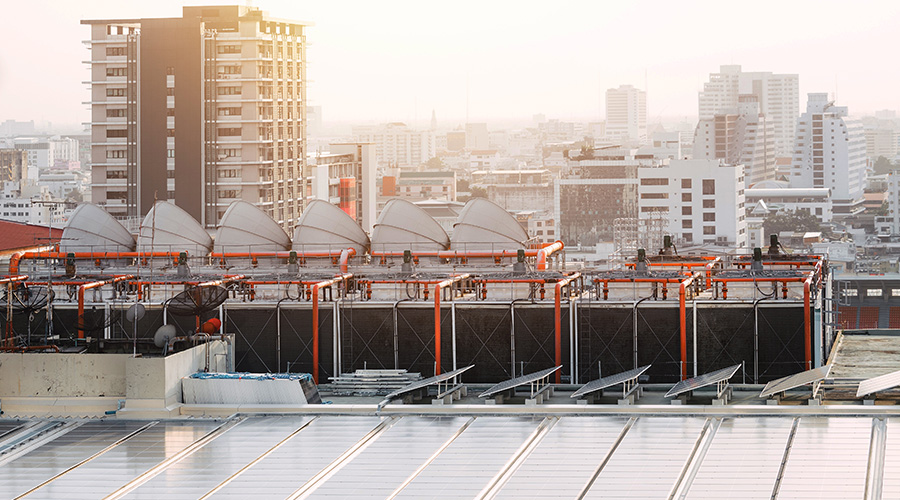
These water heaters can play a role in reducing a building’s electrical power generation. According to the Solar Rating and Certification Corp. — www.solar-rating.org — a small solar-water-heater panel of 64 square feet delivers the equivalent of 4 kilowatts of electrical thermal power. A photovoltaic panel would have to contain 400 square feet of panels to generate the same amount of power.
Several types of solar water heating systems are available. The simplest, most direct systems route water through panels typically located on the roof. The sun heats the water, which then travels to a storage tank for later use.
While this system is simple, its limitations include technicians having to drain it during the winter to prevent freezing. From an operations perspective, managers should refrain from using this type of system in areas where the panels are subject to freezing.
A second type of heater uses a glycol mixture that flows through the solar panel. The sun heats the mixture, which then travels to a heat exchanger, where the energy transfers to the potable domestic water and into a tank for later use. These systems require changing the glycol mix annually or semi-annually.
Solar systems require a conventional water-heater system as backup when solar generation is not available.
Related Topics: