SPONSORED
CFFA – Vinyl Roofing Division - Branded Feature
How Reflective PVC (Vinyl) Roofing Can Help Manage Building Heat and Cooling Demand
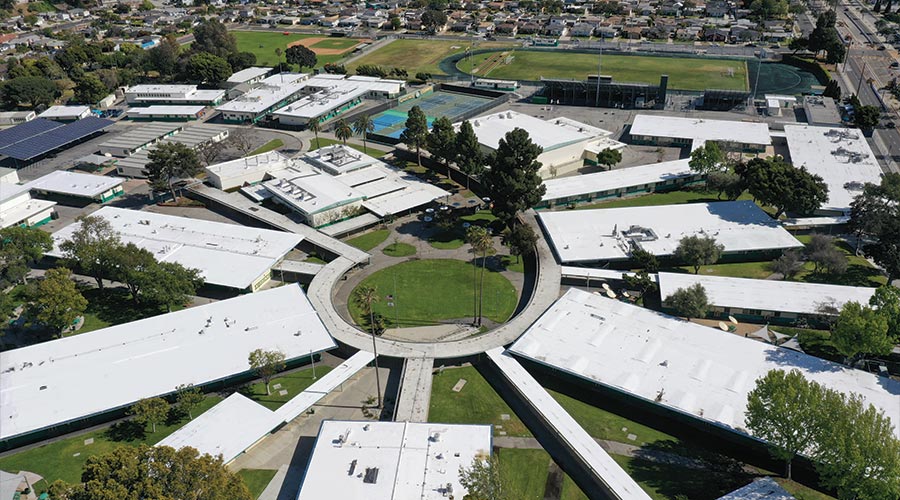
Photo courtesy of Sika, member of the Coated Fabrics and Film Association
Extreme summertime heat creates challenges that extend well beyond comfort. It can increase heat-related illnesses, raise indoor temperatures, place additional strain on HVAC systems, and contribute to peak electrical demand. The Centers for Disease Control and Prevention’s Heat & Health Tracker monitors heat-related health impacts across the United States, underscoring the growing importance of managing extreme heat.
For building owners and facility managers, the challenge is straightforward: maintain comfortable indoor conditions while managing energy use and operating costs. The roof is one part of the building envelope that can directly influence how much solar heat a building absorbs.
Bill Bellico, a two-decade roofing industry veteran who serves as vice president of marketing and inside sales for Sika Corporation’s roofing division and marketing chair of the Coated Fabrics & Film Association’s Vinyl Roofing Division, says reflective roofing can play a role in managing that heat gain.
“A cool PVC roof is designed to absorb less of the sun’s energy than a conventional dark roof, and release more of the heat it does absorb,” said Bellico. “By reducing the amount of solar heat transferred through the roof, a cool PVC roof can help reduce building cooling loads and the amount of work required from air-conditioning equipment.”
For commercial buildings, that can have implications beyond occupant comfort and annual energy consumption. During periods of extreme heat, when air-conditioning systems are working hardest, reducing cooling loads can also help reduce peak electrical demand.
What makes a roof “cool”?
Two properties are particularly important when evaluating cool-roof performance: solar reflectance and thermal emittance.
Solar reflectance, sometimes referred to as albedo, is the ability of a surface to reflect solar energy rather than absorb it. Thermal emittance describes how effectively a surface releases the heat it has absorbed.
In general, higher solar reflectance and thermal emittance help a roof remain cooler when exposed to sunlight. The U.S. Environmental Protection Agency identifies solar reflectance as an important characteristic of cool roofs, while also recognizing the role of thermal emittance, particularly in warm, sunny climates.
The underlying building-science principle is relatively simple: reflect more of the sun’s energy away, absorb less heat, and reduce the amount of heat that must be managed by the building’s cooling system.
Bellico notes that a white PVC roof can achieve solar reflectance of 80% or more and thermal emittance of 70% or higher, depending on the specific product and its measured properties. By comparison, darker roofing surfaces generally absorb substantially more solar energy.
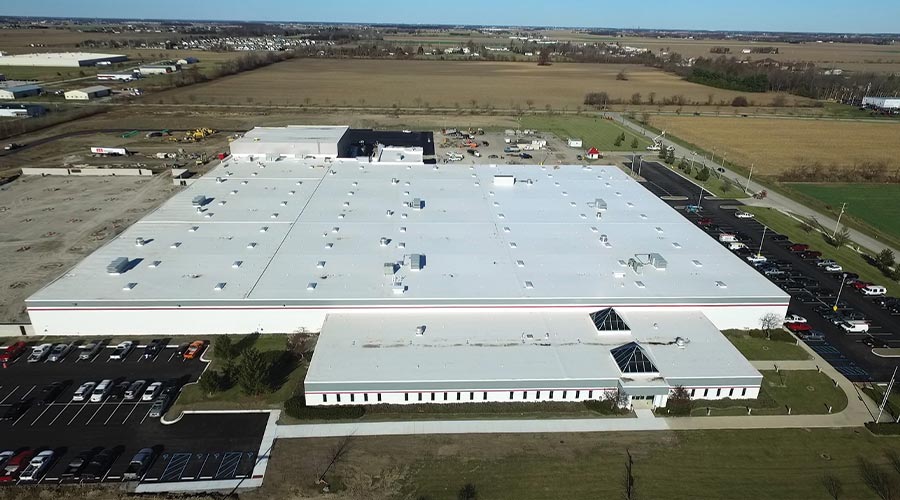
Photo courtesy of Duro-Last, member of the Coated Fabrics and Film Association
The result is a roof surface that can remain cooler under direct sunlight, reducing the amount of solar heat that enters the building through the roof assembly.
The performance of an individual roofing product, however, depends on more than the membrane itself. Roof construction, insulation, and building design all influence how much a reflective roof can affect overall building performance. For that reason, a cool roof is best understood as part of the building envelope rather than as an isolated material characteristic.
For building operators, the implications extend beyond energy performance. Maintaining reasonable indoor temperatures is an important part of protecting occupant health and comfort during extreme heat. Cool roofs can reduce roof and indoor temperatures and, in buildings without air conditioning or where cooling capacity is limited, may provide an additional passive measure for managing indoor heat. The extent of that benefit will vary based on the building and its operating conditions.
Performance across climates
The value of a reflective roof is most apparent during hot weather, when solar heat gain can increase the demand placed on air-conditioning systems. But the effects of roof reflectance are not identical in every climate.
In warm climates, reducing solar heat gain can directly reduce a building’s cooling load. This can be especially critical during periods of extreme heat, when cooling systems may already be operating near their highest levels and electrical demand is elevated.
In colder climates, however, reflecting solar heat can reduce the amount of solar energy available to the building during heating periods. As a result, a reflective roof can increase heating energy use under some conditions, but that does not tell the whole story.
The balance between summer cooling savings and winter heating effects varies by climate. In areas with hot summers, the reduction in cooling demand can be particularly valuable, while colder climates may see a greater tradeoff between cooling and heating energy use. For that reason, the potential benefits of a reflective roof should be considered in relation to the building’s location and seasonal energy needs.
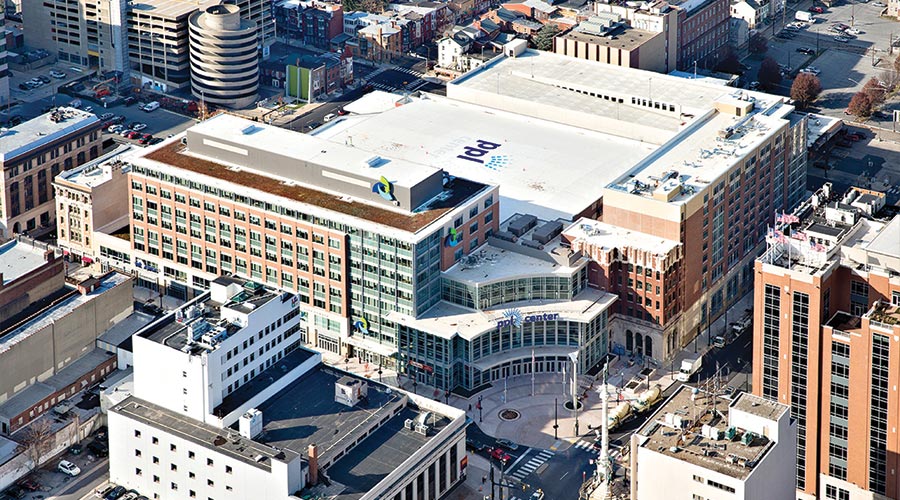
Photo courtesy of Flex Membrane International, member of the Coated Fabrics and Film Association
“Several factors can limit or reduce the so-called ‘heating penalty’ of cool roofs in winter,” said Bellico. “The sun’s angle in winter is lower, and days are shorter than in summer, reducing the effect of cool roofs on wintertime energy use. Effective insulation and energy-efficient design can also reduce impacts.”
In other words, the question for facility managers is not simply whether a roof is reflective. It is how that reflectance interacts with the building, its climate, and its operating conditions.
What the research shows
A 2024 technical report from Oak Ridge National Laboratory (ORNL) examined how solar-reflective roofs and exterior walls could affect energy use, peak electrical demand, and operating costs. The study used whole-building EnergyPlus simulations of prototype residential and commercial buildings in three climate zones represented by Houston, Baltimore, and Minneapolis.
Researchers varied roof and wall solar reflectance as well as insulation levels to evaluate how those changes affected energy consumption and peak demand. The study found that higher-reflectance roofs and exterior walls reduce cooling energy consumption, while also increasing heating energy consumption in some scenarios. The effects were generally more pronounced in building envelopes with lower insulation levels.
For the modeled commercial buildings, the highest roof and exterior-wall solar-reflectance configurations reduced cooling energy consumption by as much as 17%. The study also found that the highest-reflectance configurations produced the greatest peak electrical-load reductions across the three climates examined.
The findings are particularly relevant to building operators because peak electrical demand can have a direct financial impact. Demand charges vary by utility and location, but reducing the amount of electricity required during periods of highest demand can provide an additional operating benefit beyond reductions in total energy consumption.
The ORNL study also demonstrates why climate and building characteristics matter. Its modeled commercial buildings showed the greatest overall cost savings in Houston, while some Minneapolis scenarios produced cost increases when the additional heating energy associated with reflective surfaces outweighed the cooling and demand savings.
The results should not be interpreted as a guarantee of a particular energy or cost savings for every building. Rather, they demonstrate the potential effect of solar reflectance under specified modeled conditions and reinforce the importance of evaluating the complete building envelope.
The roof matters
While the ORNL research examined both roofs and exterior walls, its findings also highlight the role of the commercial roof.
In the commercial building simulations, the effect of roof solar reflectance was similar to or greater than that of exterior-wall reflectance in some configurations. The researchers attributed this in part to the greater amount of roof surface area relative to exterior wall area and the lower insulation levels modeled for commercial roofs compared with residential attic assemblies.
For a large commercial building, the roof represents a substantial surface that is continuously exposed to the sun. Selecting a roofing system with strong solar-reflective properties can therefore be one component of a broader strategy for managing building heat.
Reflective roofing also has an operational advantage: it is incorporated directly into the building envelope. Unlike strategies that depend on changes in occupant behavior or daily operations, the roof’s reflective characteristics work continuously as part of the building system.
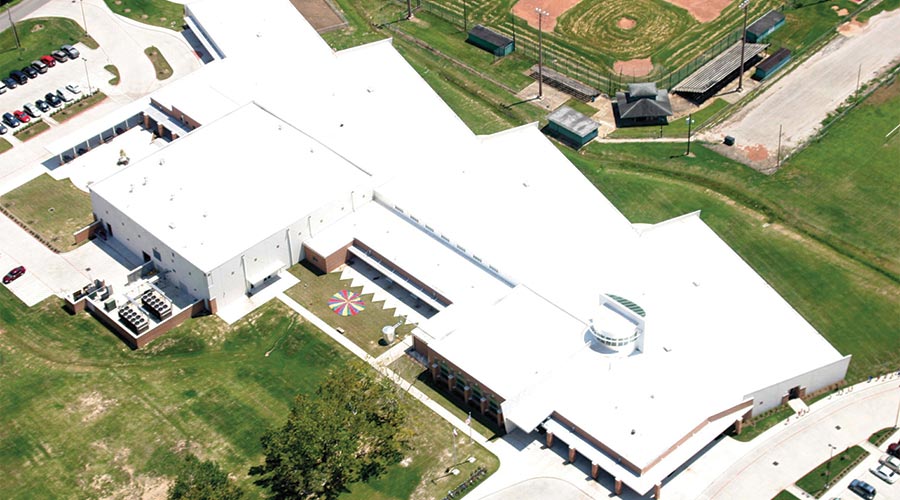
Photo courtesy of Flex Membrane International, member of the Coated Fabrics and Film Association
Reflective PVC roofing membranes can provide high solar reflectance and measurable thermal properties. Because solar reflectance and thermal emittance can be measured, building owners and designers can evaluate roofing products based on objective performance characteristics rather than relying solely on appearance or general claims about whether a material is “cool.”
“Buildings cannot control the weather, but they can be designed and maintained to respond to it more effectively,” said Bellico. “A reflective roof is one way to reduce the amount of solar heat a building absorbs. That can help reduce the cooling burden on HVAC systems and potentially reduce peak electrical demand.”
As extreme heat becomes a more important consideration for building operations, the roof deserves to be considered not only in terms of durability and weather protection, but also as one part of the building’s overall strategy for managing heat, energy demand, and occupant comfort. For facility managers, measures that reduce heat gain can support both operational resilience and more comfortable indoor environments when outdoor temperatures reach dangerous levels.