Facilities managers can overcome reactive building operations by moving toward centralized, integrated platforms that enable real-time monitoring and coordination.
The key to unlocking significant energy savings and performance gains is for facilities managers to prioritize operational excellence before turning to costly capital upgrades.
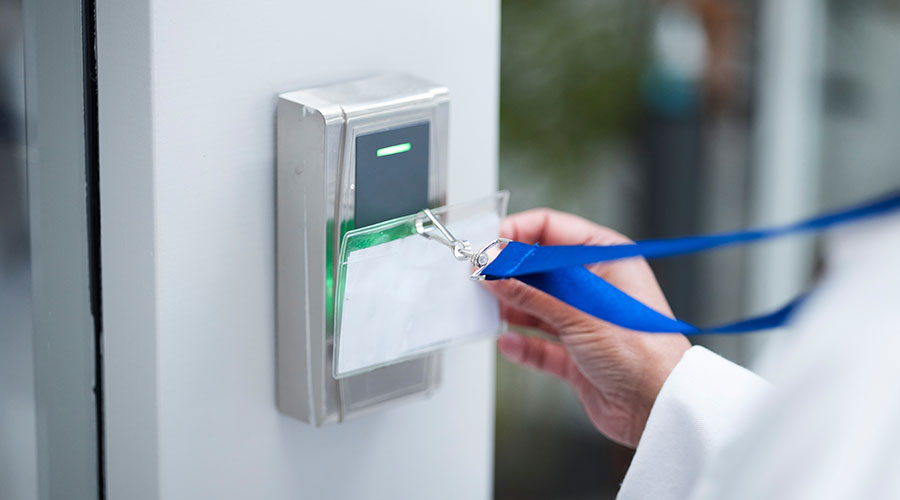
It is hard to believe there was a time when people left their doors open and unlocked at all times. Doing this now — especially for a business — is practically unheard of, and more facilities executives now rely on access control systems to monitor the movements of occupants and visitors in institutional and commercial facilities.
“There’s a couple of reasons that access control is important,” says Mike Gips, managing director of the enterprise security risk management practice at Kroll, a financial risk and advisory firm. “For one, it’s to keep yourself safe. Especially at the corporate, organizational or office level, you don’t want to let just anyone in. You’ve got to make sure you have a duty to your employees, to your customers, to anyone who’s there for their well-being, to keep them safe. There’s a moral, ethical, legal responsibility. And also, it just makes sense.”
In recent years, access control duties have been thrust upon facility managers, with some not realizing what that entails. Access control has many layers that go beyond keeping building occupants safe.
For example, a front desk worker might allow someone into the building and be checking proof of identification during a busy time of day when someone sneaks in unnoticed. Now, an unaccounted-for person is in the building, and no one knows their intent. This scenario can wreak havoc on building operations and potentially disrupt the bottom line.
“You don’t have to have 100 layers of access control for everything, but just slapping one there and saying ‘Okay’ in one place and believe that you’re good is rarely sufficient,” Gips says. “You need to get people to buy into your approach that security is serious. It’s for the employee’s own good, it’s for their safety, it’s for their well-being, it’s for the organization’s own good. You need to listen to them and say, ‘Hey, we want security to be a benefit, not a hindrance.’”
When managers unpeel the layers of access control, they also can find crucial data that can help them determine any pain points in their operations and improve efficiency. For example, a room that is not regularly accessed can be kept at a lower temperature, and lights can be controlled by motion sensors. While these seem like small fixes, they could save money over time.
Access control systems can even determine the most used spaces, enabling managers to set up technology, such as a room reservation app, that can eliminate potential confusion and competition for those rooms.
Effective access control also can generate revenue by helping managers identify areas with the most foot traffic that are convenient for vending machines.
The goal of access control systems is to let building occupants know that they are safe and that they can focus on their work.
“If you’re a facility manager for a building and you have tenants, you are responsible for everything,” he says. “You have to work with the clients to protect the client spaces. There’s lots of nuances and insurance out there, and it’s a difficult job, but it’s an important job.”
This conversation first appeared in “Access Control Strategies Every Facility Manager Needs.” To listen to the full podcast episode, please click here.
Mackenna Moralez is the managing editor of the facilities market and the host of the Facilities in Focus podcast.