How Access Control Systems Protect Facilities
When selecting access control systems, building owners must consider real-world issues and not just floor plans.
Access control systems help manage the way people enter, move through and exit institutional and commercial facilities. Before building owners decide which systems work best in their facilities, they must understand real-world movement patterns and not just floor plans.
Understanding uses and users
The first step in upgrading access control systems is conducting a thorough physical security assessment, says Timothy Dimoff, president and chief executive officer of SACS Consulting and Investigative Services, Inc.
The process can help owners understand the way visitors and occupants physically get in and out of their buildings.
“Secondly, the big question is can anyone walk off your parking lot, park and walk, and get into your building without hindrance?” He says. “Can they get past the entrance areas? Can they get to the inner areas of your building? If the answer is yes, then you have a major security breach.”
In most facilities, visitors should not have direct access to interior areas, as in most instances, that can create a security breach. To prevent such breeches, owners can turn to such technologies and strategies, as cameras, intercoms, buzz-in systems, secured entry zones and person traps. A person trap is a controlled entry area designed to prevent unauthorized individuals from moving deeper into a building without verification.
The flow of visitors through a building is frequently a factor that is underestimated during system planning, says Matt Sailor, chief executive officer of IC Realtime. Visitor management is a subset of access control, and it focuses on temporary, non-regular entrants rather than employees or tenants, essentially the “front door” side of access control.
“Visitor management is usually an afterthought, yet it is where most bottlenecks and security gaps occur,” he says. Systems that support pre-registration, temporary credentials and video-verified access events, which are a security workflow that act as an extra verification layer to prevent unauthorized access, can help facilities maintain visibility without slowing operations.
Another key aspect to controlling access to the building is matching the level of access to the occupants. Dimoff breaks those groups down into two: regular occupants, who are considered employees, tenants and staff; and visitors, such as vendors, guests and salespeople.
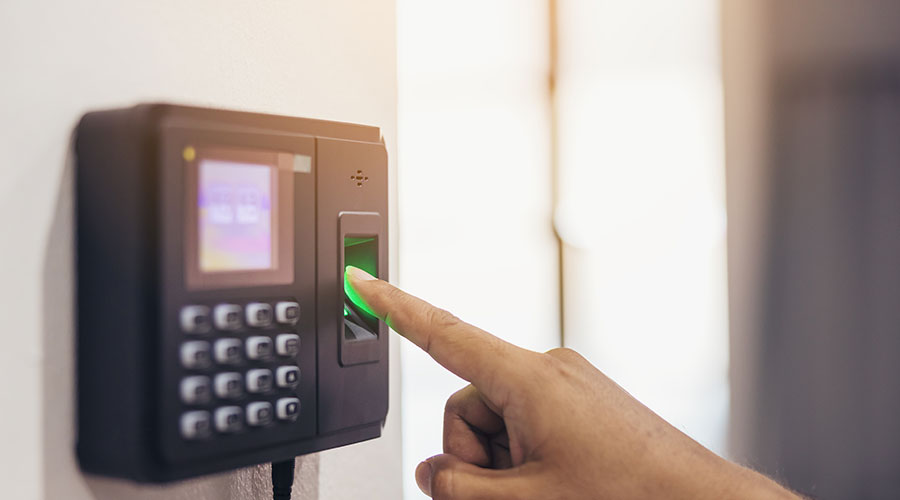
For regular occupants, Dimoff recommends using electronic credentials such as cards, fobs and biometrics. Meanwhile, non-regular visitors should be required to use controlled entry points and be verified before access is granted.
“When unauthorized individuals are contemplating to do something, it is those two types of access control that deters them from coming to that location,” he says. “No matter the building type – it deters them from their aggressive and violent behavior from taking place at that facility.”
Beyond managing people, owners must also consider access to valuable or sensitive assets in their facilities. This issue often comes into play in office buildings that display artwork in lobbies or tenant spaces, but the principles apply broadly to any high-value assets, says Bill Anderson, founder and partner at Art Guard.
“In addition to controlling who can enter certain floors or offices, facilities should pay close attention to loading areas and back-of-house workflows,” Anderson says.
Strict access protocols and camera coverage in these zones can help prevent theft and unauthorized movement.
Integrating access control with other security measures, such as sensors and environmental monitoring, is critical, Anderson says. Motion sensors, as well as temperature and humidity sensors, can interface with access control platforms to protect sensitive assets while providing building security teams with additional situational awareness.
Jeff Wardon, Jr., is the assistant editor of the facilities market.
Related Topics: