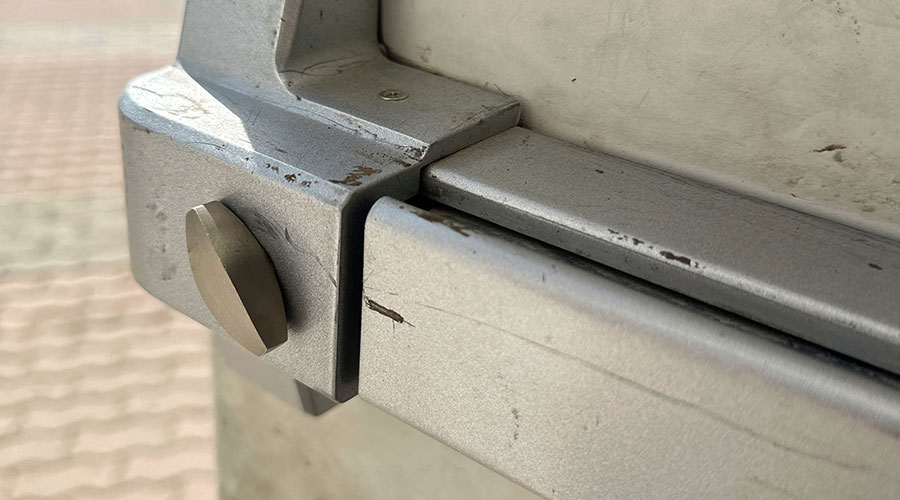
Designing Panic Systems That Work Under Pressure
Modern panic alarms and locks offer more than emergency response — they support daily operations, simplify compliance and strengthen a facility’s overall safety posture.
Ease of use is one of the most important benefits of today’s panic systems.
“This ease of use translates into peace of mind for employees, particularly lone workers and staff in public-facing roles," says Michael Gips, managing director, enterprise security risk management at Kroll. “Operationally, these systems provide value beyond emergencies through incident logging, reporting and data visibility, enabling facilities and security teams to analyze trends, identify gaps, and continuously improve response protocols.”
In many jurisdictions, panic alarms are no longer optional. Alyssa’s Law, for example, mandates silent panic alarms in K-12 schools to reduce emergency response times.
“Several states, including Florida and New Jersey, have also passed their own versions of this legislation, and similar requirements are being considered elsewhere,” Gips says. “Even where not mandated, panic devices are increasingly encouraged by regulators and insurers as a best practice.”
In James Murphy's, chief operations officer and partner, Corporate Security Advisors, experience, the value of panic locks extends well beyond emergency response. He says they help simplify daily operations by controlling access, segmenting risk zones and enabling rapid, automating lockdown procedures.
“Just as important, they reduce liability by demonstrating a proactive duty of care,” Murphy says. “In today’s climate, having reliable, tested panic infrastructure is essential not just for life safety but for executive accountability and regulatory defense.”
Integrated panic devices also reduce complexity in code compliance. As Murphy explains, when implemented properly, they allow facilities to meet both egress and lockdown requirements. Many systems now come with audit trails, diagnostics and reporting features that aid inspection readiness.
“When you embed these tools into a broader governance model, where you’ve mapped threats, defined decision trees, and trained personnel –the devices shift from a compliance box-check to a cornerstone of your safety posture,” Murphy says.
Key considerations
There are key considerations that maintenance and grounds departments need to make when evaluating, installing and maintaining panic systems.
As Gips explains, these teams must first involve the security department, if one exists. Evaluation should begin with a site assessment that considers coverage areas, accessibility, environmental exposure, power requirements and network reliability.
“Ongoing maintenance is essential,” Gips adds. “Devices require routine testing, battery replacement, firmware updates and physical inspections, particularly in outdoor or high-use locations. Facilities teams should also establish clear ownership for testing schedules, documentation and coordination with IT and security. Because many systems rely on cloud platforms and networks, coordination with IT is critical to ensure cybersecurity, system resilience and redundancy. Grounds teams must also account for weather resistance, vandalism risk and visibility without creating confusion or clutter.”
For Murphy, three things come to mind as it relates to the key considerations surrounding panic systems.
- Interoperability: Ensure the panic hardware aligns with existing access control, alarm and emergency communication systems.
- Testing and training: Don’t let hardware become stagnant. Ensure teams know how and when to use it, and that it functions as designed.
- Lifecycle planning: Build panic systems into your capital and operational expenditure budgets.
“Like any intelligent device, they require periodic upgrades and shouldn’t be treated as static installations,” Murphy says. “One of the biggest missteps is treating panic hardware as a one-off procurement decision rather than part of a broader security architecture. We’ve seen many cases where the wrong hardware is installed in the wrong place. This results in devices being deployed in locations that do not align with realistic threat scenarios or cannot be used effectively under stress. Another frequent mistake is poor documentation and post-installation oversight. If you don’t document placement, rationale, and maintenance cycles, you lose visibility and control over your risk posture.”
Most of the panic system deployment mistakes Craig Gundry, vice president of special projects at Critical Intervention Services, has observed relates to hardware selection with access control systems, deficient training for employees, and missed opportunities for greater leverage of the systems clients are already using.
“Many organizations employing access control systems have installed electromagnetic locks in their facility. I strongly advise against using mag locks when active shooter violence is a concern due to NFPA and IBC requirements for fail-safe operation during fire alarms and egress complications often related to push-to-exit switches,” Gundry says. “A less common problem is when most indoor rooms are equipped with access-controlled locks that are operated by most employee or student access badges. In these situations, it is impractical and dangerous to automatically disable badge access to those doors when an event is in progress.”
With regard to missed opportunities, many facilities Gundry assesses have solid infrastructure for integrating access control and emergency notification functions and thus simplifying multiple actions with one button-press.
“But very rarely do I see these systems integrated properly and thus facility personnel are still required to complete multiple tasks to enact all critical lockdown and notification actions,” Gundry says.
Expected continuous evolution
Industry experts agree that panic alarms and lockdown technology will continue to evolve from optional security tools into foundational elements of today’s facilities. Integration with access control, video surveillance, mass notification and building management systems will deepen, enabling faster and more intelligent responses.
Murphy believes these tools will become more intelligent, integrated and responsive. Expect panic devices to evolve into full situational awareness nodes, connected to AI-driven monitoring, real-time alerting and automated threat response protocols.
“As C-suite accountability for physical risk increases, facilities will be expected to demonstrate not just ‘we have them,’ but ‘we use them intelligently,’” Murphy says. “That’s where we see the future: intelligent physical security that aligns with enterprise governance, not just compliance.”
As new events occur that prompt concern by different types of organizations, Gundry expects we’ll continue to see more facilities adopting these types of systems and hardware.
“Additionally, as pricing becomes more competitive and the reliability of technology improves, I also expect we’ll see more facilities adopting the use of enhanced threat detection systems such as gunshot detection technology and weapons recognition systems that work with video surveillance cameras,” he says.
Maura Keller is a freelance writer based in Plymouth, Minnesota.
Related Topics: