Eliminating E-Waste for Good Causes
Businesses help facilities properly recycle unwanted electronics.
By Annie Celentani, Contributing Writer
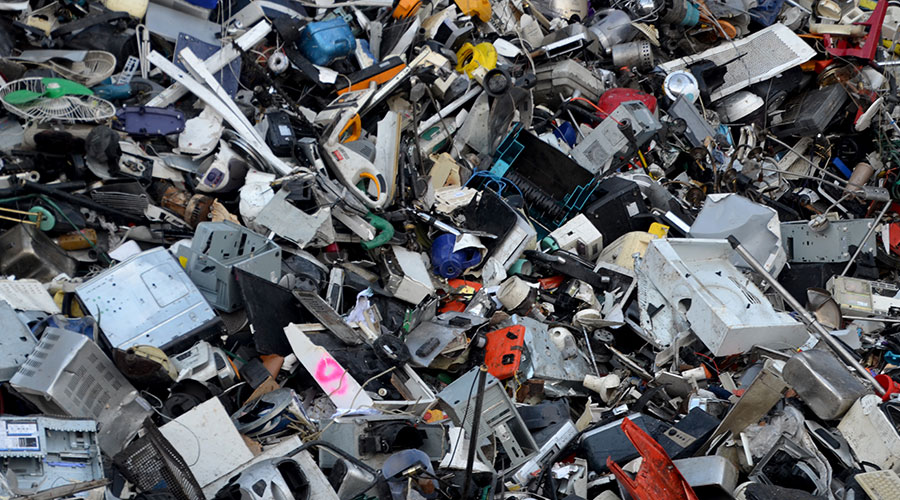
Facility managers face difficult decisions about where to send large volumes of e-waste during equipment upgrades. While recycling is appealing, many recycling companies charge pickup fees plus 20-40 cents per pound of e-waste and don’t have secure or truly green services. Thus, masses of electronics lay dormant or enter landfills each year with plenty of life left in them.
Digital Bridge, PCs for People, and Human-I-T are three of the top nonprofit e-waste management organizations in the country. They’re saving unwanted electronics destined for landfills and closing the digital divide by recycling, refurbishing, and repurposing technology to serve people in need. Each offers certified, secure, and free services including electronics pickup, data destruction or sanitation, and fully tracked recycling information for businesses.
Wasted Tech, Missed Opportunities
Upgrading to the latest devices and systems is the norm - everyone wants new, fast, and convenient. Meanwhile, less than 20 percent of electronics in the United States are recycled. E-waste makes up 70 percent of our toxic waste, and precious metals sit in storage rooms or landfills when they could be re-used for increased energy efficiency.
Improperly discarded e-waste isn’t just harmful to the environment. Dumping old electronics without assessing their potential deprives people of opportunities to obtain technology at low or no cost. While one neighborhood thrives with its residents working from home or engaging in online activities like job searching, online shopping, homework or healthcare management, others just a few minutes down the road navigate modern society without computers or an internet connection. This is called the digital divide, and it’s creating massive disparities between Americans.
Organizations On a Mission
Digital Bridge, PCs for People and Human-I-T spare the environment while closing the digital divide with e-waste management done right. They don’t cut corners, and they make donating electronics easy. Digital Bridge has saved roughly 20-25 million pounds of e-waste from landfills since its founding in 2010, and PCs for People sees about 8 million pounds of e-waste annually. Human-I-T has rerouted over 2.2 million pounds of e-waste from landfills year to date. All three organizations help their local economies by creating jobs and providing resources for a brighter future.
Social and Economic Impact
“The divide here in the USA is bigger than in third world countries,” says Michael Regione, Vice President of Sales and Marketing at Digital Bridge in Milwaukee. “Kids are getting lost in the system. They’ll get a free phone…but you’re not gonna write a paper on your phone.” Digital Bridge’s outreach spans low-income students and families to veterans and domestic abuse survivors, getting vital technology to people who can’t afford retail prices. There is currently an entire section of their warehouse dedicated to laptops heading back into the community courtesy of a grant through the United Way.
PCs for People out of St. Paul transforms local economies and fuels opportunities, too. They’ve placed nearly half a million computers with qualifying recipients. Casey Sorensen, CEO, says, “We’ve found that income goes up by 15% in the first year after you get a computer and internet from us. For every 5,000 homes, that’s about an 8 million dollar increase in income.” PCs for People has a portal where over 2,500 nonprofits obtain devices for their missions. The built-in hotspots on the laptops they distribute make it possible for “someone who is housing unstable (to maintain) connectivity through transition.”
Tori Lowe is Head of Technology Donations at Human-I-T, based in L.A. with additional locations in Detroit. One of their recent victories was providing a Chromebook to a person experiencing home loss and living in a temporary shelter after the California wildfires. “Having secure access to a device meant they could safely handle critical personal and business matters without having to make risky trips to the public library.” Lowe adds, “What might look like “old equipment” to a business can quickly become a life-changing tool for someone rebuilding after a crisis.”
“True digital equity happens when people have the tools, the internet, the knowledge, and the confidence to participate fully in today’s digital world,” says Lowe. To facilitate maximum benefit to the recipients of their refurbished devices, the three organizations provide digital literacy education, tech support, and resources for low-cost internet.
E-Waste Ethics
So, what happens to electronics once they arrive at these organizations? How can companies trust that their items are being processed as promised?
At Digital Bridge, an impressive count of Gaylord bins filled with neatly organized and meticulously accounted for electronics await the next steps on their journey to be recycled, refurbished, or resold. Even the most insignificant piece of equipment has gone through ‘The Cage,’ the intake area where NAID AAA-certified personnel (National Association of Information Destruction) with exclusive authorized access handle data sanitation and destruction according to rigid protocols.
PCs for People and Human-I-T exercise similar rigorous practices, both also holding NAID AAA certification. “(NAID AAA certification) means every step of our data destruction process—whether digital wiping or physical shredding—is independently audited and verified to meet strict security protocols. For facility managers, this provides peace of mind: sensitive company and customer information is handled with the same level of protection you’d expect from a top-tier data security provider,” says Lowe. “Choosing a NAID AAA-certified partner ensures compliance, eliminates risk, and demonstrates due diligence in safeguarding data.”
Immense trust goes into choosing a new home for old devices in regards to environmental stewardship and social responsibility, too. Regione, who details that Digital Bridge is e-Steward certified, states, “Within 30 days, we provide a donation receipt and also a ITAD (IT asset disposition) report, the weight of it, was it destroyed (servers, hard drives)... it shows all the weight you saved from going into a landfill, (and) a list of all your equipment, serial numbers, hard drives- everything.”
PCs for People and Human-I-T hold R2 (Responsible Recycling) certifications. “We have to know where everything goes and gets broken down,” Sorensen says. “We only work with certified buyers, and through time in the industry we’ve learned who the major buyers are and who we can trust.”
Sorensen explains that being a responsible e-waste management partner involves handling materials the right way, even where there’s no money in it. “A lot of times we have to pay to get rid of hard plastics. So while someone else might landfill it, we’re never gonna throw it out- we’re gonna pay to get rid of it (by having hard plastics turned into plastic pellets).”
Regione and Sorensen both touched on hazardous materials. Regione wants people to know the importance of bringing devices like computer screens and big tube TVs to a place like Digital Bridge for proper disposal, and Sorensen says, “There have been people in our industry who have just dug a pit and buried them. We’re never gonna do that…we’re gonna (pay to) make sure they’re responsibly processed.”
Full Circle Benefits
Making a positive impact from pickup to redistribution, all three organizations create jobs in their local communities. Regione says equipment donations to Digital Bridge allow the organization to “create an economy and keep it going” while giving people “the experience they need to go to the next level.” PCs for People, who employs people with disabilities through a partnership with MSS, has won county awards for job placement. They employ people who cannot find jobs, and they are also a second chance employer providing purposeful work. “This computer that you’re working on isn’t just going to go to the highest bidder,” Sorensen says. “It’s going to go to a kid in your local community- it creates that touchable, tangible action.”
The full circle impact Digital Bridge, PCs for People and Human-I-T have on the environment, the economy and Americans in need depends on institutional facilities, businesses and corporations knowing about and choosing their services.
“This industry is about more than managing waste streams,” says Lowe. “It’s about unlocking opportunity. The real win is when an old server or laptop doesn’t just avoid a landfill, but instead becomes a lifeline for someone on the wrong side of the digital divide. That’s the heart of why this work matters.”
Annie Celentani is a freelance writer based in Milwaukee.
Related Topics: