Inspecting and Repairing Hurricane-Damaged Roofs
Quick roof inspections, temporary protection and proactive maintenance can limit storm damage and strengthen long-term building resilience.
Key Takeaways:
- Facility managers should inspect roofs quickly after severe weather, document damage before making repairs and use temporary protection to prevent additional water intrusion.
- Recognizing the distinct signs of wind, rain, hail and debris damage can help teams identify problems early and determine when professional repairs or further investigation are needed.
- Roof resilience is a long-term effort, making regular inspections, maintenance and upgrades to current wind and drainage standards more effective than scrambling after the next storm.
Once the structure is confirmed safe to access, get eyes on the roof quickly. Small breaches grow fast when they stay open to more weather. Look for the damage signature each threat leaves behind.
Wind damage appears as lifted or separated seams, loose or missing flashing, and bubbling or billowing across the field; all signs that uplift broke the membrane bond or its attachment. Rain reveals itself through new areas of standing water that linger beyond 48 hours, along with fresh stains on interior ceilings that indicate a breach at a seam, flashing or penetration. Hail and debris leave punctures, tears and surface bruising. This is where membrane thickness pays off: a 60- or 90-mil membrane sheet over a cover board resists impact far better than a thin membrane laid directly on insulation.
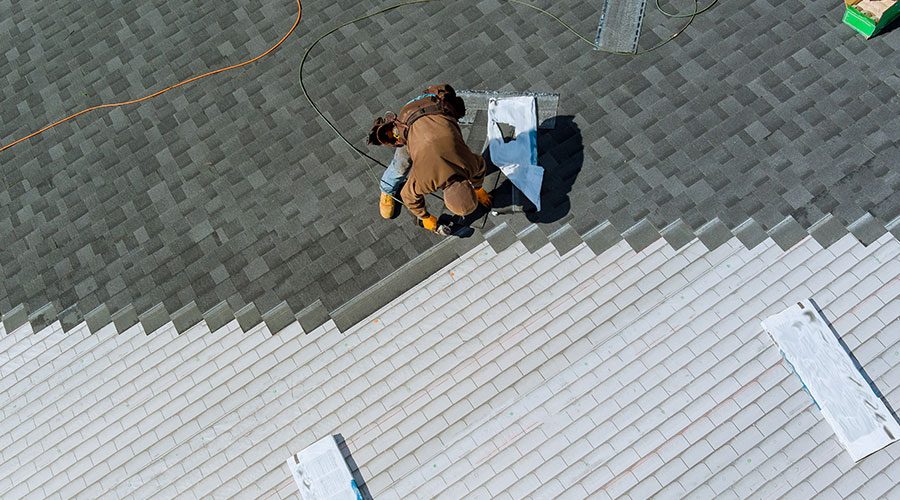
Document all damage before you touch anything, then arrange temporary protection to stop further water intrusion while permanent repairs are planned. EPDM is among the easier membranes to repair, and a rubber patch handles many punctures and tears. Still, bring in a qualified contractor for the permanent fix and to check for hidden saturation in the insulation below, which can quietly destroy feels like too strong of a word here a roofing assembly from the inside long after the visible damage is patched.
Resilience is the long game
The deeper lesson behind hurricane amnesia is that the threat never really goes away between storms, and a reroofing project is the natural moment to bring an older roof up to current wind and drainage standards. But codes and materials are only part of the answer. The roofing industry's long record of post-disaster inspections keeps confirming a simple point: a roof that is well installed, regularly inspected and consistently maintained is the linchpin of a resilient building. The membrane matters, and so does the discipline behind it.
That is the case for treating roof preparation as routine rather than a scramble when a storm enters the forecast. A maintenance program that catches a lifting seam or a failing seal in the spring costs far less than an emergency repair, or a full replacement, after the wind arrives. Owners and managers who prepare before the forecast, and who treat code minimums as a starting point, are the ones whose buildings remain intact.
The next significant storm is a matter of when, not if. The quiet seasons are for getting ready, not for forgetting.
Ellen Thorp is President and Managing Chair of the Coalition for Sustainable Roofing, an organization representing building products manufacturers that promote holistic roof system design and sustainable roofing assemblies. With 17 years at the intersection of roofing, building science and public policy, she builds coalitions that advance sustainability with manufacturers, designers and policymakers at every level of government. She participates in ASHRAE standards development and the ICC code development process, and holds leadership positions with the NAM-Council of Manufacturing Associations and the National Institute of Building Sciences. She holds a bachelor's degree in political science, a master's degree in education policy and the Certified Association Executive (CAE) credential.
Related Topics: