Proactive Drain Cleaning Prevents Costly Facility Damage
Regular inspections and scheduled maintenance help identify buildup and blockages before they disrupt operations.
Maintenance and engineering managers need to establish a proactive drain cleaning program to prevent costly clogs, backups and water damage to institutional and commercial facilities. The reason why is obvious — regular inspections and scheduled maintenance help identify buildup and blockages before they disrupt operations.
“A proactive maintenance program is the foundation of reliable facility operation and should start with a clear understanding of the system’s current condition and usage patterns,” says Jim Criniti, president and CEO of Zoom Drain, a drain and sewer service and maintenance company. “Begin with a comprehensive video inspection to assess system health, identify problem areas, and establish baseline conditions. From there, facilities managers can develop a scheduled cleaning plan based on system type, occupancy, and risk factors, which may include hydro-jetting, cabling, or enzyme treatments.”
Quarterly maintenance visits for most commercial and institutional facilities, especially kitchens, hospitals, and high-traffic buildings are recommended, he says. Each visit should include inspection, cleaning, and digital documentation so managers can track performance trends over time.
“Facilities that implement a planned maintenance contract experience fewer emergencies, less downtime, and longer-lasting infrastructure,” Criniti says.
Routine maintenance eliminates buildup before it hardens into obstructions that cause messy backups, flooding, and damage. Preventive cleaning like hydro-jetting keeps drains free-flowing by cutting through grease, sludge, and scale to protect critical areas like kitchens, restrooms and mechanical rooms.
By staying proactive, maintenance teams can avoid costly downtime, prevent sanitation issues, and reduce structural damage from water intrusion. It is far less expensive, and far less disruptive, to maintain a clear system than to repair one after a major backup.
Routine camera inspections are “a cornerstone of preventive drain care,” Criniti says. “They allow technicians to detect early warning signs such as grease buildup, mineral scale, or root intrusion — all of which can restrict flow and lead to costly failures if ignored.”
When inspections are paired with scheduled cleanings, managers can gain real-time visibility into the health of their systems, ensuring that issues are identified and addressed before they disrupt operations. Digital reporting tools also help maintenance teams document findings, plan repairs, and justify budgets.
Drain cleaning and maintenance expose workers to wastewater, pathogens and high-pressure equipment. Anyone handling or inspecting drains should wear gloves, boots, goggles, and protective clothing at a minimum.
“When operating hydro jetting systems up to 4,000 psi, only trained and authorized personnel should perform the work, as misuse can lead to injury or property damage,” Criniti says. “Partnering with professionals trained in proper PPE use and safety protocols ensures compliance and minimizes liability.”
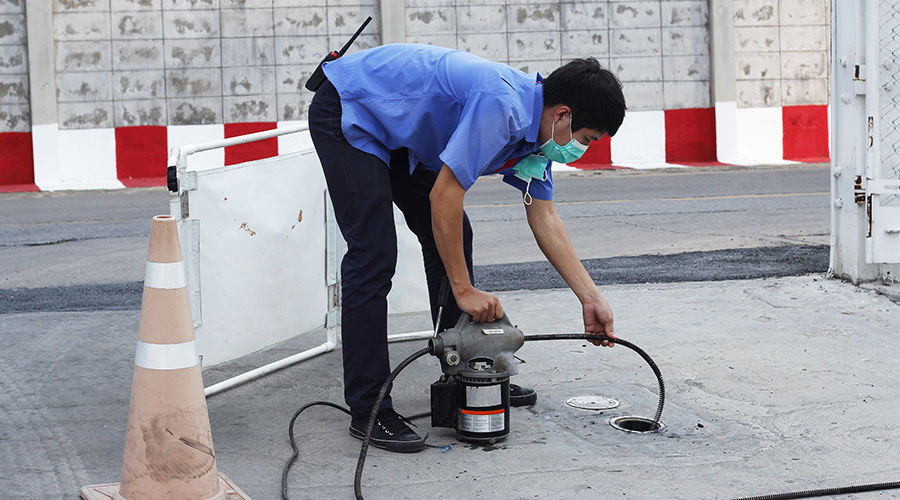
For most facilities, it is more cost-effective and safer to partner with a professional drain specialist rather than purchase equipment that requires technical training, maintenance and storage.
“However, larger campuses with in-house maintenance staff may benefit from owning basic tools, such as small hand snakes or electro-mechanical drain cleaning machines for quick response,” Crinti says. “The use of diagnostic and heavy-duty equipment, including video pipe inspection systems, water jetting equipment, hydro jet trucks, pipe milling tools, or descaling systems, should typically be outsourced to a specialized service provider.”
Howard Riell is a freelance writer based in Henderson, Nevada.
Related Topics: