Building a Proactive Drain Cleaning Program
Initiating an effective drain cleaning program requires a thorough assessment of the facility’s pipes.
When facilities consider building a drain cleaning program, managers should begin by evaluating how many drain cleaning calls they get and what types of drains and stoppagesare involved.
“Then, look at what your costs have been so far,” says Marty Silverman, vice president of marketing for General Pipe Cleaners, a division of General Wire Spring Company. “Have you been calling an outsidecontractor to handle clogged drain calls? Do you own equipment? Or have you been renting equipment?”
Most stoppages are in small lines, clogged kitchen sinks, toilets and showers. Relying on a plunger to solve all your clogged drain problems“just won’t do. You need the righttools for the job. A power handheld drain cleaner is not that expensive and can handle small line stoppages. I said ‘not that expensive’ – but don’t go cheap. A consumer-grade tool won’t last.”
The drain snake is the most importanttool part, as that is what does all the work.
“Cheap snakes can’t handle the torque, and will break quickly.Get a machine with a wire rope inner core cable,” Silverman says.
For clogs in larger drain lines, managers can determine if they should contract these out or rent a machine and do it themselves based on cost and frequency of the calls. Thetype of stoppage also determines what tool to use.
“For instance, a grease clog in a sink can be cleared much more effectively with a water jetter than a snake,” Silverman says.
This type of program, if executed well, can help prevent costly clogs, backups and water damage to institutional/commercial facilities.
“First, educate your tenants,” he says. “Don’t put food scraps down the kitchen drain; throw them in the trash instead. Be careful not to pour grease down the drain, or if you do, run hot water for a minute afterward to allow the grease to flow down the line into a larger pipe.”
Tub and shower drains often get clogged with hair, so regularly removing screens and regularly cleanin them can prevent flooded restrooms. Overstuffed toilets and older, low-flow toilets are also common sources for draining woes.
“Keep track of your clogged drain calls and note repeat areas,” Silverman says. “Old fixtures may have to be replaced.”
Managers may also consider having a contractor do camera inspections or rent a camera themselves to see if there is another reason for a repeat problem fixture. A cell phone dropped down a toilet, for example, can act like a flapper valve and cause a mysterious repeat clog.
Silverman emphasizes that regular inspections and scheduled maintenance both help identify buildup and blockages before they disrupt operations. In high-grease areas, kitchens, and food-prep stations, it’s helpful to regularly jet a line.
“Water jets are great maintenance tools,” Silverman says. “It’s better to clear the grease as it builds up, rather than waiting for the kitchen drain to clog completely on a busy Saturday night.”
When deciding whether to buy or rent equipment, managers should evaluate how many drain cleaning calls they get, and what types of drains and stoppagesthey are.
“Then look at what your costs have been so far,” Silverman says. “Compare the costs of an outsidecontractorversus renting. Also, make sure you have someonequalified to run the machine safely. Make sure all safety instructionsand the manufacturer’s videos are viewed and understood.”
Urgent repairs
Initiating an effective drain cleaning program requires a thorough assessment of the facility’s pipes, including their location, age, and frequency of use.
“It is important to inspect each line individually to determine its condition and identify those that require immediate attention,” says Alex Meyer, product manager for RIDGID.
Utilizing this information allows managers to develop a strategic maintenance schedule that prioritizes urgent repairs and ensures ongoing upkeep for all lines. For example, pipes experiencing heavy usage should undergo monthly inspections, while those used less often may be adequately serviced on a quarterly or annual basis.
Conducting regular inspections and cleanings of lines helps prevent minor issues from escalating into costly or unplanned repairs. Routine maintenance reduces the likelihood of drain line emergencies, saving the facility from unexpected closures and damage to company property. Maintenance can be efficiently scheduled during non-peak hours, minimizing operational disruptions.
A proactive approach “eliminates after-hours emergency calls and unexpected expenses related to water damage,” Meyer says.
Routine inspections and scheduled maintenance facilitate the early identification of potential issues, enabling prompt resolution with minimal interruption. Necessary maintenance activities can then be scheduled during non-peak hours.
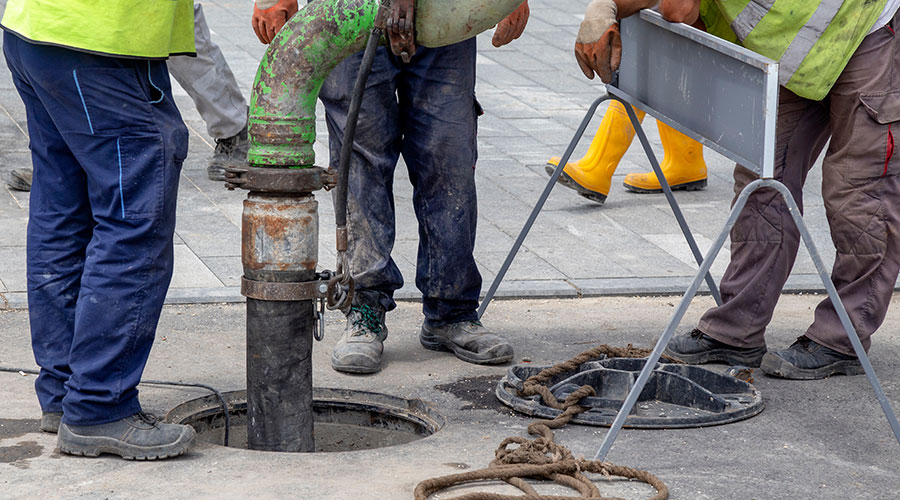
Technicians must always protect themselves against the harmful elements of contaminated water. Items to wear include waterproof clothing, boots, gloves, goggles and/or face shield and, if necessary, a respirator, Silverman says. Utilizing enclosed drain cleaning machines is also beneficial.
“It’s a simple upgrade that has a significant impact on jobsite cleanliness, especially in situations where contaminated water is an issue,” he says.
Renting equipment can assist in evaluating which tools are most appropriate for a given facility.
“However, purchasing equipment ultimately offers greater time and cost efficiency. Items such as cable machines, jetters, press tools, inspection cameras, and locators are worthwhile investments,” Meyer says.
A thorough knowledge of pipe types, configurations, dimensions, and common sources of blockage is crucial when selecting equipment appropriate for facility requirements.
Evaluating the ergonomics of each tool, compatibility with other equipment, and integration with digital reporting systems contributes to informed investment decisions that enhance productivity and minimize user fatigue.
Howard Riell is a freelance writer based in Henderson, Nevada.
Related Topics: