How Facility Managers Can Prepare for Air Quality Events
Facility teams can prepare for wildfire smoke and other indoor air quality threats by monitoring building conditions, tailoring HVAC operations and stocking filtration equipment in advance.
Key Takeaways
- Facility managers should understand baseline indoor and outdoor air quality conditions before an event to make informed operational decisions when conditions change.
- HVAC strategies should be tailored to the source of the threat, since increasing outdoor air can help during infectious disease events but worsen indoor conditions during wildfire smoke events.
- Preparedness plans should identify filtration needs, portable air cleaners, equipment locations and HVAC adjustments before an air quality event occurs.
Managing an air quality event also involves balancing competing priorities, according to Stodola.
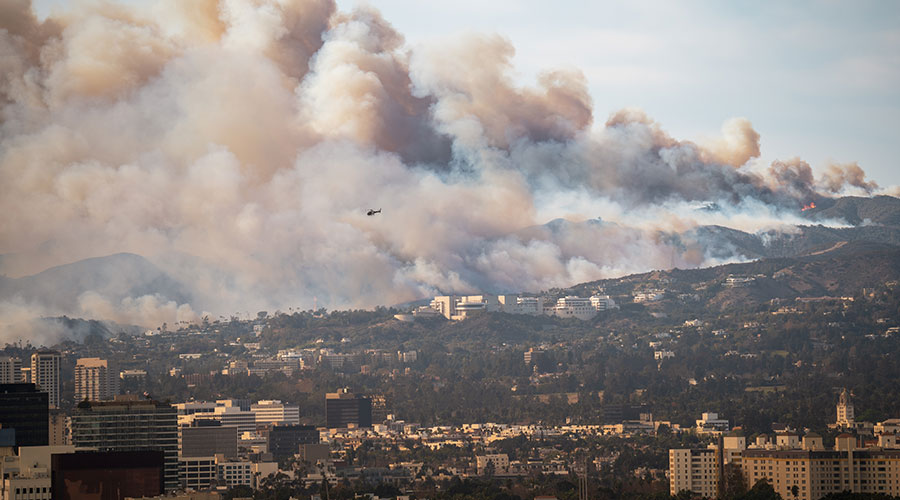
With wildfire smoke, for example, reducing outdoor airflow can limit the polluted air coming inside. But the people inside still emit carbon dioxide, and building activities and materials can also release VOCs and other harmful substances.
In other words, sealing the building and shutting off outdoor air can introduce new problems.
Stodola points to the 1970s energy crisis as an example. Buildings were tightened to reduce heating and cooling costs, but insufficient outdoor air contributed to higher concentrations of CO2 and VOCs indoors, leading to what became known as “sick building syndrome.”
He says positive pressurization can be an effective alternative. By supplying more air than the building exhausts, facility teams can reduce infiltration through the building envelope. But reducing exhaust creates another trade-off because exhaust systems often remove stale and smelly air from bathrooms, kitchens and areas near combustion equipment.
“You have to look at the building and ask, ‘What are my priorities? What conditions am I OK sacrificing performance on if that helps me deal with the primary issue during these highly polluted events,” Stodola says.
Measure IAQ Before an Event
Facility managers can make these decisions more confidently when they understand how their buildings normally perform.
This includes understanding the HVAC system and potential problem areas, and monitor pollutants and environmental conditions inside the building.
Technicians may use portable instruments to measure particulate matter inside, such as PM2.5 and PM10, which are tiny airborne particles named for their size. PM10 particles are 10 micrometers or smaller, while PM2.5 particles are 2.5 micrometers or smaller. Both are too small to see and can affect health, but PM2.5 poses the greater risk.
Testing may also measure carbon dioxide, carbon monoxide, temperature and humidity. Other samples may be sent to a laboratory to check for contaminants such as volatile organic compounds (VOCs) or mold.
These assessments can uncover ventilation problems, inadequate filtration or other conditions affecting indoor air quality (IAQ) and guide corrective actions.
Stodola recommends comparing indoor and outdoor particulate measurements even when no major air quality event is occurring. Taking simultaneous readings outside, near air intakes, and inside, can show how effectively the building reduces outdoor pollutants.
If outdoor particulate levels are 20 micrograms per cubic meter and indoor levels are 10, for example, the building is achieving roughly a 50 percent reduction. Knowing that relationship gives facility managers a starting point for estimating what might happen when outdoor pollution spikes.
Continuous monitoring can also provide useful information during an event and help facility managers communicate what’s happening inside the building to occupants.
“Part of the facilities team’s job is encouraging trust and confidence in the building itself,” Stodola says.
Showing occupants that indoor particulate levels are still substantially below outdoor levels demonstrates that building strategies are working. Before concluding that certain levels are permissible, however, Stodola advises examining leases and tenant agreements, since some may specify defined limits for outdoor air, carbon dioxide or particulate concentrations.
Tailor the Response
One of the most practical lessons for facility managers is that yesterday’s IAQ strategy may be wrong for today’s problem.
Stodola explains that during an infectious disease outbreak, increasing outdoor air can dilute contaminants generated inside the building. But during wildfire smoke events, that same action can bring more contaminants inside.
“It’s like those horror movies, when they say the call is coming from inside the house,” he says of infectious disease. “But with wildfire smoke, the call is coming from outside.”
He recommends that facility leaders first figure out where the threat originates, then determine how building operations can reduce exposure to it.
He adds that a building doesn’t have to operate uniformly during an event. Relocating all staff to floors with updated or advanced air-handling systems temporarily could be an option. Reducing occupancy in some areas could enable facility managers to decrease outdoor airflow without increasing CO2 levels.
Remote work may also be part of the response when conditions call for it, Stodola adds.
Stock Tools Early
Portable air cleaners can be used to cleanse indoor air because they operate independently of the central HVAC system.
But Stodola cautions that they are not a substitute for outdoor air and cannot address every indoor contaminant. Still, he says appropriately sized units can add particle filtration to specific rooms or areas without modifying the HVAC system.
When buying portable air cleaners, he recommends looking at the unit’s clean air delivery rate, or CADR, and make sure it is appropriately sized for the space. An undersized unit, he says, will filter some air but may not deliver the intended result.
The bigger lesson is to buy equipment before it’s needed. “Your readiness plan should not be when there’s a wildfire, I’m going to buy a bunch of standalone air cleaners, because by that point, everyone else has bought them already,” Stodola says.
A preparedness plan can identify which filters the HVAC system can accommodate, where replacement filters are stored, how many portable air cleaners are available, where they will be deployed and what operational changes should occur at different outdoor air quality levels.
Reset After the Event
The job isn’t finished when the smoke clears, he adds.
Filters capture pollutants, which means a severe or prolonged event can leave HVAC filters heavily loaded, and as material accumulates, airflow through the filter can decline.
Facility managers can check for pressure drop and compare airflow with normal operating conditions to calculate how heavily filters are loaded. This assessment will determine if replacement is necessary. In addition, if the facility increased its air treatment – for example, moved from MERV 13 to MERV 16, for example—d Stodola recommends returning the system to its normal filtration either way, especially if the greater filtration involved a tradeoff such as reduced air flow rates.
Preparing for poor air quality involves knowing the building well enough to make informed decisions when normal operating conditions no longer apply. It also involves developing a response plan for air quality events. Fortunately, Stodola says facility managers do not have to develop these plans from scratch.
ASHRAE Standard 44 provides guidance for managing wildfire and prescribed burn smoke, while Standard 241 addresses infectious aerosols. Both standards offer strategies that can help facilities plan how they will adjust ventilation, filtration and other building operations when IAQ is threatened.
“These standards offer general guidance that is easy to understand and follow, as well as detailed calculations for engineers,” he says.
The heart of air-quality preparedness is knowing where the threat is coming from and what can be done about it, and developing a response before an air event outside makes them urgent.
Ronnie Wendt is the owner of In Good Company Communications and a freelance writer specializing in articles for the facilities management, aviation, RV and automotive, meetings and events, security, logistics and business technology industries.
Related Topics: