HVAC Upgrades Require Smart Technology Choices and Clear Expectations
As HVAC technology evolves and refrigerant regulations change, facility owners must balance innovation, risk and cost.
Key Takeaways:
- Facility managers should balance proven HVAC technologies with emerging innovations that can improve energy efficiency and building performance.
- New refrigerant regulations are reshaping HVAC planning, requiring owners to consider system-wide upgrades rather than replacing individual components.
- Clear communication of organizational goals and occupant expectations helps ensure HVAC upgrades deliver the right balance of performance, comfort and cost.
Just as owners need to understand the condition and repair history of their existing HVAC equipment, they also need to stay abreast of new and emerging HVAC technology advances that can benefit their facilities and organizations.
“Some owners are pretty savvy,” Barbee says. “They keep up with technology, and they want new technology that actually saves energy when they do retrofits.
“You want to bring the systems up to the new standards if you can, but you don’t want to be on the bleeding edge. You want to be on the cutting edge. The challenge with that is that the technology might be out there, but are you willing to take that risk?”
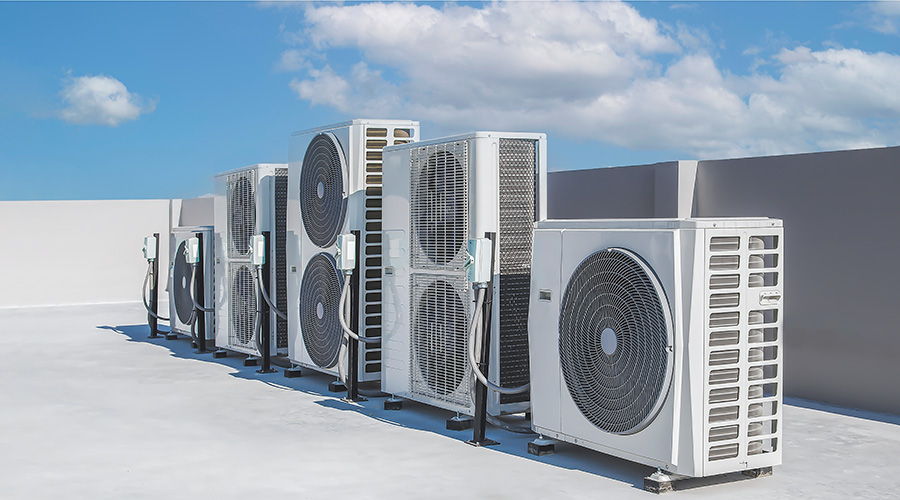
Owners looking to upgrade HVAC equipment also must contend with changes in the availability of refrigerants. The United States is rapidly phasing down the use of high-global warming potential (GWP) refrigerants, most notably hydrofluorocarbons (HFCs). Beginning on January 1, 2026, high-GWP refrigerants are no longer permitted in new commercial comfort cooling systems. Existing systems can continue operating and can still be serviced, provided repairs do not require a full system replacement.
“We're going from a pretty common refrigerant type that we have been using for quite a while now, R410A, to a different type of refrigerants called A2Ls,” Spinelli says. “This is not an insignificant change. Historically, we’ve had changes in refrigerants. We dealt with them in the past, and really it wasn’t much to think about.
“This change that we’re seeing now is drastically different. It impacts the architecture of a building in a lot of cases, especially taller buildings.” The refrigerant change also will affect owners’ equipment decisions.
“With the new refrigerants, the equipment is not compatible,” Spinelli says. “You cannot use the new equipment with the older refrigerator and vice versa. It has to be essentially built and certified for that refrigerant. That forces owners to think about their projects a bit differently. They can’t just get a new component of a system using the new refrigerant. They have to think of the whole system.”
Expectations and communication
The success or failure of an HVAC upgrade project depends on the ability of owners and executives to gather and act on equipment and financial information related to the systems under scrutiny. But the project’s future will depend just as much on the ability of owners to communicate information to the team that goes well beyond these two factors. For example, owners need to give engineers and architects information that can help them balance available technology with the organization’s mission.
“Owners want to provide the patients with the best service to get the best healthcare possible,” Barbee says of HVAC upgrades in healthcare facilities. “They want to make money, but they also want to provide the best care and have the best recognition in the public eye.” To address the patient satisfaction side of this equation, owners might push for higher air filter ratings than are required, putting engineers on the spot.
“For general patient care, there’s no need to gold plate the design and the equipment selections, which is not going to improve the health of the patient,” Barbee says. “It’s not going to do any good except cost more money operationally and with the initial first cost.”
Such discussions among owners, engineers and architects can help the team better understand the owner’s expectations.
“We’re undertaking this retrofit project,” Spinelli says. “That’s the easy part for an engineer to understand and wrap their heads around. But architects tend to do more of the visionary things, with their planning boards that they create renderings for. They’re more in touch with the owner on that level.
“Historically, that’s not the same with engineers. Engineers tend to say, ‘We’re going to give you a system that functions. It’s going to be really great and meet your technical needs.’ But we need to understand more about the secondary, non-technical portions of your organization as an owner.”
The planning process also is more apt to produce a successful project if owners take into account the expectations of building occupants in developing project goals. Barbee offers an example of planning for an HVAC upgrade in a healthcare facility.
“Owners have users in these different departments,” he says. “They could be doctors, they could be nurses, it could be the directors of departments. They have expectations that might not meet code.” In some cases, these expectations are related to comfort conditions, including temperature, humidity and pressure.
“If you wanted that up front, you need to state that up front,” he says. “You can gold plate something for no reason and do higher efficiencies or colder air temps. But if there’s no reason behind it, you’re wasting money. That is a challenge. Owners need to manage users’ expectations on space conditions.”
Dan Hounsell is senior editor for the facilities market. He has more than 30 years of experience writing about facilities maintenance, engineering and management.
Related Topics: