HVAC Trends: What Lies Ahead
Several trends have emerged that owners need to consider before making decisions that will affect operations, the environment and the bottom line.
By Dan Hounsell, Senior Editor
Changes have been coming fast and furious for building owners, especially when it comes to HVAC systems and technology. Just when many owners were getting their arms around the impact of the sustainability movement on HVAC system selection, installation and operation, the COVID-19 pandemic threw a wrench in the works and forced many owners of institutional and commercial facilities to rethink long-held beliefs about ventilation, air filtration and occupancy. Then came artificial intelligence (AI), offering opportunities to improve energy efficiency and system operation and maintenance in ways that are still being defined.
Let’s call this the age of VUCA.
“We use this phrase called VUCA — volatility, uncertainty, complexity and ambiguity,” says Paul Morgan, global chief operating officer of real estate management services with JLL. “It’s volatile because portfolio usage is changing and churning. You don’t have the same level of occupancy you did in the past. It is uncertain because you don’t know what’s going to happen in the next 6, 12, 18 months.
“It’s complex because you’re now getting more data and more requests in short order. It’s ambiguous because you can’t really look at the future, so you’ve got to predict more than you ever have.”
As these challenges unfold in facilities, several trends have emerged related to HVAC system specification, operation and management that owners need to consider before making decisions that will affect operations, the environment and the bottom line.
Technology on the move
Nearly every HVAC component and system has seen important changes in recent years that have given owners reason to reassess their priorities and goals.
“We are seeing real progress across three areas: electrification, controls and system integration,” says Chris Cutcliff, vice president of operations with Chateau Energy Solutions. “High-efficiency heat pumps are becoming viable for more climates and building types, which is changing how owners think about heating and cooling altogether. Chillers and boilers are also far more efficient than they were even a decade ago, especially when paired with variable-speed drives and smarter sequencing.
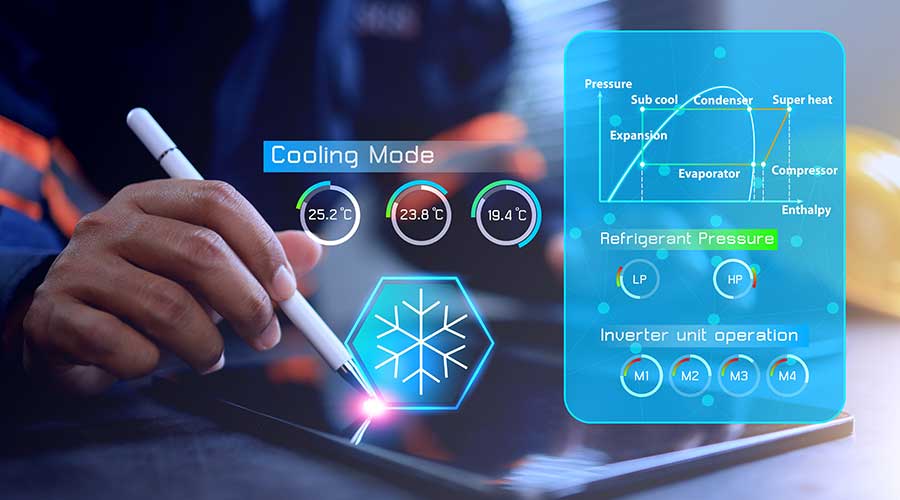
“The biggest shift, though, is controls. Building automation systems are no longer just about scheduling. Today’s platforms allow owners to see how systems actually perform in real time, identify inefficiencies, and make adjustments that save energy without sacrificing comfort.”
The arrival of AI also has offered promise for owners seeking greater efficiency and reliability of HVAC systems while also providing challenges related to ensure the technology delivers intended benefits.
“Before, we relied heavily on individual building automation systems,” Morgan says. “Certainly, when we look more broadly now, we can pull data from multiple sources together and use that to make real-time micro-adjustments but also match it with things such as occupancy in buildings.
“When you layer AI over the top of that, then we can get into predictive analytics: what’s going to happen before it happens. That’s probably the biggest step change we’re going to see in building performance that I’ve seen in a long time.”
Implemented and managed effectively, the technology offers owners and facility managers greater flexibility and focus than ever.
“Fundamentally, what (AI) enables us to do is rather than looking at improving one system at a time, we can look at the overall ecosystem of systems not only one building but across the portfolio, which means that we can trim it to real time usage,” he says. “As a result of doing that, we can reduce energy consumption, as well as maintenance costs because we’re not just running what we think is 100 percent occupancy. We’re trimming it to true demand.”
Outside forces
While HVAC technology has been changing the game for owners, other forces have been at work that have revamped the landscape in which the technology is deployed.
“The pandemic is a long time ago now to some extent, but we’re still seeing the lasting effects of that, which is occupants care more about the environment that they’re entering into, not only from sort of what they touch but what they breathe,” Morgan says. “Their focus is more on a greater degree of air filtration, touchless controls, enhanced ventilation.”
Cutcliff points to regulatory pressure as another major driver affecting HVAC systems.
“Emissions targets, energy codes and utility requirements are pushing organizations to rethink older, fossil-fuel-heavy systems,” he says. “We also see financial leadership getting more involved in HVAC decisions because energy efficiency now directly affects operating budgets, capital planning and long-term risk.”
Decisions about deployment of HVAC systems also are tied to the evolution of sustainability goals and the push for net zero emissions in many organizations.
“Obviously, we’ve seen it in terms of certainly corporates driving toward demand for buildings with lower carbon footprints,” Morgan says. “This means they need to be more efficient and effective not only in the base building equipment but the tools and systems that you use over and above it to drive that efficiency. That’s not only driving building owners to think about the types of equipment they install but then obviously how they physically operate them.”
The shifting dynamics of the facilities workforce also has affected the way owners view and act related to their facilities’ HVAC systems.
“Forty-odd percent of our entire community in the built environment is going to retire in the next 10 years,” Morgan says. “Immediately, you’ve got this impending labor shortage challenge that’s building. As labor starts to get tighter, that’s going to potentially push the cost of that labor. It’s also going to push building occupiers to not only install equipment that is lower maintenance but also can be managed and monitored remotely, which means that we probably can reduce the overall total cost of maintenance or total cost of life cycle of that equipment.”
Operation considerations
As HVAC technology advances and developments related to compliance, sustainability and staffing play out, they are redefining the way owners and managers make decisions to benefit their organizations and facilities. One such trend is the way departments communicate and strategize.
“There is also more coordination across departments,” Cutcliff says. “Facilities, finance and sustainability teams are working together more often to align HVAC upgrades with broader organizational goals, whether that is cost control, resilience, or emissions reduction. Operations have become more proactive and less reactive, especially for organizations that want predictable performance and fewer surprises.”
Trends in HVAC system operations reach all the way to the level of in-house technicians and the way they perform equipment maintenance.
“The more insights we get in terms of runtime condition of equipment means that we can probably move toward a condition-based maintenance strategy as opposed to preventive maintenance strategy,” Morgan says. “We can actually drive our maintenance strategies more effectively than we have in the in the past because we’ve got more insights, and we’ve got more predictive tools to analyze when something may fail as opposed to just going and changing a filter, etcetera over a period of time.”
Cutcliff adds that perhaps the biggest shift is thinking related to HVAC systems in recent years involves a systemwide approach rather than just considering one component.
“Replacing a chiller or boiler alone is rarely enough,” he says. “The real value comes from looking at how HVAC, controls, lighting and building envelopes work together.”
Looking ahead
Building owners are certain to face even more complex decisions on HVAC system selection, installation and operation as demands on systems and facilities grow in coming years. Successful decisions are likely to depend on owners’ ability to use small pieces of information — HVAC system data — to make large decisions.
“One of the bigger takeaways here is understanding the data you need to make informed decisions about running your buildings,” Morgan says. “How do you get that data? How do you get it in a quality and consistent fashion? Once you’ve done that, then start to build your AI models over the top of it in order to enable you to run more predictive analytics or outcomes of how to run your portfolio or individual building more effectively.
“It sounds like this enormous task, but actually you could start super small. Focus on two or three metrics, get that data in place, build some models around it and then use that as the catalyst to start to scale.”
Adds Cutliff, “Owners who take the time to align technology choices with long-term operational and financial goals tend to see the best results. HVAC is no longer just a facilities issue. It is a strategic asset when approached thoughtfully and with the right expertise guiding the process.”
Dan Hounsell is senior editor for the facilities market. He has more than 30 years of experience writing about facilities maintenance, engineering and management.
Related Topics: