Aging School Buildings Pose Health Risks to Students
Experts at a summit highlighted how aging infrastructure, inadequate funding, poor indoor air quality and extreme weather threaten student health and school operations.
Key Takeaways:
- Aging K-12 infrastructure, outdated HVAC and plumbing systems, and a $90 billion facility funding shortfall create persistent challenges for maintaining healthy school environments.
- Poor ventilation, moisture issues, chemical exposures and other indoor environmental hazards can contribute to asthma, respiratory problems and reduced student concentration.
- Extreme weather and longstanding funding inequities disproportionately affect schools and communities, underscoring the need for coordinated investment in facility upgrades and preventive maintenance.
Is anyone against keeping schoolchildren healthy? Surely not, yet the challenges for maintenance and engineering managers seeking to ensure that K-12 facilities consistently provide healthy environments to students and teachers remain stubbornly persistent.
Five organizations recently came together to co-host the Healthy Schools for Healthy Kids Summit in Washington, D.C., to detail the reasons healthy school facilities are so important, factors that have created barriers to upgrading these buildings and campuses and the way these groups and their allies can work together. The meeting brought together advocates, elected officials, health experts, facility managers, academics, students and others to address these issues.
“Can you make a better investment in society than in our schools?” asked Jason Hartke, executive vice president for external affairs and global advocacy for International WELL Building Institute, during his remarks.
Children typically spend 5-7 hours per day in classrooms, making schools’ impact on kids profound. While many people might recall the way a good or bad teacher directly affected their lives, do they remember the indoor air quality in their schools? They also can have a lifelong imprint.
Healthy schools challenges
While school facilities should be safe havens for students, they too often represent minefields. The potential hazards are many, particularly with the average age of school buildings approaching 50 years old and one-half of school districts nationwide needing to update or replace multiple systems, including HVAC and plumbing.
Despite these challenges, the funding gap for school facility improvements continues to widen. The 2025 State of Our Schools report estimated that school districts nationwide face a $90 billion shortfall in facility funding.
Dilapidated, outdated school facilities are an embarrassment and represent genuine threats to student and teacher health and safety. These threats can include exposures to toxic substances from lead and asbestos to pesticides and harsh cleaning chemicals. Moisture management issues also can create health issues, including asthma triggers, while poor ventilation and gaps in cleaning, operations and maintenance can exacerbate all these problems.
Asthma is a major focus. Kenneth Mendez, president and CEO of the Asthma and Allergy Foundation of America says one in 12 American children have asthma, with 50 percent of those children having missed school days, with higher percentages reported among black and Latino children. Asthma triggers in the school environment can include mold, dust, chemicals and school bus exhaust.
Erika Eitland, director of Human Experience Research at the architecture firm Perkins & Will, says “the policy mismatch” that “many of the buildings that our kids are in, our teachers are in, predate major environmental legislation,” such as laws prohibiting lead paint and asbestos. Even though these substances have been generally banned from building products starting in the 1970s, many school facilities have not yet fully removed them.
In facilities as complex as K-12 schools, many additional hazards can crop up. Dr. Robert Amler, vice president for government affairs at New York Medical College, offered the example of a school installing an off-gassing polyurethane floor in a gymnasium without adequate ventilation in a place where children spend the day hyperventilating.
“There is one good ingredient to go in a lung, and that’s air,” Amler says. “Nothing else.”
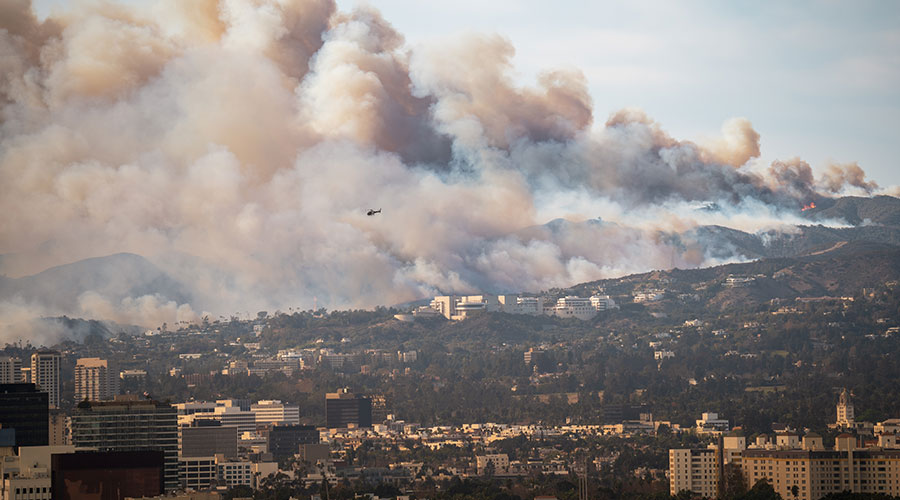
Climatological changes, including increasing temperatures, wildfires, floods and hurricanes, multiply the threats to schools. Joel Scheraga, senior advisor for the Healthy Schools Network, says, “In the 2024-2025 school year, nearly 10,000 schools, approximately 10 percent of all public schools, were forced to temporarily close because of weather-related events. That translated into over 9 million students affected.”
The impact of school closures affects mental health, as well as physical health.
“A school building is also a city center, a community center,” says Nsedu Obot Witherspoon, executive director of the Children's Environmental Health Network. “It’s used for many different functions beyond the learning. The symbolism of it being hurt, gone, washed away, is very traumatic.”
Dr. Taylor Brewer, pediatric resident at Children's National Hospital in Washington, D.C., offered the example of parents wanting to get their kids checked for ADHD. After investigating, she found the children were forced to study in schools without air conditioning. And on the hottest days, they simply couldn’t concentrate.
“Children are not small adults,” Amler said. “Their exposures are very different because their bodies are not only smaller, but they absorb faster.”
The impact of unhealthy schools is very unevenly distributed, reflecting deep-seated patterns of social inequity. Jenna Riemenschneider, vice president of advocacy and policy at the Asthma and Allergy Foundation of America,cited research showing a $23 billion gap in the funding between majority white schools and majority black schools.
“We cannot here in 2026 say every child that goes to a school building in the United States will be safe and healthy,” Witherspoon says.
Ken Sandler, Ph.D., is a clean energy and sustainability analyst and thought leader who spent 35 years advancing green building and sustainability policies and programs across the federal government. In addition to being a FacilitiesNet sustainability columnist and Facility Influencer, he writes his own newsletter, Regenerative Futures at LinkedIn and Substack.
Related Topics: