Bridging Generations: How Experience and AI are Transforming Facilities Staff
A walkthrough with two technicians reveals how different generations do their jobs. November 16, 2026
By By Yanet Vega, Contributing Writer
Key Takeaways:
- AI can speed up HVAC troubleshooting and parts sourcing, but it supports—not replaces—the engineers doing the work.
- Recommendations must be checked against equipment details, manufacturer guidance and safety requirements.
- Pairing experienced tradespeople with younger, tech-savvy colleagues helps teams solve problems and preserve valuable know-how.
You wake up ready to start your day. Wash your face, brush your teeth, grab your coffee and get moving.
Except the world has other plans.
You reach for your phone, and the messages are already coming in. An HVAC system is down at one of your buildings. Temperatures are changing, operations could be affected and now the clock is ticking.
For HVAC maintenance and engineers supporting facilities of all kinds, this can be a typical day.
Their job isn't simply to repair equipment. They must understand complex systems, troubleshoot quickly, minimize disruptions and protect the people relying on those buildings.
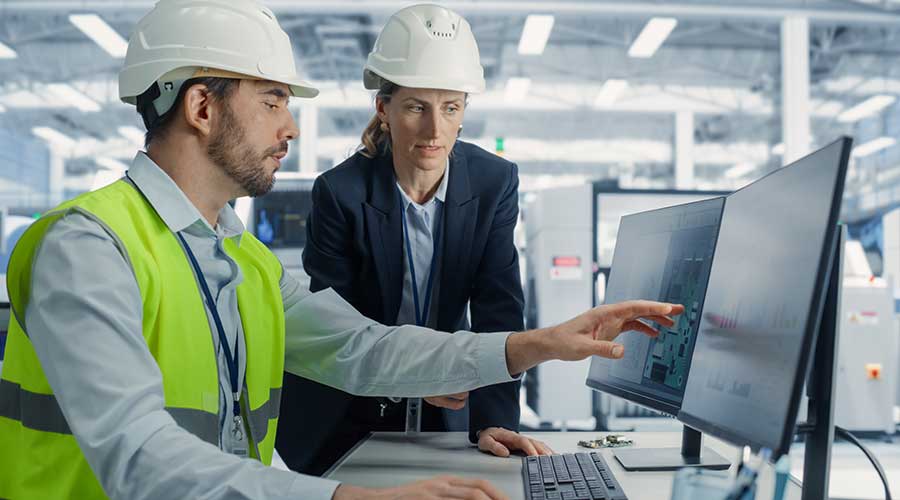
Recently, I spent time with two HVAC engineers on my facilities team. One has more than 40 years of trade experience, while the other represents a younger generation of technicians.
What caught my attention was how they combined their experience with something relatively new to their work: artificial intelligence (AI).
And what struck me wasn't what AI knew.
It was how much their experience and partnership determined whether AI was useful.
Modern building management systems provide detailed information about equipment performance. From boilers and chillers to air handling units and thermostats, these systems display diagrams, operating conditions and alerts when equipment isn't functioning as intended.
But identifying an error doesn't necessarily explain why it's happening.
Our engineers explained how they have started using AI to help troubleshoot unfamiliar problems. They take photographs of error codes, provide equipment information and describe the maintenance they've already performed. They explain what they've replaced, what they have tested and what they suspect may be causing the issue.
With that information, AI can suggest potential causes they may not have considered.
During one ongoing equipment issue, AI suggested a possibility they hadn't considered. Using their knowledge of the system, the engineers investigated further and resolved the problem.
AI didn't repair the equipment.
It simply pointed them in another direction.
They still had to evaluate the recommendation and decide whether it made sense.
Another example they shared involved locating replacement parts.
Historically, finding specialized components meant hours researching specifications and contacting suppliers. Sometimes obtaining a part took months.
Today, they can photograph a component, provide the equipment model and explain what the replacement needs to accomplish. AI helps narrow their research, identify potential compatible parts and locate suppliers with available inventory. This is a way to accelerate sourcing, not a guarantee that every part can be delivered quickly.
In some cases, they have gone from research to delivery in fewer than five days. AI didn't eliminate manufacturing or shipping delays; it helped them find available parts faster.
Think about what that means when you are responsible for maintaining a large building. We are talking about a potential game changer, reducing operational disruptions, avoiding unnecessary closures and protecting revenue.
Of course, AI recommendations still require verification. Equipment compatibility, manufacturer specifications and safety requirements cannot be overlooked. It's not simply about asking AI a question and accepting the answer. It's about providing accurate information, identifying specific equipment models, questioning assumptions and verifying recommendations against reliable sources. The quality of the information we provide matters just as much as the information we receive.
Technology can provide options, but experience determines which options are appropriate.
Perhaps the most interesting takeaway had little to do with AI itself.
It was seeing, both through observation and conversation, how two generations of engineers were learning from one another.
One engineer brings decades of hands-on experience and lessons learned. The other brings familiarity with emerging technology and new ways of accessing information.
The younger engineer introduces tools that make research more efficient. The experienced engineer explains why a proposed solution may or may not work based on what he's encountered throughout his career.
That knowledge isn't something you can simply search for online.
It's built through years of repairs, mistakes and understanding how building systems work together.
And the exchange goes both ways.
The experienced engineer is learning how technology can make familiar tasks easier, while the younger engineer gains knowledge that might otherwise take decades to develop.
AI becomes another resource in that exchange, making it a dynamic trio.
As facilities leaders, we have an opportunity to bridge the gap between generations, combining historical knowledge with new approaches and technology. We cannot remain stuck in the past, but we also cannot overlook the lessons that experience has taught us. We need to remain curious, open-minded and willing to question what we learn. Innovation should be exciting, but it must also be approached responsibly, with safety, efficiency, productivity and cost savings at the forefront.
We have experienced tradespeople with decades of knowledge and younger generations entering the workforce with new ideas and different technical skills. Some of those more experienced tradespeople are close to retirement. Creating opportunities for them to learn from one another strengthens our teams and helps preserve knowledge that could otherwise be lost over time.
AI cannot replace that experience, understand every building condition or perform the physical work of maintaining complex systems.
The future of facilities maintenance isn't simply about introducing more technology.
It's about understanding how to use it while continuing to invest in the people who keep our buildings operating.
Yanet Vega is a facilities and environmental services leader with more than a decade of experience overseeing healthcare facilities, capital projects, infrastructure and building operations. With a background in architecture, she brings a strategic and business-focused perspective to facilities management, with an emphasis on capital planning, operational efficiency, leadership and creating safe, effective environments for the people they serve.
Next
Read next on FacilitiesNet