The Future of Mowing: Smarter Technology and Electrification
Mower manufacturers discuss how technology is reshaping productivity, costs and long-term planning for grounds operations.
Advances in mower technology are reshaping how facility maintenance teams approach productivity, lifecycle costs, and workforce management. From connected equipment and onboard diagnostics to larger cutting decks and the growing interest in autonomous solutions, manufacturers are responding to pressures ranging from labor shortages to rising maintenance expenses. At the same time, electrification is prompting new conversations about infrastructure readiness, runtime expectations, and total cost of ownership.
In this manufacturer roundtable, Facility Maintenance Decisions asked mower manufacturers to weigh in on the technology trends having the greatest impact on grounds operations today.
FMD: What industrywide advancements or trends in mower technology are having the greatest impact on productivity and lifecycle costs for facility maintenance teams?
“Data is driving a lot of fleet decisions these days. Fleet managers are proactively tracking repair costs along with operational hours, and when they notice repair costs starting to spike from a machine, that is when it gets flagged to initiate a replacement process.
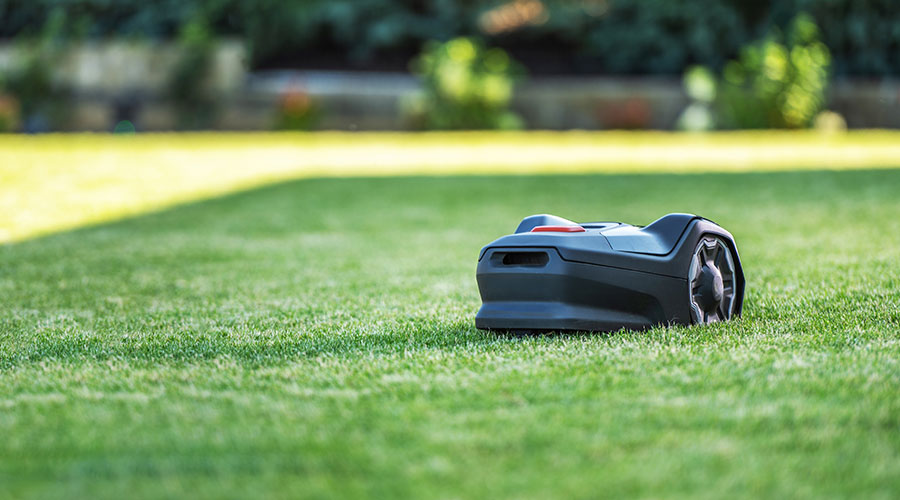
The discussion surrounding autonomous technology is now part of nearly every customer conversation. Customers are curious about autonomous equipment and looking to understand the practical implications for their specific operations. Autonomous equipment is overwhelmingly viewed as a workforce multiplier, rather than a means of labor reduction. Equipment fleet managers are using autonomous solutions for routine tasks, like mowing. That allows their staff to focus on other high-priority tasks that are currently difficult to address, maximizing efficiency and the workforce.”
— Matt Anderson, district sales manager – sports fields & grounds, Toro
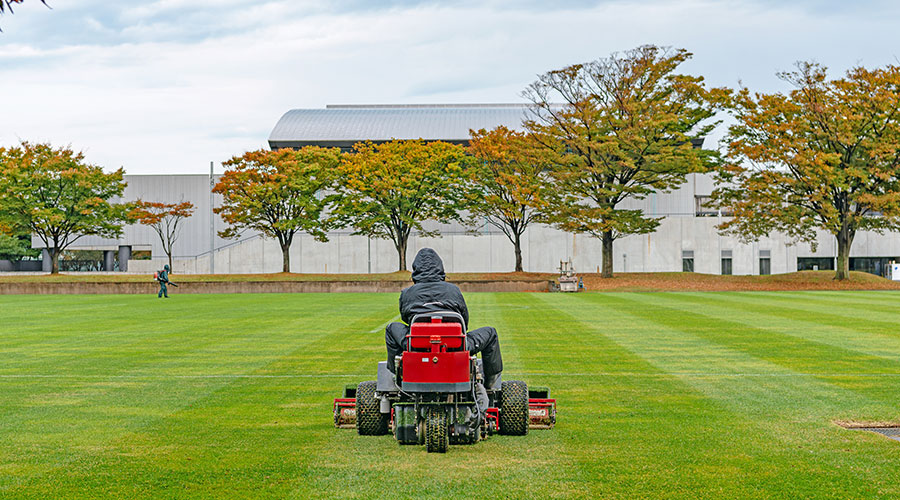
“Specific to products like commercial zero turn mowers, there has been some movement toward larger horsepower engines and larger cutting decks to maximize productivity particularly where the workforce might be more limited. Of course, stand-on mowers also continue to increase in popularity due to their compact nature and capability of maximizing trailer space. There is still some movement towards full autonomous mowing which will likely accelerate over the next few years as technology advances.”
— Sean Dwyer, senior product manager – commercial wheeled products, Husqvarna
“Electronic fuel injection (EFI) delivers maximum fuel efficiency and economy, performance and reliability. Because there is no choke or carburetor, these engines will start easier in all temperatures. Maintenance is reduced with no carburetor to maintain. EFI engines feature on-board diagnostics to help identify problems before they become a big problem resulting in downtime.
Electronic throttle control (ETC) controls airflow to the engine for peak governor control to supply all the engine’s power and more importantly, a consistent blade speed. This, in turn, delivers better quality cuts.
The bottom line is that mowers equipped with EFI and ETC deliver consistent, reliable power over a wide variety of terrain. The benefits of maximum production and greater fuel economy translate into greater productivity because more grass can be cut.”
— Brian Schoenthaler, marketing specialist, Grasshopper
FMD: As more organizations explore electrification, what considerations should facility managers keep in mind when comparing electric, hybrid and gas-powered equipment?
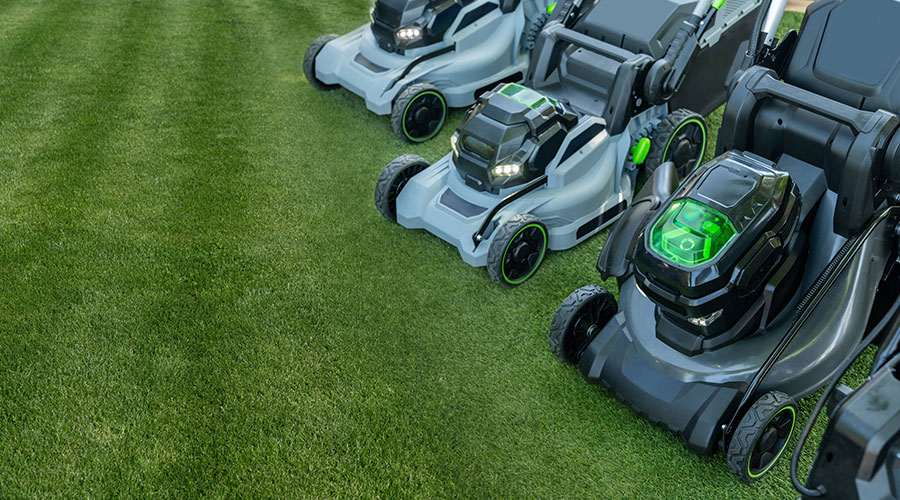
“When it comes to the electrification of equipment, infrastructure is one of the most important considerations for facilities managers. The challenge of charging multiple mowers or larger pieces of equipment simultaneously is one that needs to be considered up front. It is not as simple as just filling up a fuel tank. Charging infrastructure will need to be built into the operation in order to efficiently handle the load.”
— Lenny Mangnall, marketing manager, Exmark
“When it comes to battery powered products, the typical push back is “charging”. For handheld products it has been an easier transition, as the power requirements are lower and swapping batteries during the day is much easier. Charging solutions are also in hand for multiple batteries. It is a more difficult situation with ride on products where the power draw is much higher and variables like grass density, hills, etc., can dramatically affect mowing times. Charging cycles are much longer and spare batteries are not feasible. In this situation, gas powered product are still king and will likely continue for some time.”
— Sean Dwyer, senior product manager – commercial wheeled products, Husqvarna
“Electric-powered riding mowers will carry a higher initial cost compared to gas-powered models. They do, however, offer the benefits of being eco-friendly with a quieter run and lower maintenance costs.
There are tradeoffs with that lower maintenance costs to consider. Run time is of vital importance to a landscaper. Electrically-powered mowers will vary on run time depending on acreage and cutting conditions. Once the batteries are drained, they must be recharged or replaced with fresh ones. A typical recharge time is 5-6 hours. A set of four replacement batteries might run up to $10,000. Replacing one battery will cost an average of $2,400. Battery chargers, unless built in to the mower, will run in excess of $3,000.
Gas mowers on the other hand can be quickly refueled and back on the job in no time. As I mentioned before, newer engines with electronic fuel injection and electronic throttle control are more fuel efficient and provide greater power to mow longer grass with ease making them more productive.
Gas-powered mowers have plenty of flexibility in fuel availability, but one must weigh the difference between the cost of fuel over the life of the mower as compared to the battery costs over the same time period. The benefits of quietness and eco-friendliness must also be considered. Electric mowers may open the door with some commercial accounts that a gas-powered one may not open.”
— Brian Schoenthaler, marketing specialist, Grasshopper
Jeff Wardon, Jr., is the assistant editor of the facilities market.
Related Topics: