 Image credit: UW-Whitewater/Craig Schreiner
Campus Mowing Strategies for Safer, Healthier Grounds
UW–Whitewater tailors mowing schedules, equipment and turf management to the distinct needs of athletic fields, campus landscapes and high-traffic areas.
By Jeff Wardon, Jr., Assistant Editor
Key Takeaways:
- Tailor mowing schedules and priorities to each campus area’s use, balancing athletic-field safety and playability with the appearance and accessibility of academic and residential grounds.
- Choose appropriately sized equipment and maintain it proactively; UW-Whitewater’s autonomous mower helps cover large intramural fields while saving time and reducing turf compaction.
- Treat mowing as part of a broader turf-management strategy — including fertilization, aeration, growth regulators and efficient landscape design — and measure success by healthy fields and people enjoying the grounds.
While mowing grounds at institutional and commercial facilities can seem like a repetitive task, success often requires a more strategic approach. Universities have a large footprint of campus grounds to maintain for students and faculty use, and these grounds have to be properly maintained for a variety of reasons. A one-size-fits-all approach often does not cut it.
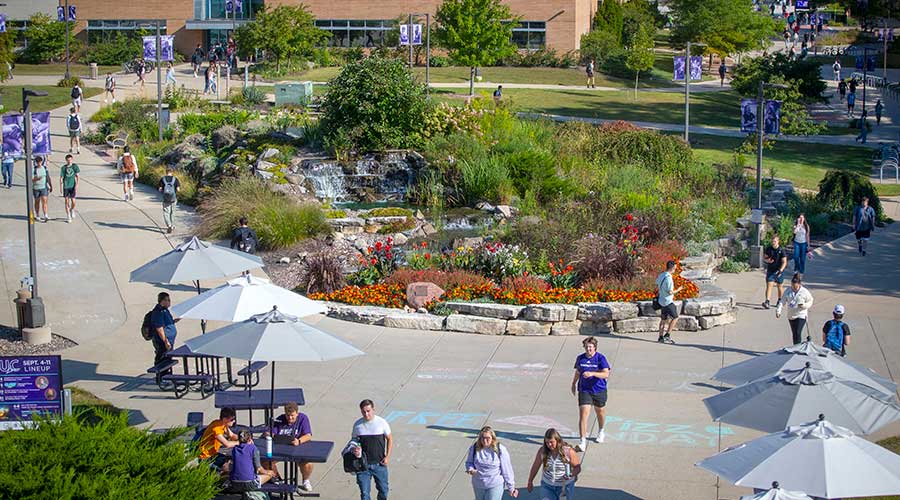
The University of Wisconsin–Whitewater offers a clear example of the need for a strategic approach. Athletic fields require an emphasis on player safety and playability, while academic and residential areas place more focus on aesthetics, traffic and visibility.
“Our approach is to address each field individually, and work with their seasonal use,” says Mike Miller, grounds crew lead at UW-Whitewater.
Mowing strategies and schedules
The first step to an effective mowing program is to understand what each area of the property needs. For athletic fields, player safety is the primary consideration, as field conditions are affected by weather, heavy use, sports play and turf vitality.
“Each field has its own unique details and requirements, and we do our best to work during the off seasons and have a high-performance field by the time it is in peak use,” Miller says.
Academic and residential areas share similar mowing methods with the athletic fields, but their priorities differ. There is lower demand for playability and access, so instead, the focus is on high-traffic areas, highly visible areas and the overall appearance of the campus.
“Being that they are mostly used for aesthetic purposes, the focus is maintaining high-traffic and high-visibility spaces to impress and showcase our campus for incoming students and their families,” says Joe Post, the university’s building and grounds manager.
It is important to base mowing frequency and priorities on the way a landscape is used, rather than widely applying the same standards across an entire campus.
Mowing schedules must account for both turf conditions and campus activities. With athletics, varsity game fields typically require two to three mowings per week for optimal playability and safety, Miller says.
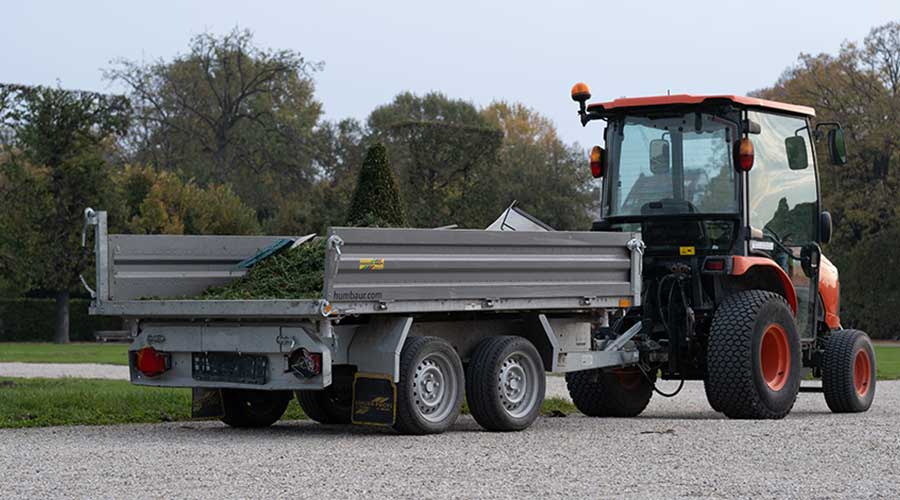
Then there are the 15-acre intramural sports fields, which would be a large task for any crew member. That is the reason the program recently introduced an autonomous mower which can operate 24/7 and in nearly all conditions. This unit can mow more frequently with a smaller footprint and compaction, which benefits turf health.
“Another huge benefit is the time-savings that we have had since receiving this mower,” says Miller. “This is our second season using it, and so far, our impressions have been very positive.”
Whether addressing academic and residential grounds, the mowing schedule tends to remain the same throughout the season, Post says. But given the amount of acreage UW-Whitewater has, the team makes mowing a priority in the work schedules.
“We often have campus tours that we try to work around, attempting to get all our mowing done without disrupting tours and visitors,” he says. “As always, we make sure that we are making good decisions regarding budget, weather and turf health.”
Spotlight on selection
Mowing equipment selection is a critical approach for the grounds team to build efficiency into the program.
The fleet at UW-Whitewater is comprised of three areas:
- Athletic-field operations, which includes three rotary mowers that consist of two 72-inch decks and one 10.5-foot deck.
- Academic and residential operations, which includes four mowers that consist of two 6-foot decks and two 8-foot decks.
- Intramural fields, which have one autonomous mower.
Having the correctly sized mower for the area has also been key for operations, Post says.
“Striking the balance between maneuverability and efficiency with a correctly sized mower allows us to reduce the amount of handwork needed to keep our campus looking well-kept and maintained,” he says.
Maintenance considerations for the fleet also differ depending on the area in question:
- Athletic mowers: Blades are sharpened every 25-30 hours, oil is changed each season and mowers are operated about 100 hours per week
- Autonomous mower: It features a 26.8-inch deck and three discs, with five blades per disc. The blades last roughly 500 hours, and the unit requires light cleaning.
- Academic and residential equipment: Hardened steel disc blades provide more operating time between required maintenance.
“We also have an in-house mechanic who is the lifeblood of our operations and keeps everything running smoothly,” Post says. Rather than treating equipment maintenance as an afterthought, it is a part of keeping the mowing operation going.
Ultimately, the right mower is the one that fills the need for a specific space while minimizing unneeded handwork and maintenance downtime.
Turf management and health
UW-Whitewater uses advanced turf management practices to lessen the demands on its mowing operation. Growth regulators < What are these? Explain. are key tools on the university’s athletics surfaces, Miller says. The grounds team has observed benefits from these products, including more energy stored in the root system, less frequent mowing, a greener appearance and lower mowing related costs.
Reducing overall mowing frequency affects more than just labor. Fewer mowing hours also translate to lower fuel and equipment maintenance costs.
Miller recommends having a consistent broadleaf application program and fertilization plan, adding that following those programs from year to year helps maintain healthy turf. He says that aeration and top dressing are vital components of maintaining a healthy turfgrass.
“They are all integral parts of keeping our fields at a competitive level,” he says.
The grounds team also streamlines mowing by adjusting the size and shape of mulch beds and tree rings and planning their layout around utility boxes and light poles, Post says. Design decisions also can improve grounds care efficiency.
“Our goal is to make the landscape flow for our operators, reducing the need to come back to further parts of campus to touch-up or push mow areas,” he says.
A successful mowing program is one part of a comprehensive turf-management plan rather than an isolated maintenance activity. Similarly, defining the success of UW-Whitewater’s mowing program goes beyond acres covered or hours logged to include how well the spaces serve the people who use them.
“The best metric of success to me, is the word-of-mouth that visiting teams, officials and fans extend compliments on how great our fields look and play,” Miller says. “Their compliments are proof that improvements we make to the fields have a direct impact on player safety and experience.”
Adds Post, “The greatest measurement that we use is what we hear from students, faculty, staff and community members. When we see people enjoying and using our green spaces, we take that as a great indication that what we are doing is working.”
Jeff Wardon, Jr., is the assistant editor for the facilities market. With more than three years of experience, he covers topics including technology, wellness, sustainability and emerging industry trends. Connect with him on LinkedIn.
Related Topics: