Greater Number of Businesses Pursuing ‘Green’ Status
From a Missouri office building to a Manhattan skyscraper, businesses more often are going environmental when it comes to construction.
From a Missouri office building to a Manhattan skyscraper, businesses more often are going environmental when it comes to construction.
The U.S. Green Building Council — its members striving toward buildings that are environmentally responsible, profitable and healthy places to live and work — said this week it has more than 1,750 new construction projects registered to seek certification that their buildings are green, up from the 45 buildings that sought the status when the program began in 2000, The Associated Press reported.
When Alberici Corp. set out to create its own green offices in the St. Louis suburb of Overland, leaders of the construction business wanted to learn about building green to stand out from the competition.
But they hadn't really counted on the Boy Scout troops or the out-of-town architects who have been asking for tours of the 110,000-square-foot, roughly $25 million building.
The contemporary steel, concrete and glass structure with brick accents features a system that catches rainwater off the roof, filters it and allows it to be reused elsewhere in the building, like tempering water in the cooling tower for part of the air-conditioning system.
A giant wind turbine being built on the property will generate enough electricity for 20 percent of the building's needs.
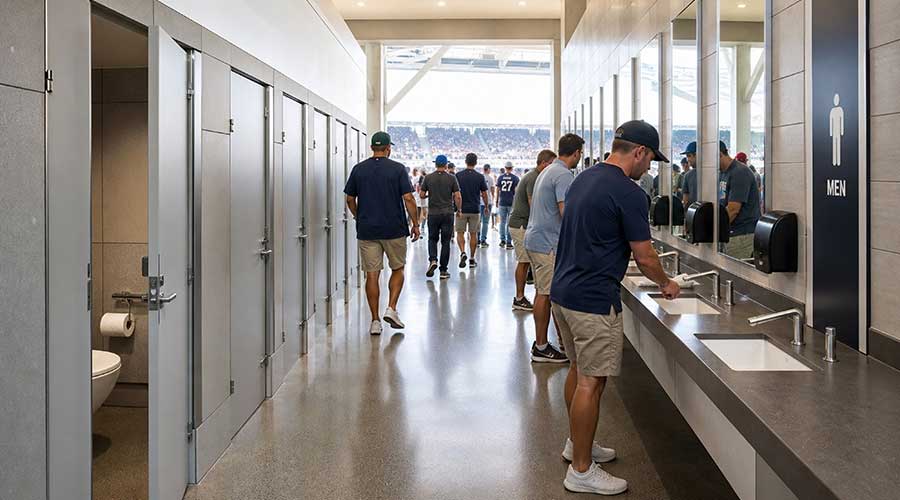
There's even interest in the restrooms, complete with waterless urinals and dual-flush toilets that allow the choice of a greater or smaller amount of water per flush.
The company evaluated everything from the type of adhesives and paints used in the structure, to how to position the building and what type of glass to use to make best use of the sun.
There are cabinets built from a particle board made from wheat and even bamboo baseboards, used because those materials grow quickly and can be replenished. Employees have individual floor registers at their desks to help them control the heat and air they receive.
Even the coffee machines have been replaced to grind whole beans in bulk, cutting the amount of prepackaged material coming into the building and saving the company about $5,000 a year, Alberici executives said.
Alberici registered with the U.S. Green Building Council at the start of the project, then followed the council's rating system that essentially determines just how green a building is.
Buildings can simply be certified or receive silver, gold or platinum status. That's the ranking Alberici is pursuing, though to date only 10 buildings in the world have achieved it. Alberici documented its work during planning and construction, and it will be reviewed by a third party trained in the certification process.
Alberici executives said they believe the attention to materials and a green building process increased employee satisfaction in the new offices, lessened the impact on the environment and ultimately reduced operating costs.
In New York City, Bank of America and The Durst Organization also are pursuing platinum status on their 945-foot-tall skyscraper on Sixth Avenue, between 42nd and 43rd streets. The Bank of America Tower is scheduled to open in 2008.
The project, designed by Cook+Fox Architects, will feature a system to reuse rain and wastewater, a plant to generate electricity on site, and carbon dioxide monitors to automatically supply fresh air.
Related Topics: