D.C.-area Construction Grows Increasingly Green
Rising energy costs are driving developers to build environmentally friendly "green" buildings in the Washington area and elsewhere.
Rising energy costs are driving developers to build environmentally friendly "green" buildings in the Washington area and elsewhere.
To save on energy costs after the buildings are completed, owners and developers are willing to spend a little more on energy-efficient designs and materials.
However, as the price of crude oil topped $56 a barrel for the first time recently and some petroleum industry analysts predict prices of $80 a barrel in the near future, the good times appear to be gone.
The 1.5 million-square-foot Census Bureau headquarters being built in Suitland, Md., will be one of the nation's largest green buildings when it opens next year.
In the Washington area, 34 large office buildings are being made "LEED-certified." LEED, or Leadership in Energy and Environmental Design, refers to design specifications that reduce energy and water needs of buildings.
LEED certification was developed by the U.S. Green Building Council five years ago in consultation with the U.S. Department of Energy and building industry leaders. It includes a 71-point scorecard for rating projects based on items such as "water-use reduction" and "renewable energy."
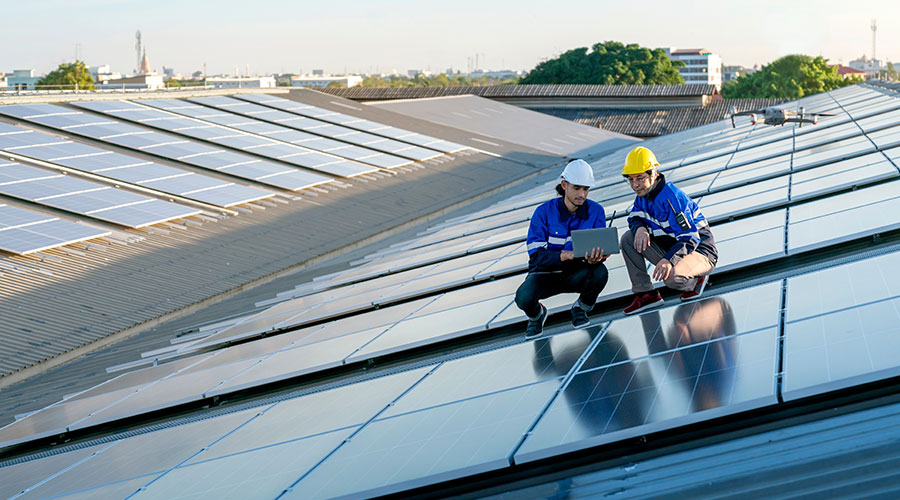
Green buildings in the past typically included a few energy-efficient features, such as carpets made of recycled materials and solar panels, but lacked a single set of standards.
The Census Bureau headquarters is using LEED guidelines to install glazed reflective windows, ventilation filters to improve air quality, recycled building materials and low-flow water fixtures.
Other examples of green buildings in the Washington area include a planned 385,000-square-foot commercial complex, the Department of Interior's new building and a new athletic center at the Pentagon.
Many developers still are reluctant to pay an additional 3 percent of a building's cost to make it more energy-efficient.
Local and state governments have been trying to give the green-building movement a boost with financial incentives.
In Maryland, commercial green buildings more than 20,000 square feet can qualify for a tax credit worth 6 percent to 8 percent of the total construction cost if they meet the state's energy-efficiency guidelines. The amount of the credit also depends on how much of a building is made energy-efficient.
However, some developers say the documentation requirements are extensive.
Developers say one of the best incentives is offered by Arlington County, Va., which offers zoning variances to build larger, more densely populated buildings if they are LEED-certified.
The industry also is getting a boost from building-supply manufacturers who are bringing down the cost of energy-efficient materials. A few years ago, energy-efficient materials or equipment were made in small quantities or were custom-built, which drove up costs.
Related Topics: