A 'Green' School Saves on Energy Costs
From the outside, Clearview Elementary School in Hanover, Pa. looks brand-new, but otherwise unremarkable. The remarkable part is on the inside — they've come up with a school that reimburses its owners over the long haul.
From the outside, Clearview Elementary School in Hanover, Pa. looks brand-new, but otherwise unremarkable. The remarkable part is on the inside — they've come up with a school that reimburses its owners over the long haul, The Pittsburgh Post-Gazette reported.
It's a school that saves about $18,000 a year through energy efficiency, compared to what a same-sized school built with traditional construction materials would normally consume in utility expenses. That's why Clearview, less than two years old, already serves as a landmark example of what an accommodating school administration and an environmentally sensitive architect can accomplish.
The eco-friendly concept school puts Hanover Public School District in York County on the leading edge of a construction trend that figures to grow in popularity over the next decade, as architects and builders learn more about so-called "green" design.
The building’s features: recyclable modular carpeting, recycled steel siding, recycled cement block construction. Cabinets and countertops are made of wheat board, a renewable material that comes from the chaff left over after harvest. The gym floor is made of recycled tires. Bulletin boards are built from recycled plastic soda bottles.
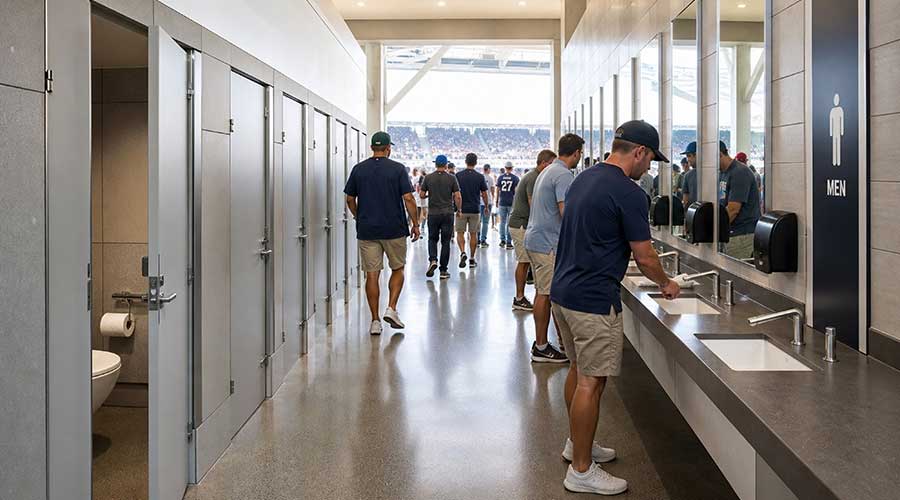
Those features are merely environmentally sensible. But the savings come from other sources: The urinals in the boys' room are flushless, which saves water. The walls are lined with two layers of a new, Styrofoam-like insulation padding. Classrooms are equipped with light sensors that dim the lamp bulbs if sunlight is sufficient for reading. The rooms also are equipped with motion sensors, which turn off the lights if nobody is in the classroom.
It adds up to one of the country's most environmentally friendly public schools, one of just three elementary schools nationwide to receive a gold LEED certification from U.S. Green Building Council. The LEED rating system stands for Leadership in Energy and Environmental Design, and the council is a group of builders promoting environmentally responsible construction.
While just 126 public and commercial buildings have so far received certification from the Green Building Council, more than 1,500 such projects are either under way or on the drawing board, according the council's in-house statistics.
For such a forward-thinking project, Clearview's design and discussion phase was surprisingly rancor-free. Taxpayers in Hanover Public School District generally warmed to the design, the school board backed it, and by 2001 it was under construction. For a while, construction was behind schedule because of cement-pouring delays, and after the school opened there were initial problems with the heating system when the temperature dipped below freezing.
John Boecker, an architect from L. Robert Kimball & Associates, designed the 43,000-square-foot school with an ambitious plan in mind: Create a building that not only uses green materials during the construction phase, but also takes advantage of passive solar power to heat and cool the building and save on utility costs.
The school's dominant bank of windows faces south. Spaced about 10 feet in front of the windows is a two-story concrete wall with window-shaped holes cut into it. In the winter, the holes allow the sunlight to beam directly through the windows, warming the south-side hallway.
And in the summer, late spring and early autumn, when people are using air conditioners, the sun is at a different angle in the sky. Instead of pouring through the windows, the direct rays of sun bounce harmlessly off the "sunscreen" wall, providing shade and preventing the school from getting too hot.
There's more: Below the floors in each classroom, there's a space called the plenum, a hollowed-out chamber that serves as the building's air-conditioning system. Pressurized air is forced from the plenum through vents in the floor, instead of ceiling or wall vents. That leads to a more even distribution of air.
The building's windows are triple-paned, to prevent heat and cool air from escaping.
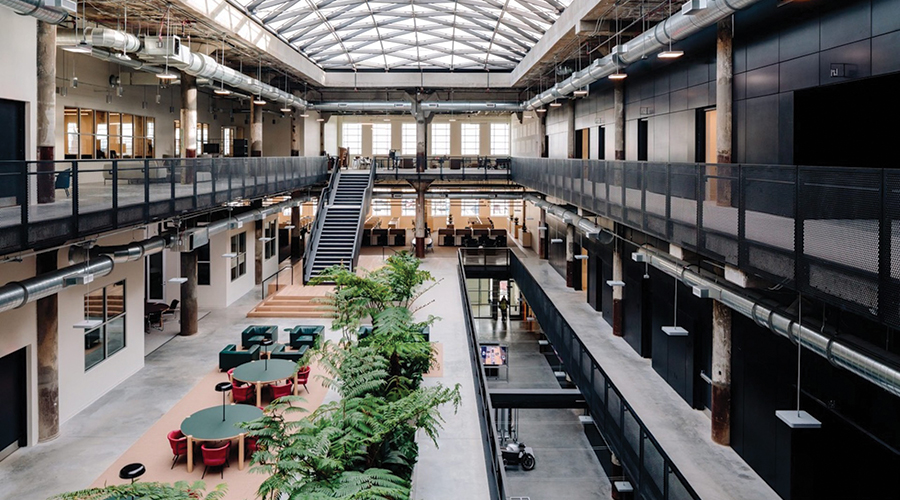
The classrooms have a warehouse feel, with exposed pipes and beams gracing the ceilings, because officials decided to forgo traditional drop-down ceilings.
About 70 percent of the school's building materials came from Pennsylvania. In a roundabout way, that's also an environmentally friendly choice, because local products don't have to be transported long distances, which helps conserve gasoline and airplane fuel.
The school's heating and cooling system is tied to a series of 30 geothermal wells. The wells, 350 feet beneath the surface, keep water at a constant 55 degrees. In the summer, the warm classroom air is sent below ground, where it's cooled to 55 degrees before being returned to the classrooms. In the winter, cold surface air is likewise sent below ground, where it's warmed, then returned to ground level.
It's not just the flushless urinals that save water. It's also the automated sink faucets, low-flow shower heads, and the landscaping schema -- landscapers selected hardy plants that don't require much irrigation.
The school cost about $7.1 million. A same-sized school -- Clearview can accommodate up to 300 pupils, grades kindergarten through fourth grade -- built with traditional materials would have cost about $6.5 million, officials said.
But the extra expense will be recouped through utility savings in about nine years.
Related Topics: