U.S. Mission Building to Get Larger, More Secure Replacement
The headquarters of the U.S. Mission to the United Nations doesn't generate much respect among the world's diplomatic set, whose members have derided the gray 12-story structure as an architectural eyesore that is unfit to house the world's lone superpower.
The headquarters of the U.S. Mission to the United Nations doesn't generate much respect among the world's diplomatic set, whose members have derided the gray 12-story structure as an architectural eyesore that is unfit to house the world's lone superpower, The Washington Post reported.
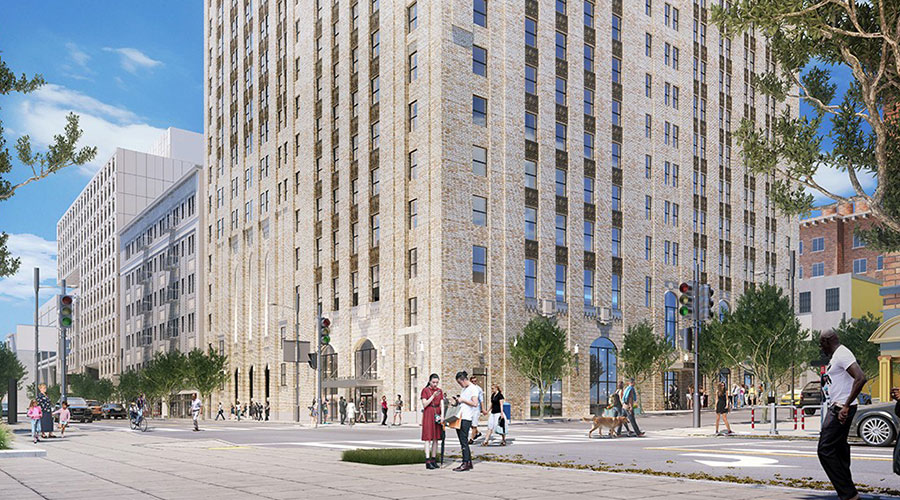
The United States is set to get an upgrade. Construction workers will demolish the 40-year-old building on 45th Street and First Avenue over the next four months to make way for a heavily reinforced, 23-story high-rise that is designed to accommodate nearly twice the staff and survive a car bomb explosion.
The $4.4 million demolition has forced more than 160 American diplomats and support staff into a commercial building several blocks from U.N. headquarters, on 45th Street near Lexington Avenue, until the new building is completed in 2008.
The passing of the storied building, whose concrete, honeycombed facade once stirred fans of Modernist architecture, has generated little protest from the city's preservationists.
The building, which opened its doors in the spring of 1961, was not always so despised. For a country that had been ambivalent about the United Nations, the decision to erect a permanent mission across the street from U.N. headquarters was seen as a symbol of America's commitment to working with others to pursue peace. A New York Times editorial in March 1956 hailed U.S. plans to build "our own U.N. monument" as a powerful rebuke to "a few antediluvian isolationists in Congress who would like to have us pull out of this often annoying company and go it alone."
The effort faced bureaucratic, financial and political hurdles from the beginning, when American officials began looking for a site in 1947. The late U.S. ambassador Henry Cabot Lodge Jr. overcame the forces of Washington bureaucracy and American isolationism to make it happen, invoking fears that the Soviets were considering purchasing the site for their own mission. That, he warned, would constitute a "diplomatic Sputnik for them," a reference to the first man-made craft sent into space.
During Lodge's tenure, Congress appropriated about $3.7 million in March 1958 to begin construction. But President Dwight D. Eisenhower, whose golden bust is displayed in the main conference room at the mission's transitional headquarters, vetoed the bill because of an unrelated dispute over civil servants' retirement funds. The bill was ultimately signed into law months later.
Inspired by Swiss architect Le Corbusier, who helped design the U.N. headquarters, the firms Kahn & Jacobs and Kelly & Gruzen conceived the building in the Brutalist style, a form of architecture popular in the 1960s and 1970s that relied on sculpted, rough concrete surfaces.
Like its predecessor, the new building has taken more than a decade to finance and has faced intense resistance from the United Nations' toughest critics.
The building's shell, which will be constructed by the General Services Administration, will cost $50 million to $60 million. The State Department will pay more than $12 million for renting the two spaces. To save money, the government scrapped plans for a permanent residence for the ambassador.
U.S. officials declined to discuss the cost or the practical impact the move will have on U.S. intelligence agencies that have long used the United Nations as a prime post for listening in on foreign diplomats.
The mission's transition to temporary quarters, meanwhile, has irritated some diplomats, who complained they have been squeezed into smaller cubicles while the mission's top three ambassadors have been given equal space. Still, many diplomats are grateful to flee a building that provided an inviting target for car bombers. Indeed, the design for the new mission has been influenced as much by terrorists as by the aesthetics of architecture or the principles of international cooperation.
The new building will be set back from the street, and the first six floors will be windowless, in an effort to prevent injury from exploding glass from a car bomb. Former New York Times architectural critic Herbert Muschamp described the new mission as a "high-rise bomb shelter."
Related Topics: