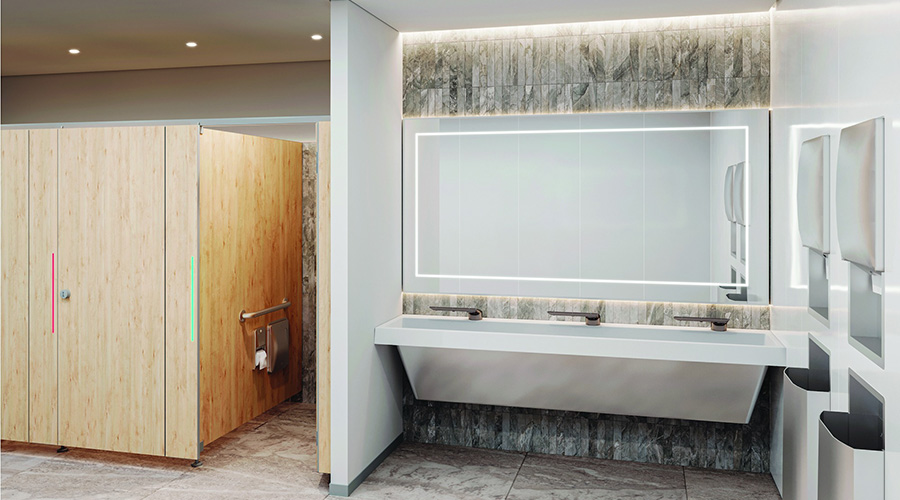
Smart Plumbing Brings Data-Driven Maintenance to Restrooms
Smart plumbing fixtures help facility managers monitor usage, anticipate maintenance needs, improve water safety and optimize system performance.
Key Takeaways:
- Smart plumbing fixtures provide real-time usage data that helps facility managers better understand restroom demand and optimize system performance.
- Intelligent fixtures with hygiene flushing and wireless connectivity can support water safety, identify maintenance needs and reduce unplanned downtime.
- Monitoring plumbing system conditions, including water temperature and pressure, can help facility managers protect occupant health, safety and well-being.
To achieve their goals related to reliability, performance and especially sustainability, owners and managers will need to better understand the technology advances in plumbing systems that make them possible. Among the key advances are the Internet of Things and smart technology.
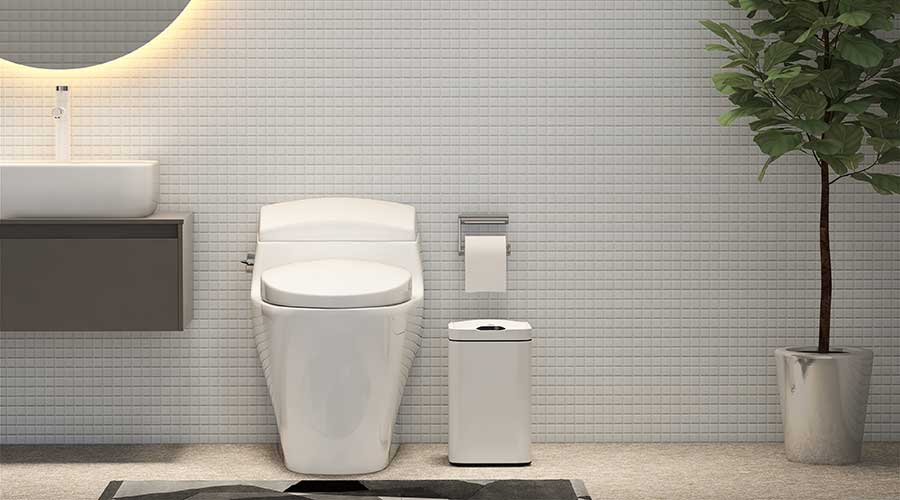
“Smart restrooms are the new thing,” Caouette says. “There’s a lot of data that can be pulled from these smart restrooms. They’re a little bit more costly than traditional fixtures because they have a data card in it that sends a wireless signal into a router that disperses it either into the building management system or into someone's smartphone through their proprietary BACnet system. It’s also able to share the data on the actual usage versus the assumed usage of a particular restroom group.”
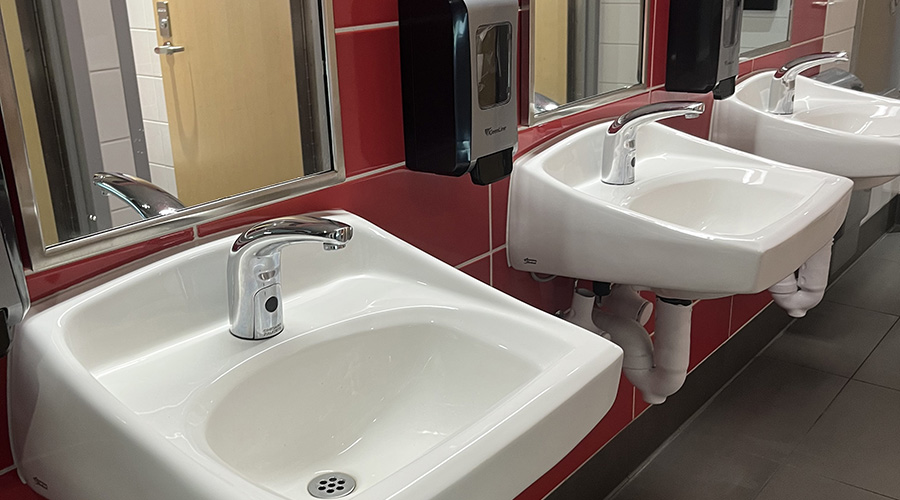
Intelligent fixtures enable building owners and managers to monitor and adjust plumbing systems in ways that benefit both occupant safety and system maintenance.
“We’re seeing fixtures capable of hygiene flushing,” Dipping says. “If we remember the COVID era where buildings sat unused for a long period of time, hygiene flushing purges water, keeping water safer in the buildings. Safer water in buildings provides better occupant well-being.
“Fixtures now come with Wi-Fi and Bluetooth technology that offer insights into maintenance needs: ‘I’ve been cycled 50,000 times, so it’s time for me to get some new gaskets in my faucet and get a new diaphragm in my flush valve.’ That avoids downtime and keeps the building up and running and provides a better experience for end users.”
As rising occupant and owner demands drive changes in plumbing systems and restrooms — and as technology advances provide an expanding flow of data on system condition and performance — the challenge for owners and managers planning restroom upgrades is to embrace their ability to update, monitor and control intelligent fixtures and systems to benefit occupants and the organization.
“The plumbing industry needs to start looking at the intelligence that the HVAC system has applied in its design throughout the years and get data collected in plumbing systems and predominantly domestic water systems applied so we can collect data and analyze performance outside of the mechanical room,” Dipping says. “Plumbing systems really drive the life and safety and well-being of occupant users.
“It’s one thing to be a little warm if the HVAC system isn’t working right. It’s another thing if all of a sudden toilets and showers aren’t working correctly. You’re going to be much more uncomfortable a lot faster. I like to really drive the idea of adding intelligence to plumbing systems outside in the mechanical room. Know how temperatures are operating and know how pressures are operating so you can really have a good idea of how the system is running to keep people safe.”
Dan Hounsell is senior editor for the facilities market. He has more than 30 years of experience writing about facilities maintenance, engineering and management.
Related Topics: