CO2 Monitoring Can Help Schools Improve Classroom Ventilation
Real-time CO2 monitoring can help facility managers identify ventilation problems, prioritize fixes and improve classroom IAQ without waiting for major HVAC upgrades. October 2, 2026
By Jeff Wardon, Jr., Assistant Editor
Key Takeaways:
- Real-time CO2 monitoring can help facility managers identify classrooms with ventilation problems and make otherwise invisible conditions visible.
- Low-cost strategies such as managing classroom occupancy and increasing fresh-air flow can improve ventilation while districts plan longer-term HVAC upgrades.
- Connecting CO2 monitors with smart HVAC controls can allow systems to adjust dampers and fans based on real-time conditions while supporting energy efficiency.
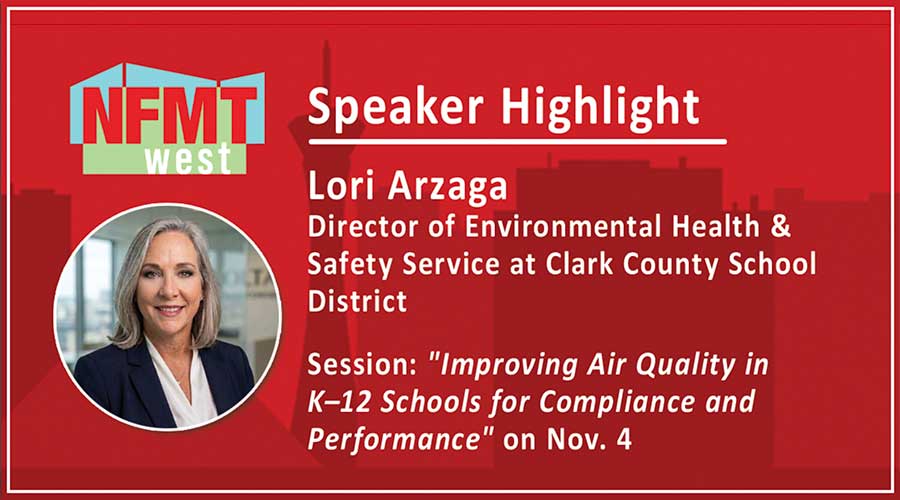
As K–12 school systems contend with aging HVAC infrastructure and limited capital budgets, improving indoor air quality (IAQ) does not always require major equipment upgrades. Lori Arzaga, director of environmental health and safety service at Clark County School District, whose research examined CO2 levels and ventilation across school classrooms, says facility managers can start by making ventilation conditions visible through real-time CO2 monitoring.
From identifying problem spaces to making low-cost operational adjustments, Olson-Arzaga's session “Improving Air Quality in K–12 Schools for Compliance and Performance” will cover this and more at NFMT West in Las Vegas from November 3 to 4.
FacilitiesNet: Your research found elevated CO2 levels across a large number of K–12 classrooms. What are the most common factors driving these elevated levels, and what should facility managers look at first when identifying problem spaces?
Lori Arzaga: So, I’ll start backwards. They need to have some sort of device to measure ventilation, and I use CO2 monitoring devices to identify classrooms that have ventilation issues.
FN: How can school districts use real-time IAQ monitoring to move from simply meeting ventilation requirements to actively managing classroom conditions for student and teacher performance?
Arzaga: By having the CO2 measurements displayed on the device, people are aware of what the CO2 levels are. Therefore, they can understand what’s going on with the ventilation and recognize that, above or below certain levels, there are actions they need to take if they see those levels on the display.
FN: For districts dealing with aging infrastructure and limited capital budgets, what low-cost or operational strategies can improve classroom IAQ now while supporting longer-term ventilation and HVAC modernization?
Arzaga: There’s little to no cost to increase ventilation. One easy way is just to make sure your class size is the appropriate size for the classroom. The source of CO2 is coming from the students and other occupants in the room, so just making sure the room is not overcrowded can help at no cost to the district. They can also open windows or doors during passing periods — just getting anything that can get fresh air in.
Once you do have monitors, if they’re smart monitors, they can then be used to tell the system to open the dampers as needed. It’s also an energy-efficiency option because, if you use smart thermostats — and what I mean by smart is that they’re relaying the information — the system can communicate that information to the HVAC systems and open and close dampers or turn on fans. That kind of strategy is something they can use in the interim.
One thing I did want to note around that is that we did a study. It was one of the first UL certifications a couple of years ago of 23 of our schools. We looked at 10 percent of the HVAC zones within the school district, and we found that our rating overall was 95 percent. Typically, when there was a zone that wasn’t passing for certification, it was simply a quick fix with the unit to get the airflow to be adequate.
So, the good news is that, in most cases, the systems are over 90 percent operating efficiently. It’s just those areas where things break, like there’s no fresh air getting in for whatever reason, and that’s what can be easily addressed in the interim.
FN: What do you think will be the most important takeaway from your session?
Arzaga: We don’t have an air pollution problem in the classrooms. We just have a ventilation problem, and that we can easily address it by making the invisible visible and then taking steps to correct it.
To learn more about CO2 monitoring in classroom environments, be sure to check out Arzaga’s session at NFMT West 2026 this November. Register for West here.
Jeff Wardon, Jr., is the assistant editor for the facilities market. With more than three years of experience, he covers topics including technology, wellness, sustainability and emerging industry trends. Connect with him on LinkedIn.
Next
Read next on FacilitiesNet