Building a Better Water Management Strategy
The WELL Building Standard promotes a proactive approach to drinking water quality through regular testing, monitoring, treatment and third-party verification.
Key Takeaways:
- The WELL Building Standard promotes a proactive water management cycle that includes assessing building water, improving plumbing systems, routine monitoring and independent third-party testing to maintain water quality.
- Effective water treatment requires building-specific solutions based on testing results, with technologies such as filtration, activated carbon, UV disinfection and ion exchange selected to address specific contaminants without creating new risks.
- Regular water quality monitoring and transparent sharing of test results help build occupant confidence in tap water, supporting healthier hydration habits and reducing reliance on bottled water.
Rather than reacting to water quality problems, WELL emphasizes a proactive management cycle built around four steps:
- Assess your building water
- If needed, improve or fix your building water system
- Routinely monitor the quality of your water, correcting issues if results are concerning
- Have a third party testing the water quality.
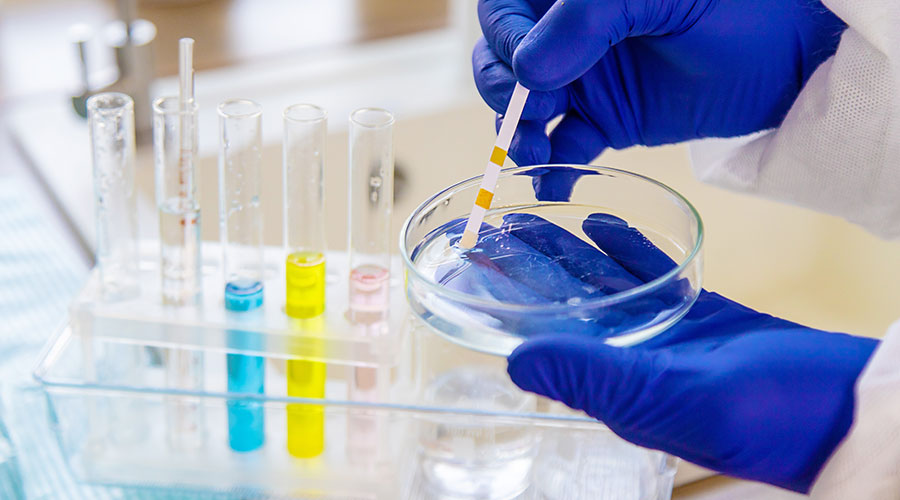
As such, water needs to be assessed by testing for metals, chemicals and sediments. Typical targets for drinking water quality testing include but not limited to lead, copper as well as for chlorine (i.e. the disinfectant added by the municipality, to check for its presence and activity), turbidity (a measure of cloudiness) and pH, as well as a microbiological indicators such as coliforms or heterotrophic bacteria. This list can be expanded to contaminants of concern in the area and disinfection byproducts like chloroform, which are side reactions of chlorine with plastics and/or organic matter dissolved in water.
Water needs to be tested at the point of entry to the building, to obtain a baseline, and throughout the building, to detect and fix issues related to design, ongoing operations or maintenance. It is highly recommended to repeat this process if buildings undergo renovations or are vacant for extended periods of time. Early assessment is a powerful tool for informing capital purchases for filters or treatment, for signaling maintenance operations like flushing or repairs, or for confirming the proper functioning of the system.
When it comes to water treatment, there is no one-size-fits-all solution. The right treatment depends on the contaminants present, the building's plumbing system and how the water is ultimately used. A system can be installed where the water enters the building or at the points of use such as kitchens or drinking water fountains.
Treatment technologies include filters, which physically trap particles and can be made of a porous medium like sand or of membranes, as in the case of reverse osmosis systems; activated carbon filters, in which contaminants, such as dissolved metals and organics, physically or chemically adhere to the carbon substrate; UV (ultraviolet) devices, which kill microbes by the sterilizing action of high-frequency UV-light; and ion exchange, which is the technology used for water softeners. These treatments are often used together or sold as a single system, as in many under-the-sink treatments. Buildings can install primary treatment, usually to remove larger particles, at the point of entry, and additional treatment throughout the building or at the points of use.
Selecting the appropriate treatment needs to be assessed by a specialist to ensure that it removes the contaminants of concern, at a reasonable installation and operational cost, and without creating other problems. For instance, some treatments may remove chlorine from water, increasing the risk of microbes colonizing pipes after treatment if not properly scoped.
In addition, routine monitoring of a smaller set of water quality indicators such as chlorine, pH and a microbial measurement helps operators when they address problems and, through trend analyses, proactively plan for maintenance before water becomes unsafe. Think of routine monitoring as preventive maintenance for your drinking water system.
Independent verification not only builds confidence with occupants, it also gives owners and operators confidence that their management practices are working as intended.
Buildings seeking WELL Certification earn points through feature W05 Part 1: Assess and Maintain Water Quality, and must pass third-party water testing (step 4) as described in features W01: Water Quality Indicators and W02: Drinking Water Quality. In addition, WELL awards points for buildings that share their water test results with the occupants, so users can feel more confident that the water is being monitored and are more likely to drink it - promoting hydration, an important contributing factor to our health and well-being.
Building confidence in tap water
If occupants don't trust the water — or simply don't like how it tastes — they're less likely to drink it. Sometimes, even when health-based thresholds for water quality are met, water may be found unappealing to drink because of taste, odor and appearance concerns. For example, high levels of chloride contribute to a salty taste and iron can give the water a reddish appearance. The WELL feature on enhanced water quality requires projects to provide drinking water that meets thresholds on chemicals that affect aesthetics and taste concerns. By managing nuisance chemicals, projects can provide more appealing and palatable drinking water. WELL Certification awards projects for meeting thresholds for drinking water taste including iron, sulfate, chloride and total dissolved solids.
Drinking water shouldn't become a concern only when something goes wrong. A healthy building water system depends on well-maintained plumbing, regular monitoring and water that continues to flow rather than sit stagnant. By giving occupants confidence in the quality of tap water, building owners and operators not only help protect health, but also encourage a more sustainable alternative to single-use bottled water.
For more information to enhance drinking water quality in your buildings, reference the WELL Water strategies in the publicly accessible WELL Building Standard. For a list of approved WELL Performance Testing Providers, visit the IWBI directory.
Rodolfo Perez, Ph.D., is Vice President of Standard Development and Water and Materials Concept Lead at the International WELL Building Institute (IWBI), where he leads the development of the Water and Materials concepts in the WELL Building Standard. Previously, he worked at the New York City Department of Health and Mental Hygiene, specializing in drinking water quality, Legionella surveillance and environmental health. He holds a Ph.D. in Environmental Engineering from the University of Wisconsin–Madison.
Related Topics: