Wildfire Smoke Buildings: Why Time and Distance Matter
Understanding smoke’s impact is critical to protecting indoor air quality and maintaining HVAC system performance and longevity.
By Brad Kovar, Contributing Writer
Key Takeaways:
- The impact of wildfire smoke on contaminants and structures is largely governed by the processes that determine the way contaminants are emitted, dispersed, transformed and deposited.
- Understanding impact zones helps facility managers translate environmental science into practical expectations for building conditions and facility response.
- Because the impact of wildfire smoke can vary widely, a structured, data-driven process provides the most reliable path forward.
- Wildfire smoke events are becoming an increasingly common reality across many regions, creating new challenges for facility managers and those responsible for maintaining safe, operational institutional and commercial facilities. While the visible impacts of fire can be immediate, smoke-related effects on buildings often persist long after flames are extinguished.
One of the most persistent misconceptions is that all properties exposed to wildfire smoke experience the same level of impact. In practice, that is rarely the case.
A more accurate and useful approach begins with understanding where a property sits in relation to a fire event and the way smoke contamination behaves over time and distance. By applying a science-based framework, managers and other building stakeholders can make more informed decisions about assessment, remediation and resource allocation.
For facility professionals, understanding the impact of wildfire smoke is critical to making informed decisions about when remediation is necessary, avoiding unnecessary or overly aggressive response costs, protecting indoor air quality (IAQ) and occupant health, and maintaining HVAC system performance and longevity.
The effects of time and distance
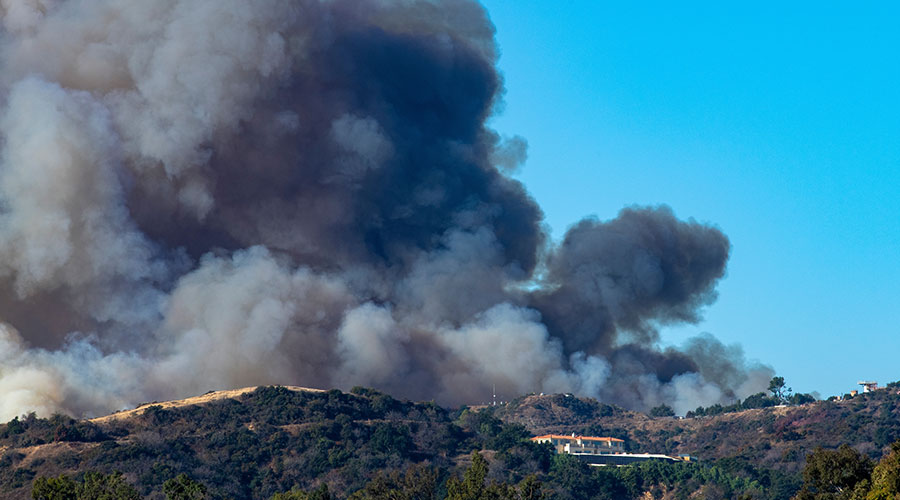
The impact of wildfire smoke on contaminants and structures is largely governed by what environmental scientists refer to as fate and transport — the processes that determine the way contaminants are emitted, dispersed, transformed and ultimately deposited. During active fire conditions, smoke plumes rise and travel based on wind patterns, temperature and terrain. In areas closest to the fire, airborne contaminant concentrations tend to be highest.
As the plume moves farther away and cools, those contaminants undergo significant changes. They dilute, chemically transform and shift between gases and fine particles that behave differently in the environment and within buildings.
At the same time, deposition processes — such as settling, impaction and surface absorption — determine where and how those contaminants accumulate on buildings and indoor surfaces. These outcomes are influenced not only by environmental conditions that include wind, temperature and humidity but also by topography and building-specific factors, such as ventilation systems, building envelope integrity and whether openings are present.
For facility teams, this means the type and extent of contamination, as well as the way it enters and affects a building, can vary significantly based on proximity to the fire and exposure conditions.
Together, these dynamics establish a clear pattern: Properties closer to a fire are more likely to experience heavier, more complex contamination, while those farther away typically experience lighter, more variable impacts. This time-and-distance relationship forms the foundation for classifying wildfire impact zones and guiding appropriate response strategies.
Building conditions and response
Understanding impact zones helps facility managers translate environmental science into practical expectations for building conditions and facility response.
Burn zone, or immediate fire area. Properties in the burn zone might experience direct flame exposure or intense radiant heat. Besides structural damage, these buildings often are subjected to dense, high-temperature smoke that can force particulates and gaseous combustion byproducts, such as volatile organic compounds (VOC), deep into the building envelope.
The facility’s structural integrity is the primary concern, followed by comprehensive remediation of heavy contamination. This process often involves significant restoration efforts and system-level evaluation.
Near-field zone, 0.6–6.2 miles. In this zone, properties can be exposed to the hot, turbulent smoke plume as it moves away from the fire. This turbulence can create pressure differentials that drive particulate matter such as ash, char and gaseous contaminants into indoor environments.
As a result, contamination can include a mix of visible residues and less obvious VOC-related impacts, including persistent odors. Restoration in this zone often requires a more involved approach, addressing surface contamination and possible absorbed compounds. While damage can be significant, structures generally are restorable with the right remediation strategy.
Targeted remediation of facilities typically is required, along with HVAC system inspection and potential odor mitigation strategies.
Far-field zone, or 6 miles and extending outward. As the smoke plume moves farther from the fire, it cools and transforms. Larger, heavier particles settle out near the source, leaving behind ultrafine particles — known as PM2.5 — that are small enough to remain suspended in the air and easily infiltrate buildings through normal airflow.
For properties in this zone, the impacts are typically lighter and more surface level. These fine particles can enter indoor spaces, but they generally do not damage most materials and can be effectively addressed through standard cleaning and filtration methods.
An effective facility response typically is to focus on filtration, HVAC system performance and routine cleaning rather than invasive remediation.
Assessments and best practices
Because the impact of wildfire smoke can vary widely, a one-size-fits-all approach to assessment is rarely effective. Instead, a structured, data-driven process provides the most reliable path forward. Effective evaluations typically consider:
- impact zone
- the quality of indoor and outdoor air
- surface contamination levels
- HVAC system performance and filtration
- structural condition and building envelope integrity.
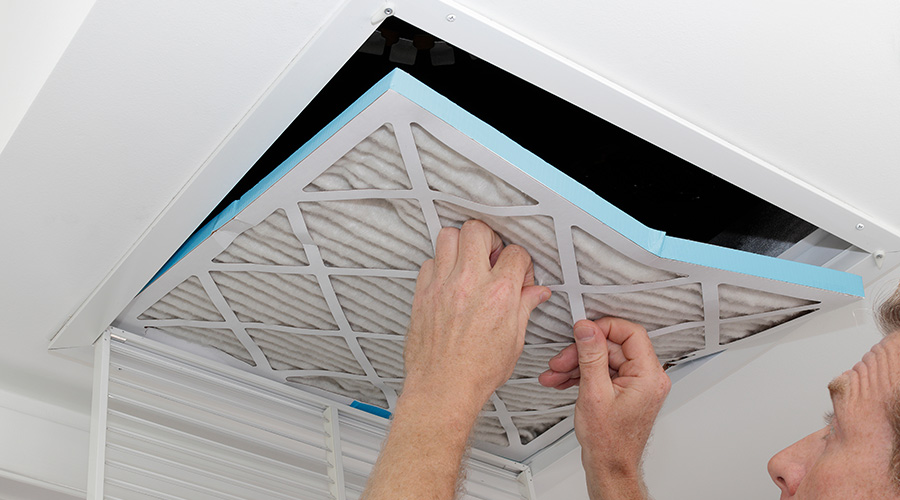
HVAC systems often play a critical role by acting as a pathway and a potential reservoir for smoke-related contaminants. Evaluating system condition and filtration effectiveness is an important part of any assessment.
Environmental testing can help distinguish between background conditions and fire-related impacts. When combined with site-specific factors — such as proximity to the fire, time since the event and duration of exposure — this information supports more targeted and proportionate remediation planning.
Guidance for decision-makers
For facility managers, the challenge often is to determine when action is necessary. Rather than reacting to any smoke exposure, decision-makers should look for clear indicators that further evaluation might be warranted, including:
- visible soot, char, ash or residue
- persistent smoke odors
- degraded IAQ
- HVAC system contamination or reduced performance
- increased occupant complaints.
Aligning a response with actual conditions also is important from a cost and resource standpoint. Overestimating the impact can lead to unnecessary large-scale remediation, while underestimating it might result in ongoing IAQ concerns and repeat service needs.
Industry guidance from organizations such as the American Industrial Hygiene Association (AIHA) and the Institute of Inspection, Cleaning and Restoration Certification (IICRC) reinforces the importance of basing response decisions on measured conditions rather than assumptions.
Interpreting the impact of wildfire smoke requires more than surface-level observation. Environmental professionals can provide the technical expertise needed to evaluate contamination pathways, interpret analytical data and differentiate between levels of impact. By applying established scientific principles and industry guidance, they can help ensure that recommendations are effective and proportionate.
Wildfire smoke will remain an ongoing challenge, but the way facility managers respond continues to evolve. By focusing on the core principles of time and distance, managers can better understand how and why impacts vary and what that means for their buildings. This framework supports more informed decisions that prioritize occupant safety, system performance and responsible resource allocation. The ultimate goal is not simply to react to wildfire smoke but to respond with clarity, precision and confidence that is grounded in science and aligned with actual building conditions.
Brad Kovar is the founder and chief executive officer of Safeguard EnviroGroup Inc., an environmental consulting firm providing technical investigations and advisory services related to indoor environmental contamination, wildfire smoke impacts, and environmental health hazards. He has more than three decades of experience conducting complex environmental investigations and providing technical guidance to insurance carriers, plaintiff and defense attorneys, government agencies and private clients. His work focuses on characterizing combustion residues, wildfire smoke infiltration, and environmental contaminants affecting residential, commercial and industrial structures.
Related Topics: