close
logoAdloadimgUGL Services and DTZ have united to form one company. Learn more > Advertisement
CES Group. Click here.
Firestone Roofs to Rooftops, click here... Automated Logic

On the Move: Portable Heating and Cooling

Part 1: Portable Heating and Cooling: Specification Starts with Facility Analysis

Part 2: Applications for Portable Heating and Cooling Grow

Part 3: Common Mistakes in Specifying Portable Heating and Cooling Equipment

Part 4: Portable Heating and Cooling: Quantify a Room's Heat Load

Part 5: Portable Heating and Cooling: Key Questions

Part 6: PRODUCT FOCUS: Portable Heating and Cooling


Common Mistakes in Specifying Portable Heating and Cooling Equipment

By Dan Hounsell, Editor - January 2010 - HVAC


Unfortunately for too many managers, mistakes during the specification process short-circuit the potential connection between the available technology options and facility cooling needs.

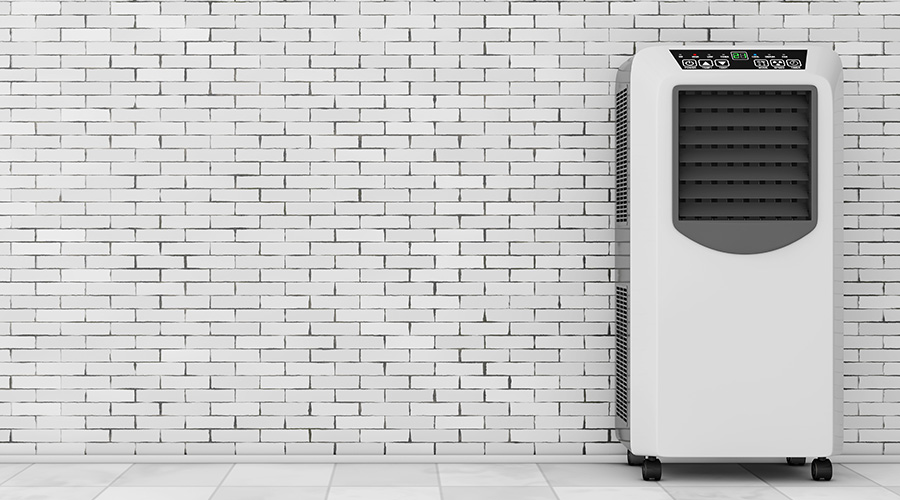
For example, many managers fail to understand one size does not fit all. Portable heating and cooling units designed for use in manufacturing plants will not perform as needed when used in a commercial building's server room.

"The two units are not the same, so don't try to have one size fit all," Lee says.

In some cases, managers mistakenly assume portable and fixed units of the same capacity provide the same quality of cooling. But a 1-ton portable unit will not cool a space as efficiently or effectively as a 1-ton fixed unit, Tagge says.

"They are not equivalent, Btu for Btu," he says. "A fixed unit is ideally and uniquely designed for that space."

Other common mistakes involve not understanding the limitations created by the power available to the space where the equipment will operate.

"If you only have a 110-volt outlet, we're limited by that" because larger-capacity units require higher voltages, Armshaw says, adding that managers who do not take power limitations into account will end up with equipment too small for the space. "They won't be happy with the results.

Managers also tend to purchase a piece of equipment without fully considering future expansion needs.

"Purchasing a larger unit than you need right now gives you the ability to grow the server room," Armshaw says. "Nothing is worse than getting six months down the line, adding a rack of servers and realizing the equipment can't keep up."

Comments

Add a comment

Prev

Next


On the Move: Portable Heating and Cooling

Part 1: Portable Heating and Cooling: Specification Starts with Facility Analysis

Part 2: Applications for Portable Heating and Cooling Grow

Part 3: Common Mistakes in Specifying Portable Heating and Cooling Equipment

Part 4: Portable Heating and Cooling: Quantify a Room's Heat Load

Part 5: Portable Heating and Cooling: Key Questions

Part 6: PRODUCT FOCUS: Portable Heating and Cooling


RELATED

Browse articles on portable heating and cooling, hvac, heating and cooling on FacilitiesNet

FACILITYZONE SEARCH

Search for portable heating and cooling, hvac, heating and cooling articles on FacilityZone


Find us on Google+
Modine. Save Thousands of Dollars in Energy & Thousands of Pounds in CO2. Click here.


Schooling the competition for 25 years. Aerco, click here.


*************************

Free E-mail Newsletter Sign-up

Weekly Articles
Facility Webcast Alerts
Building Products/Technology
Monthly Digital Magazine


*************************
*************************
*************************