Infrared Cameras Can Detect Thermal Bridging, Air Leaks, Wet Insulation
Although air movement transports cold air into a building and forces warm air out, thermal bridging through the wall system also can increase the load on the mechanical system. Thermal bridging consists of temperature gradients through components, such as cold, exterior air cooling a window frame, which then cools interior air.
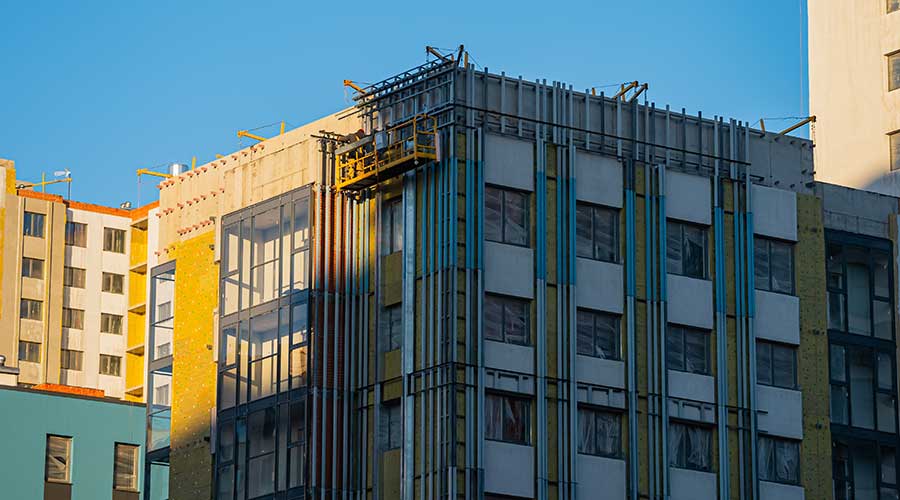
The wall system also can contribute to heat losses and gains from thermal bridging. Many facilities use fiberglass batts in the wall cavity between steel studs to insulate the wall. But the insulation is inserted between the steel studs, breaking the continuity of the insulation. Thermal bridging occurs because the steel studs extend from the exterior — cold — side of the wall to the interior — warm — side of the wall.
Identifying Energy Loss
Infrared scanning technologies can help technicians identify energy loss in building envelopes. Infrared scans can identify air leaks, wet insulation in a roof and some wall systems, and significant thermal bridging.
While using infrared diagnostic tools might look easy on the surface, scanning does not mean technicians are merely looking through a camera. Trained thermographers, infrared camera technicians and knowledgeable building envelope professionals must interpret the thermal images to determine the scans’ findings. For example, reflections of apparent heat loss on a surface might provide a false-positive.
Infrared scanning is limited to specific types of systems and components, mostly barrier-type systems that do not include a cavity between the exterior shell and the back-up wall system, such as brick veneer. Air leaks can dissipate behind the face shell and veneer with a cavity system, so technicians might not be able to identify the leak with an infrared camera.
Secondary techniques for identifying air leaks include visual surveys, pressurization of the building, and the use of smoke pencils. In some instances, openings in the building envelope are very obvious. After locating large air-leak paths, technicians can use smoke pencils to identify smaller paths. Although infrared scanning and smoke pencils can identify leak areas, they cannot identify the cause of the leak. Technicians need to evaluate and investigate further to determine the cause.
For example, an infrared scan might indicate wet insulation, but it will not determine the reason the insulation is wet. Also, infrared scanning or smoke pencils can identify air leaks, but they do not indicate the breach in the air-barrier system. Making that determination might require destructive testing and exploratory openings to examine concealed components.
Related Topics: