No-Touch Technology and Training Can Minimize Dispenser Issues
Many school districts have addressed these and other restroom issues by employing a number of effective strategies.
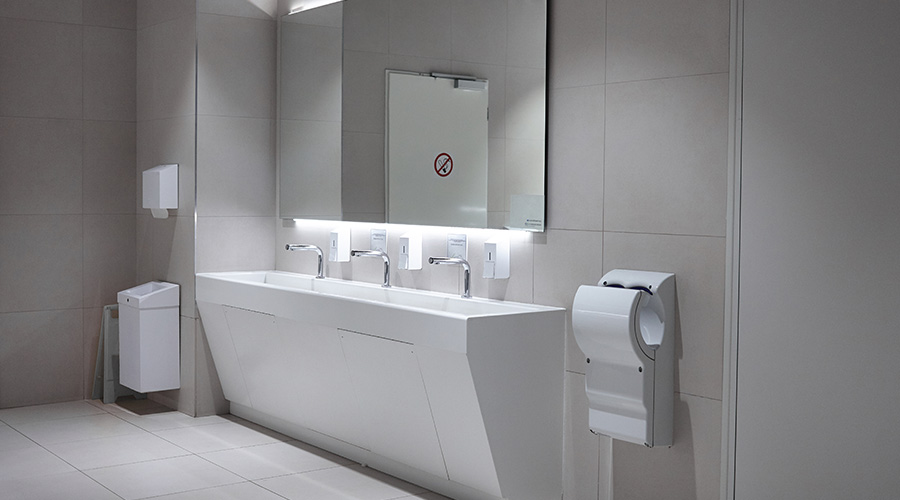
For example, they have upgraded restrooms with vandal-resistant dispenser designs, installed improved lighting, and specified white or light colors for dispensers, floors, grout, walls and partitions to make soil easier to see, rather than allowing it to hide under grey or dark colors.
Hidden dirt also hides the source of odors and germs and makes it harder for custodial employees or contractors to see the soil and remove it. This strategy is a key to odorless, clean and sanitary restrooms. Audits of restrooms often uncover urine, bacteria and mold on virtually every surface users touch, even when the surfaces appear clean.
Ensuring these surfaces are sanitary and easy to inspect is the best way to maintain clean restrooms. Good maintenance, along with no-touch dispensers where possible, will earn high marks from users.
Training for custodians who clean restrooms can complement the no-touch approach. More managers also are purchasing no-touch cleaning tools, similar to wet-dry vacuum machines. The units dispense cleaner and rinse water and vacuum residual water, leaving the surface clean and dry in one-half the time of more traditional methods.
More managers in schools also are appointing restroom committees comprised of teachers, students, custodians and maintenance technicians who regularly check restrooms and note problems. With training, students even have the authority to write maintenance requests.
With proper monitoring, dispensers with large-capacity paper-product refills can extend the period between replacements, compared to smaller-capacity refills, and they reduce the chances of empty dispensers. Another way to ensure a full dispenser is to specify units with transparent fronts so cleaners or others monitoring restrooms can check a dispenser without having to open it. This strategy saves maintenance time, and it ensures the dispenser is stocked properly at all times.
Soap dispensers also should feature a design that allows workers to check their status without disassembly. Managers also should specify a cartridge-type design for easier soap replacement. The cleaner removes the depleted self-contained cartridge, recycles it and replaces it with a new cartridge without having to pour any liquid.
Related Topics: