Case Study: Hospital EPS Load Breakdown
A few other tips may be helpful in preparing for smooth operation of an emergency power system. Be sure that there is sufficient lighting on emergency power in the emergency power system room and around the gear to allow for maintenance and inspection for troubleshooting.
Also, if the main BAS unit is located in engineering offices not supplied by emergency power, it will be difficult to control operations from the BAS. Verify which devices will restart when normal power resumes, and which items will have to be restarted manually. Be sure that all of the HVAC control devices and mechanisms are on emergency power.
Test the in-rush current when starting the chiller and other large motors — in some cases, the in-rush may be too great and will exceed available emergency power system capacity. Part load start will be essential.
Finally, be sure that the emergency power system operational plan, including the triage component, is documented in detail and kept in an accessible location that several people (not just the facility executive) know about.
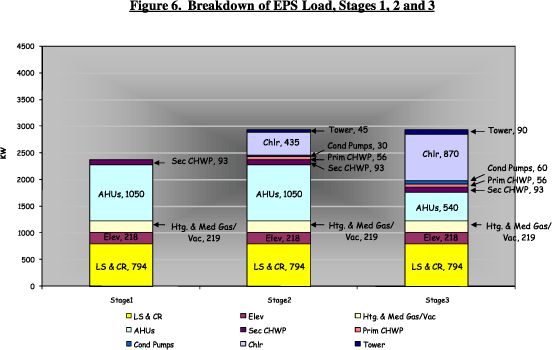
The figure below shows the distribution of the emergency power system over the three stages of outage. Many refinements of this sequence could be implemented at the cost of simplicity and reliability. The first might be to close the chilled water valves on the air handling units that are shut down, further shunting chilled water to the high-priority air handling units. This would result in quicker cooling of the coils on the high-priority air handling units and no “waste” of chilled water through air handling units that are shut off. Of course, the load on the cooling coils would be negligible with fans off. 
Click & View PDF
The figure below shows the distribution of EPS over the three stages of outage. Many refinements of this sequence could be implemented at the cost of simplicity and reliability. The first might be to close the chilled water valves on the AHUs that are shutdown, further shunting chilled water to the high priority AHUS. This would result in quicker cooling of the coils on the high priority AHUs and no “waste” of chilled water through AHUS which are shut off. Of course, being shutoff, the load on the cooling coils will be negligible. We were also concerned about reliably restarting the system after an outage.
|
Dan Koenigshofer, PE, is a principal with IES Engineers-Dewberry. He holds a master’s degree in public health and is a certified ASHRAE health care designer.
Related Topics: