Following Lift Safety Guidelines Avoids Accidents, Citations
Product Focus: Aerial Work Platforms
Workers in most maintenance and engineering departments use mobile aerial work platforms, or lifts, regularly. But how many operators use them as safely as they should?
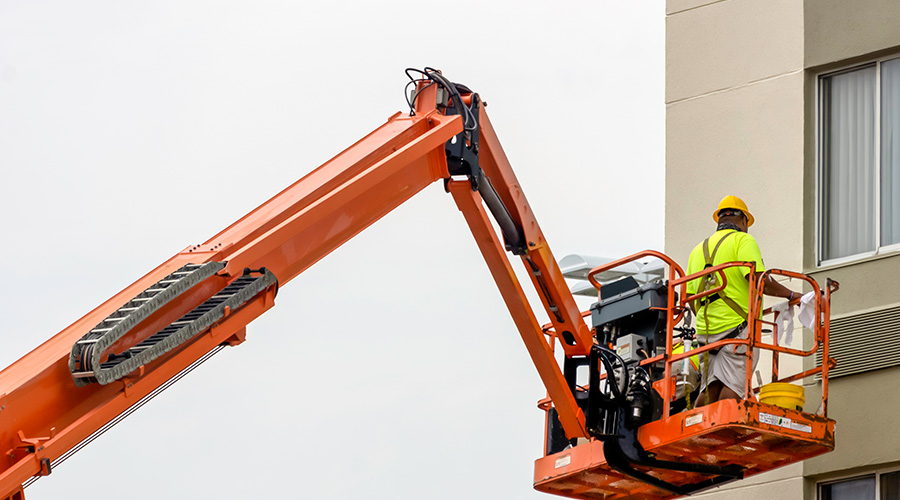
Lifts are designed to elevate personnel on a platform supported by scissors, masts or booms. Work platforms are essential when technicians must perform work for extended periods at elevations where a guarded, fixed work surface is not available.
They offer flexible, versatile access to elevated locations and tend to be safer than ladders and other access equipment when working at higher elevations. But for these essential pieces of equipment to be as safe and efficient as possible, users must operate and maintain them according to regulations and manufacturer requirements.
Safety First
Failure to follow manufacturer safety guidelines and standards from the American National Standards Institute (ANSI) can lead to violations and citations from the Occupational Safety and Health Administration (OSHA), worker injuries, and even fatalities.
Common safety violations leading to citations or accidents include:
• lack of fall protection
• tip-overs
• working near live power
• crushing and pinch-points
• objects falling from platforms
• unstable surfaces.
The main causes of these problems include a lack of training, misuse of equipment, and not following manufacturer guidelines. According to the U.S. Bureau of Labor’s fatality statistics, 75 percent of scissor lifts that tipped over resulted in fall deaths.
In the remaining accidents, workers died from being struck by the falling scissor lift. About 40 percent of the tip-overs occurred when an operator extended the scissor lift higher than 15 feet, mostly while driving the unit. In 20 percent of the falls, the worker was ejected from the scissor lift, generally when the lift hit another object.
Other fall deaths occurred after operators removed chains or guardrails or while users stood on or leaned over railings.
Related Topics: