The Three Applications for Lavatory Faucets
Managers typically specify lavatory faucets for three broad applications.
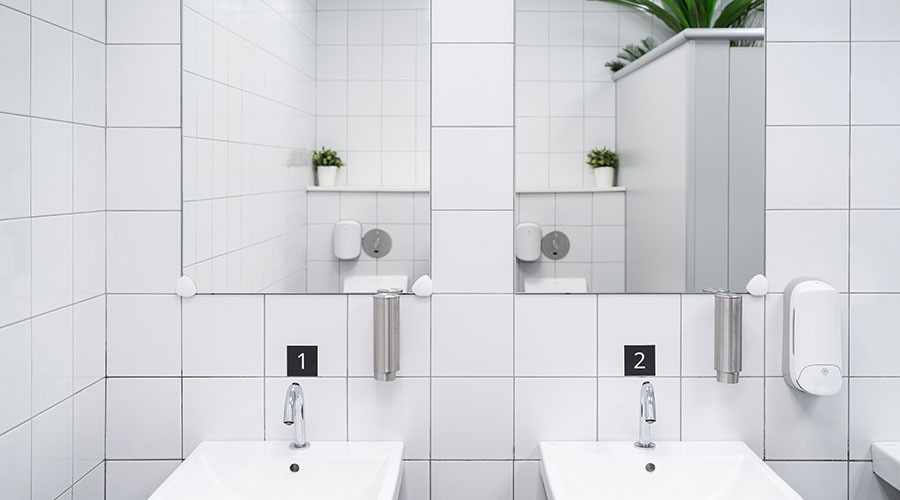
The first category is hand washing in public restrooms. In public restrooms, most codes require the fixtures use 0.5 gallons per minute (gpm). LEED requires these fixtures for public toilets.
The second category is for private fixtures occupants use for moderate hand washing and light bathing — face washing, shaving, or teeth brushing. Codes usually refer to these facilities as private lavatories. For example, managers can specify these fixtures for buildings where people live for extended periods of time, such as dormitories. Gyms, locker rooms and workout areas also are common applications.
These fixtures also are appropriate for clinical areas where workers must wash their hands regularly before seeing patients. Managers should not specify faucets that use more than 1.8 gpm for this application.
The third category involves private fixtures occupants use for heavier hand washing, such as medical, culinary, and maintenance. These applications require more water, and, as a result, managers can specify 1.8-2.2 gpm fixtures. Most codes restrict these fixtures to less than 2.2 gpm.
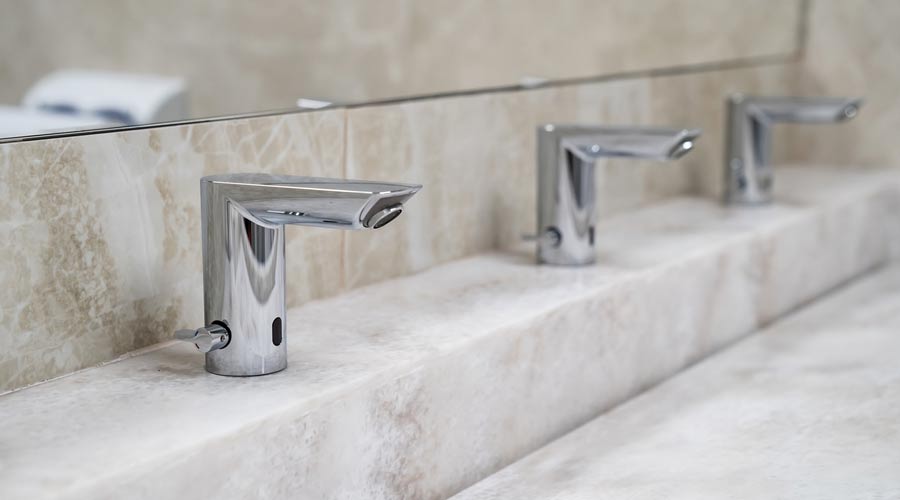
In certain applications, users might have to actively clean and scrub their hands for a predetermined amount of time. In most cases, the water does not have to remain flowing during scrubbing. In situations such as this, managers can specify sensor-, foot-, or knee-operated fixtures.
Managers can look at 0.5-1.5 gpm fixtures, which are available in many price ranges with numerous options. Some fixtures reduce water use with a simple flow restrictor in the spout, though users easily can remove the restrictor. Higher-quality fixtures integrate the flow-restricting device into the fixture. Manual and electronic metering fixtures that control the amount of time a fixture operates also are available and recommended in public installations.
Related Topics: